
Corn and the Santa Claus rally

Key points:
- A short timeframe during December has tended to see higher prices for corn futures
- This period has seen corn gain in price 89% of the time since 1961
- For 2022, that period starts this week
Corn price action has been weakening
Corn prices have been struggling to stay positive, and there are signs that trends are breaking down.
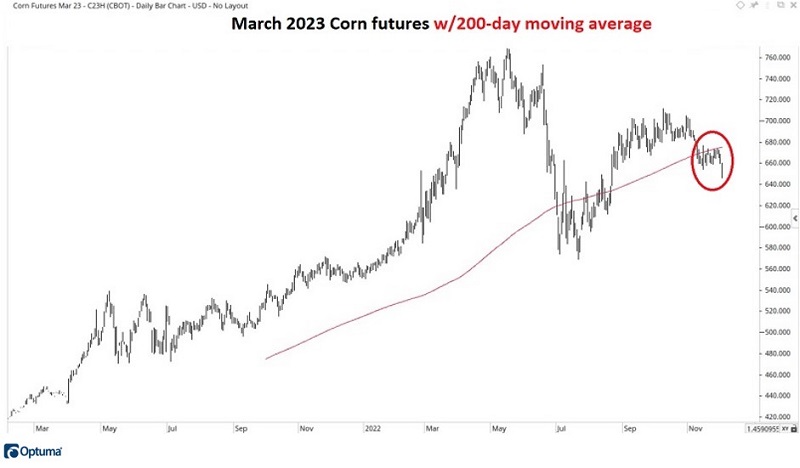
The chart below shows price action in corn futures, and there are some technical concerns here. Price has been working its way lower for over six months and is breaking below the 200-day moving average (red line). Nevertheless, corn is a highly cyclical market and is about to enter the seasonally favorable portion of the year. As such, price weakness in the near term could prove to be a buying opportunity.
Corn seasonality set to turn positive
The chart below displays the annual seasonal trend for corn futures. Note that corn is about to enter a favorable seasonal period. For 2022, this period runs from the close on December 8 through the close on December 30.
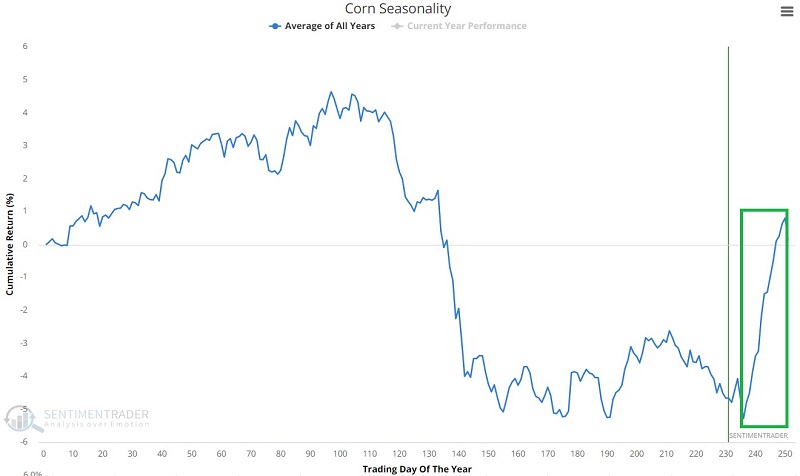
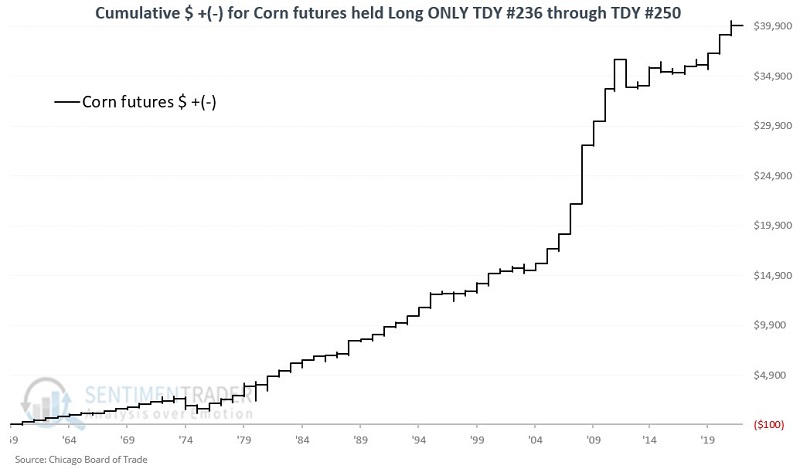
For this test, we will examine the performance of corn futures between Trading Day of the Year (TDY) #236 and TDY #250. The chart below displays the cumulative dollar return achieved by holding a long 1-lot position in corn futures only during this period every year starting in 1960.
The year-by-year results show how consistently profitable this window has been, though there was that exceptional outlier in 2012.
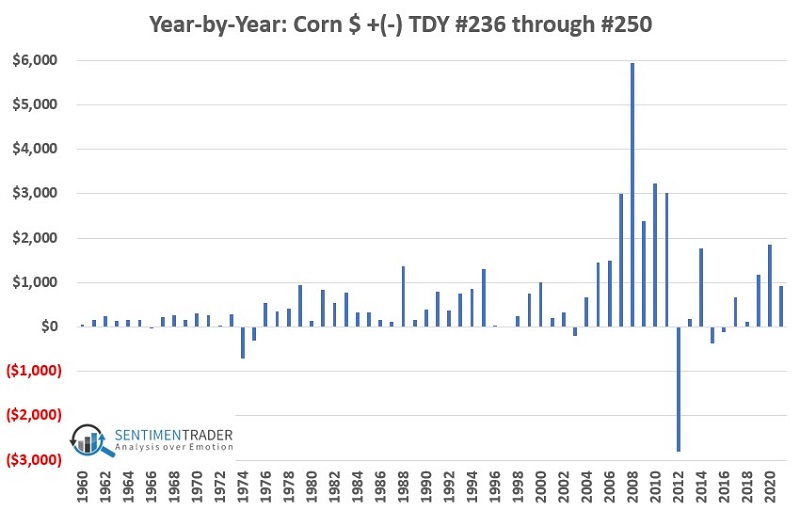
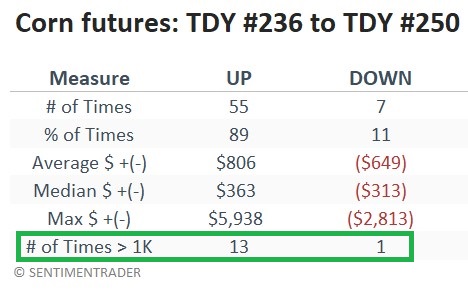
Over the past 62 years, corn futures showed a gain 55 times during this roughly 3-week period. The lopsided nature of gains versus losses over $1,000 (13-to-1) suggests a true edge. However, the sheer size of 2012's loss of -$2,813 reminds us of the need for risk management in every trade, regardless of any perceived edge.
What the research tells us...
During the approximately 3-week seasonally favorable timeframe coming soon, corn futures have shown a gain 89% of the time. This tendency for strength offers traders an edge, but success is never guaranteed from year to year. The significant loss in 2012 reminds us that - from a real-world trading perspective - no matter how consistently any price trend, strategy, factor, or seasonal trend performs, the first job of a trader is risk control.