
Consumer sentiment suggests relief for 60/40 investors

Key points:
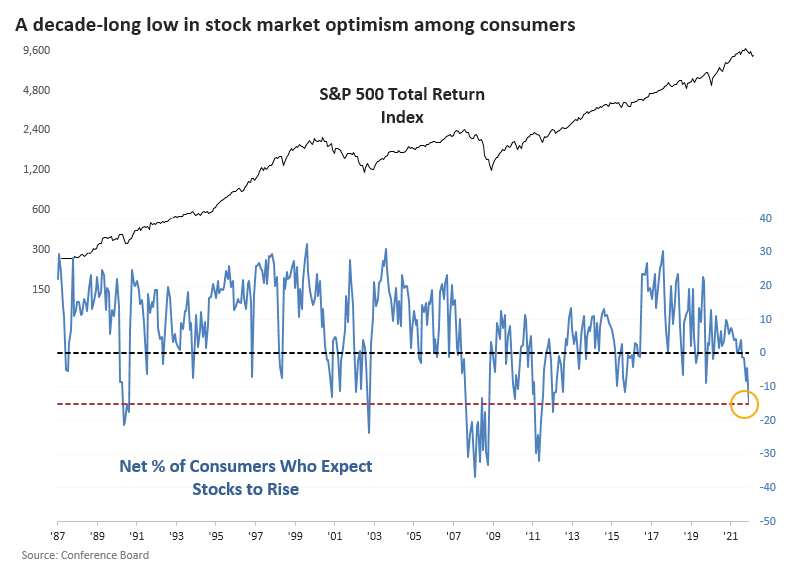
- General U.S. consumer sentiment toward stocks is the worst in over a decade
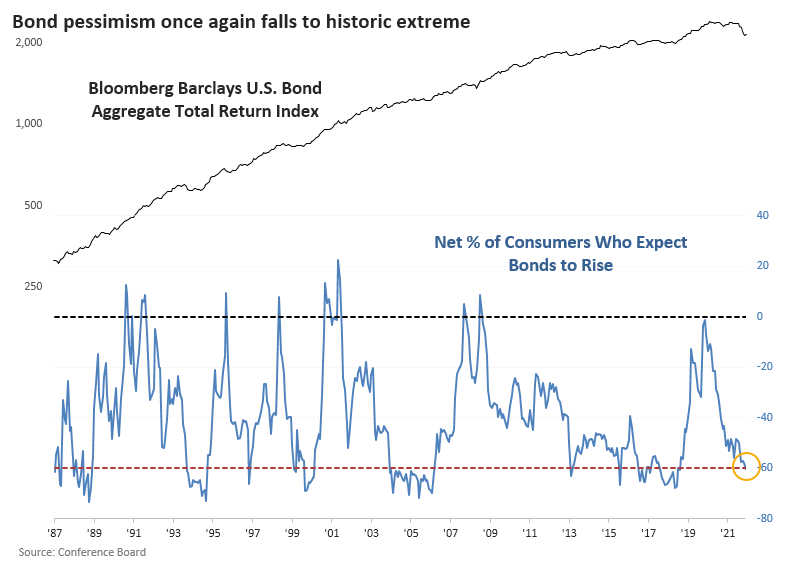
- It's also historically pessimistic toward the bond market
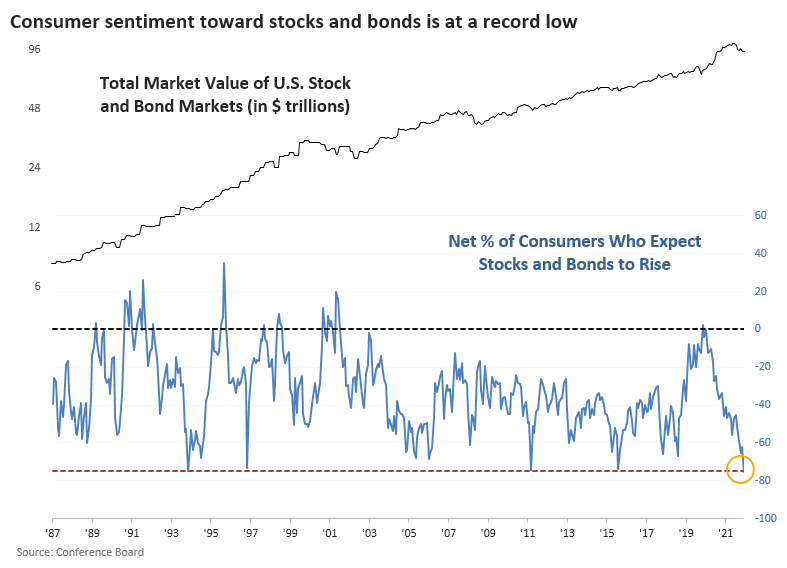
- Combined stock and bond sentiment is the worst in history, which should be a good sign for both markets
The consumer has given up on stocks...and bonds
We've seen how pessimistic investors have become multiple times over the past few weeks. With a steady drumbeat of news reports about plunging stocks, bonds, and crypto, that poor attitude has spread to general consumers. The cult of 60/40 stock/bond allocations in recent decades has led to substantial losses across even conservative accounts.
In the U.S., households now hate stocks on a level rarely matched in 35 years. According to the Conference Board, 43% of consumers expect stocks to fall in the coming months. That compares to only 28% who expect stocks to rally. The net difference between the two is the lowest in over a decade.
The bond market has also suffered a historic drawdown. Relative to historical performance and investor expectations, it's been even worse for bondholders than stockholders. So it's no surprise that consumers also hate bonds. According to the latest survey, 60% more consumers expect bonds to fall in price than rise.
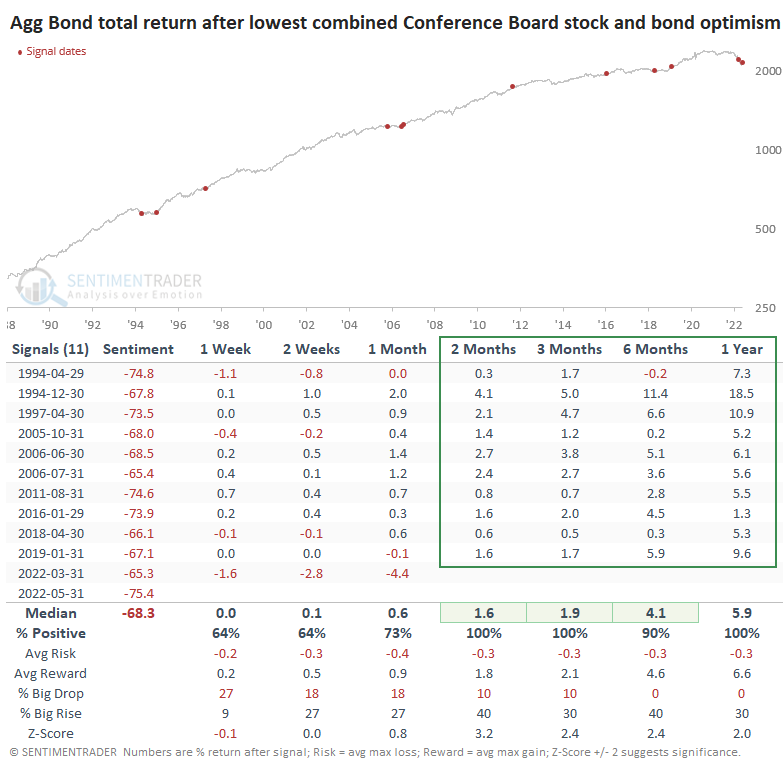
If we combine stock and bond sentiment, it is now the lowest in history. Never before in 35 years have more consumers expected both stocks and bonds to decline.
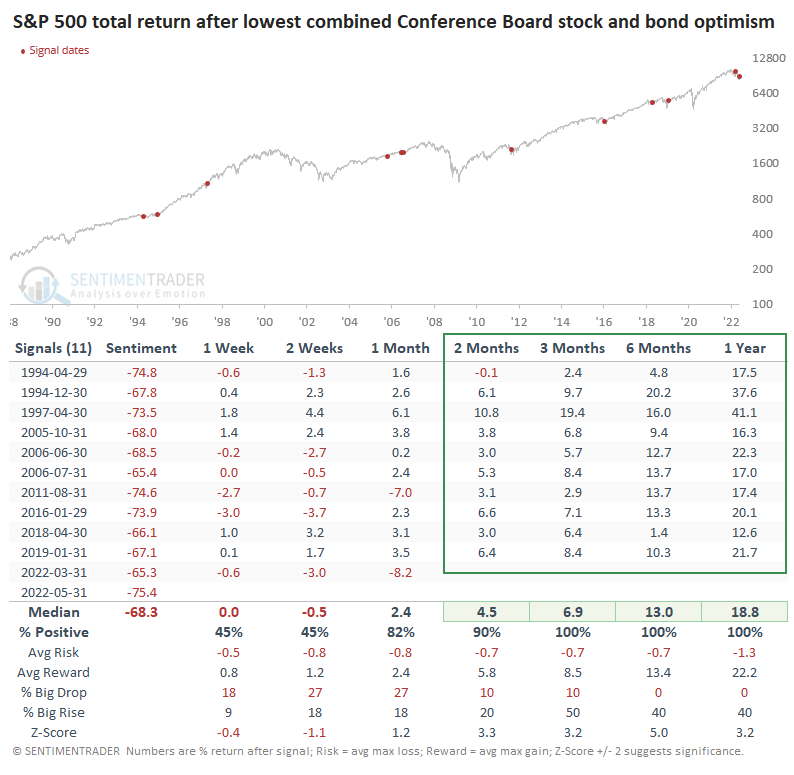
When we look at the worst combined stock and bond sentiment among consumers, it typically occurred after drawdowns (duh), but not necessarily significant ones. Even so, future returns in the S&P 500 were pristine, with an exceptional reward to risk ratio.
The past 35 years have had a persistent tailwind for bond prices, so it's not a shocker that the Bloomberg Barclays U.S. Aggregate Bond Total Return Index also showed fantastic returns after these bouts of dual pessimism.
What the research tells us...
When the performance of a market becomes so extreme that it enters the general population's consciousness, often that sentiment marks a turning point. Forward-thinking investors tend to reverse whatever positions they had that helped cause the trend, and we swing back to neutral or beyond. We seemed to have hit that inflection point over the last several weeks, with mainstream media filled with "bear market" articles and scary covers on magazines. The pessimism has spread to the general consumer, and they have had a pretty reliable record of becoming overly concerned (or euphoric) at the wrong times.