
Confidence comes back

Key points:
- Consumer Confidence jumped in May, with one of the largest monthly increases in nearly 60 years
- The net percentage of consumers expecting stocks to rise also jumped
- Both signs have been positive for stocks, with a higher probability of rising when Confidence is optimistic
Consumers are getting over their malaise
Consumers in the U.S. adjust their feelings of confidence based on several factors. The price of gasoline is among the bigger considerations, but so are more ephemeral factors like the vagaries of the stock market.
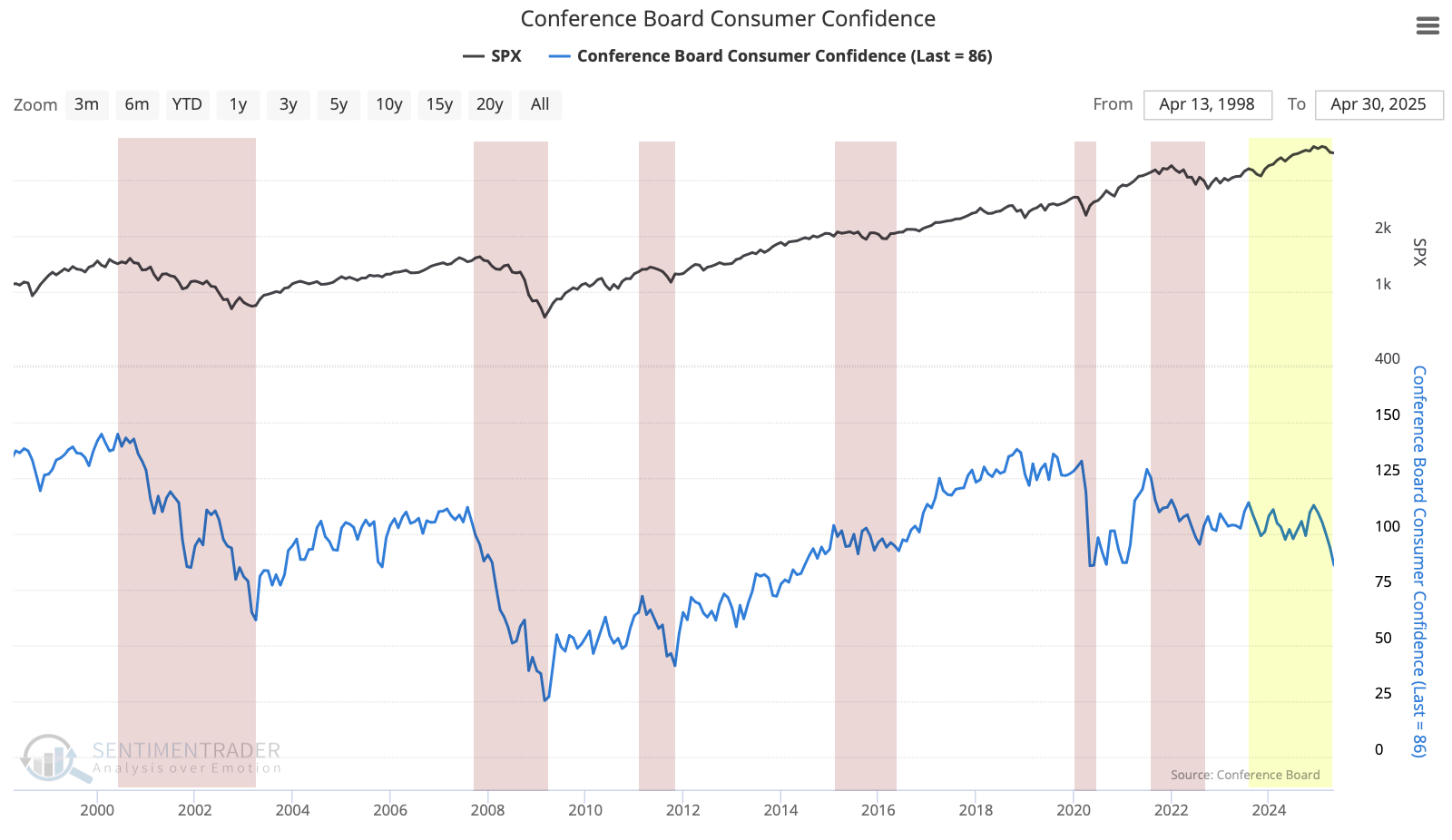
Over the past 25 years, the Conference Board's survey of Consumer Confidence has tended to suffer declines when the stock market is heavy. The last couple of years have been an outlier, with generally stagnant Confidence despite a mostly healthy market.
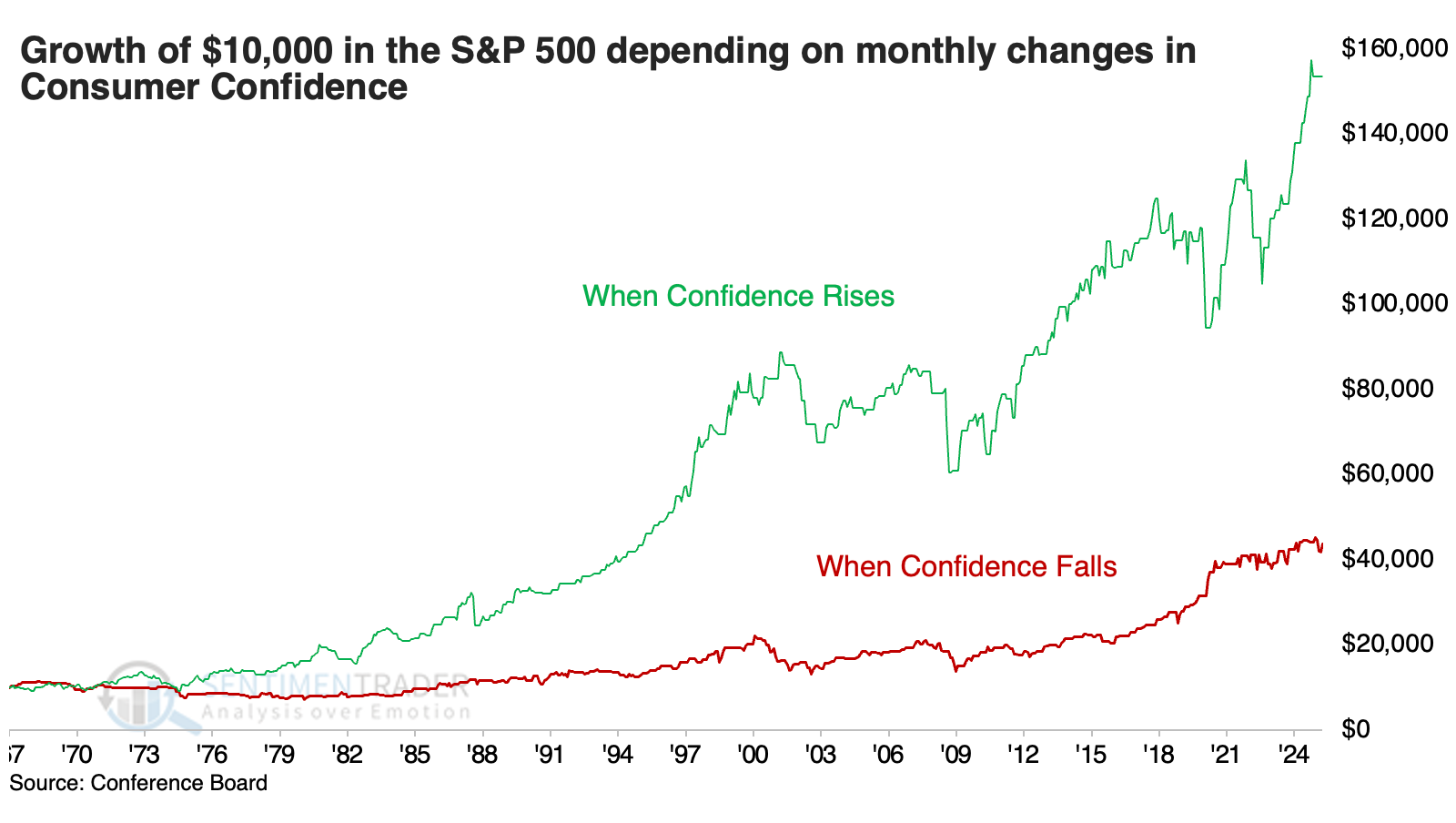
This matters for investors. When Confidence rises, meaning that it's higher this month than last, the S&P 500's next-month return tends to vastly outperform the alternative. Since 1967, when Confidence rose, $10,000 turned into $153,536. When Confidence declined, $10,000 turned into only $43,840.
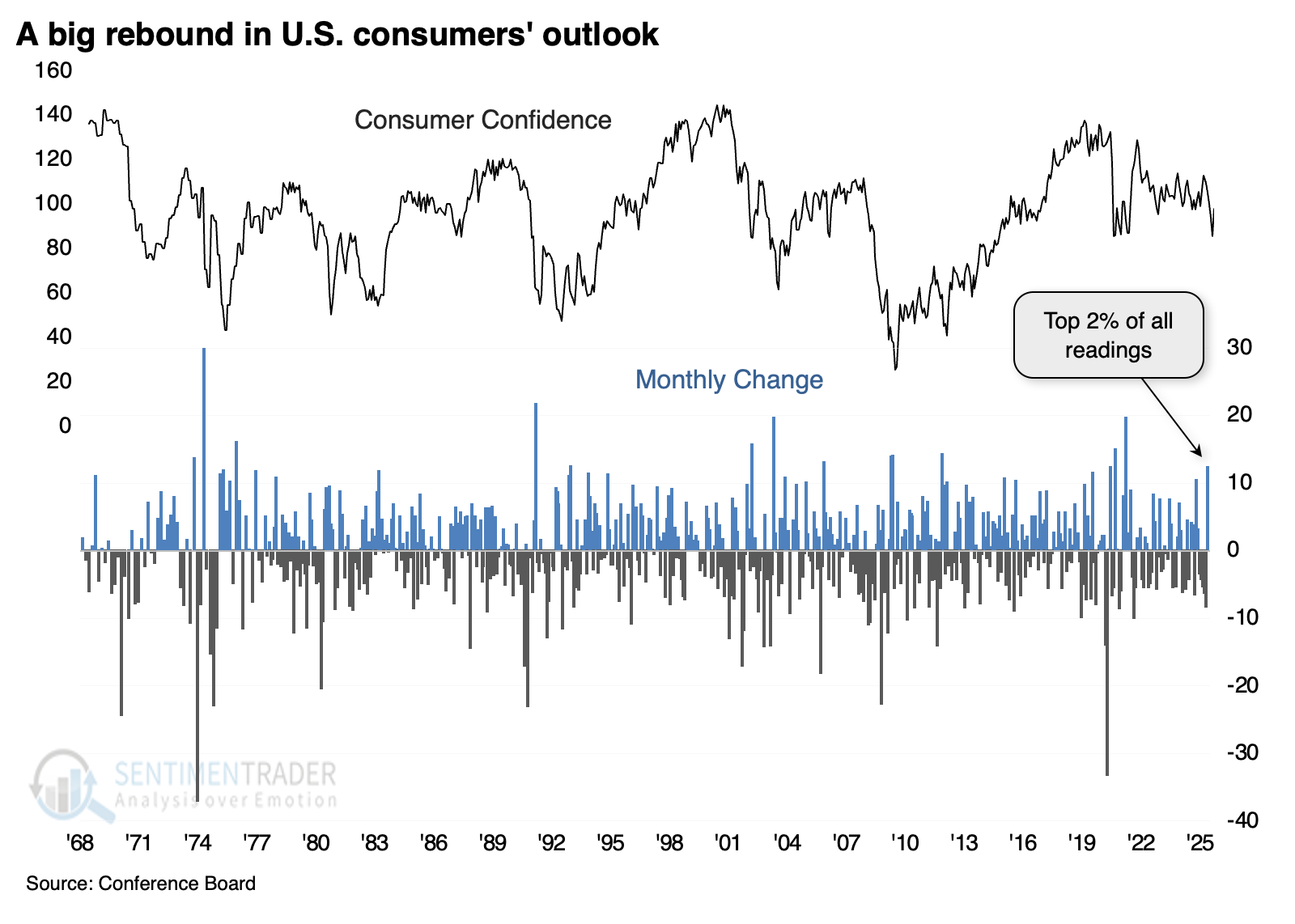
That should be a good sign, since the latest reading showed a significant jump in Confidence. The current month's rise ranks in the top 2% of all monthly changes over the past 58 years.
Rising confidence has been a good sign for stocks
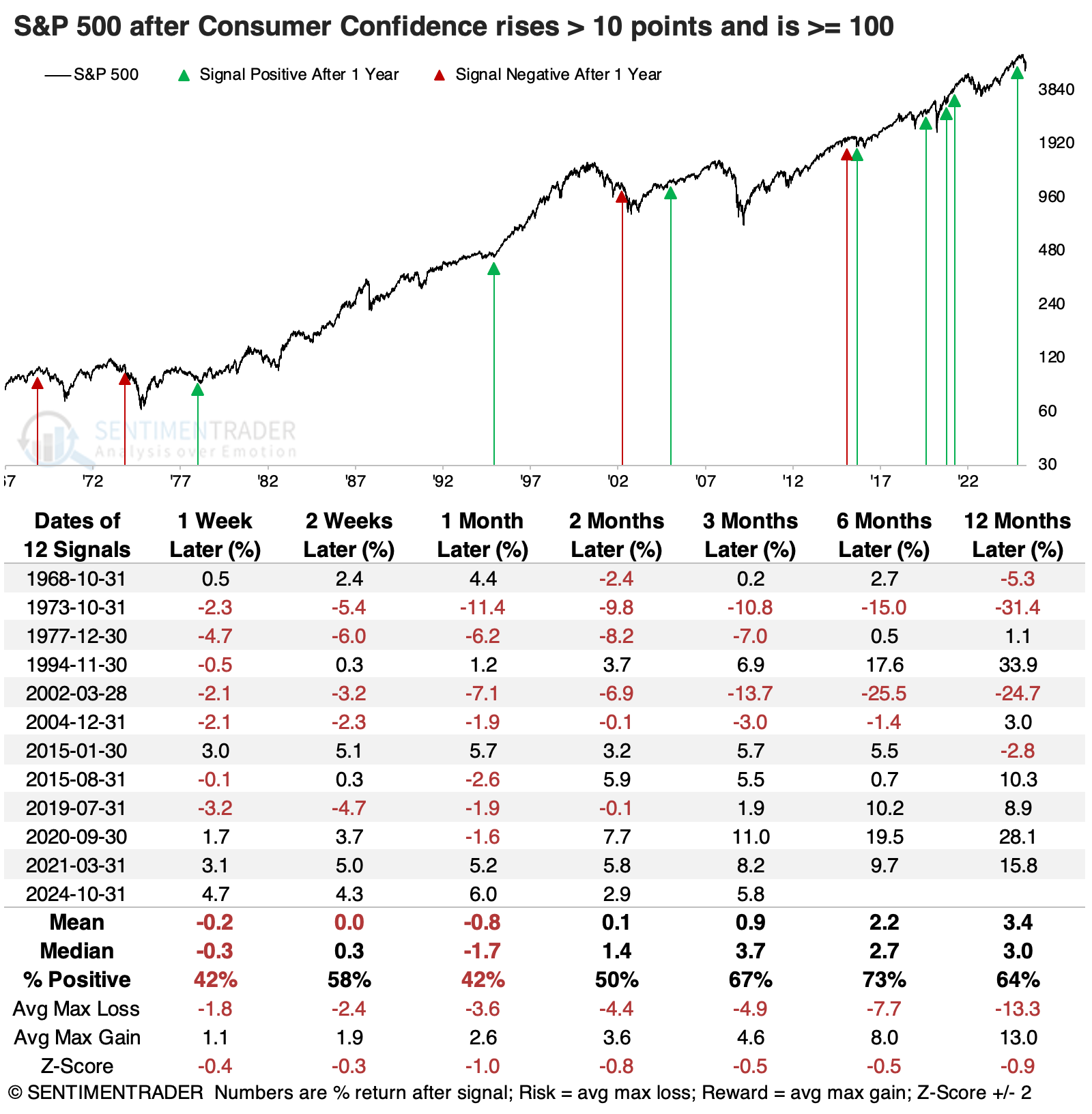
The table below shows that when Confidence rises more than ten points in a month and remained below 100, the S&P 500's returns in the months ahead were excellent. It suffered only two losses over the following two months, and the reward was significantly larger than the risk. Within the following year, the S&P suffered more than a -10% drawdown only twice, while gaining more than +10% fourteen times.
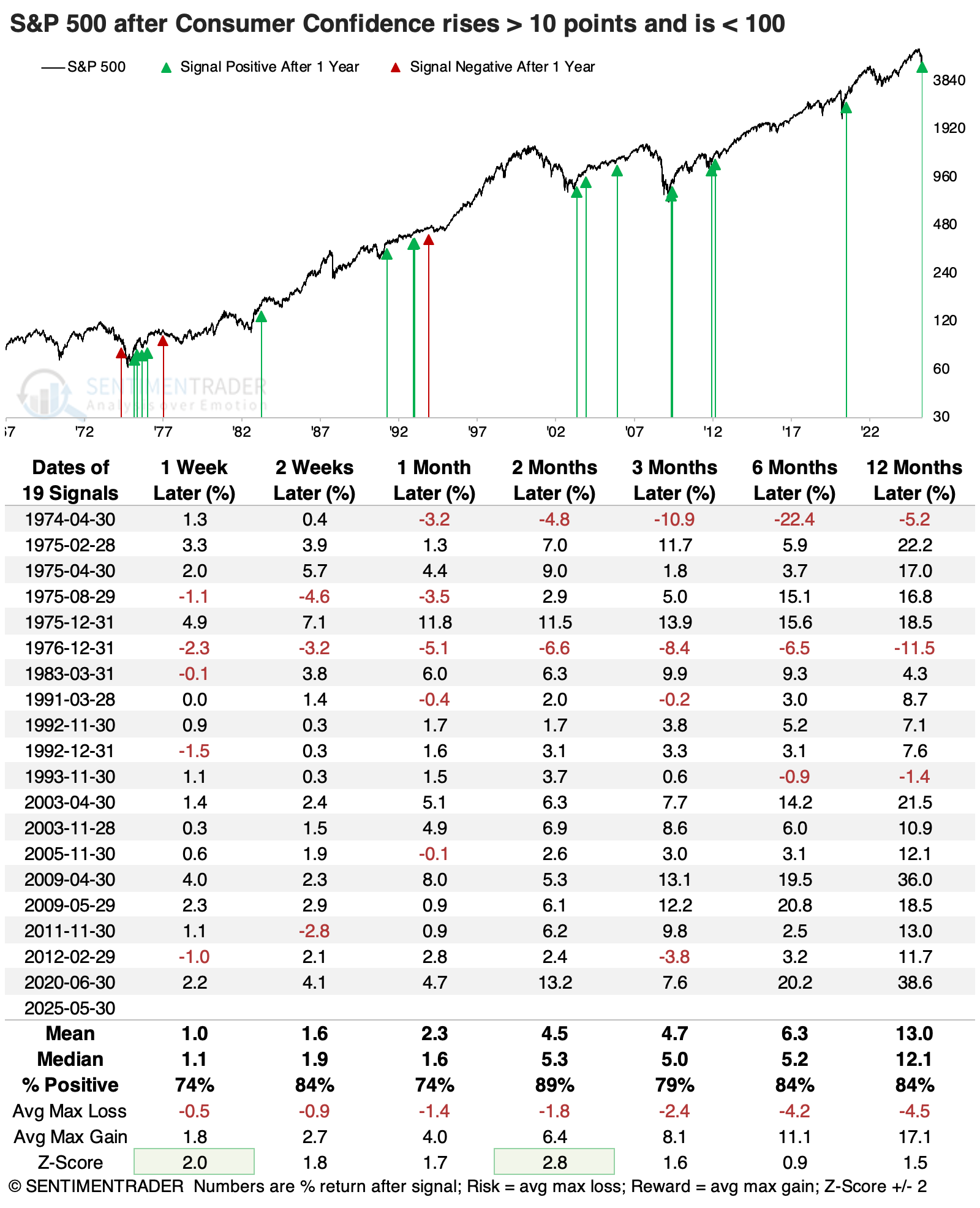
The fact that Confidence jumped when it was still somewhat depressed is a positive sign. When there was a big monthly jump and the reading was over 100, future returns were significantly less favorable.
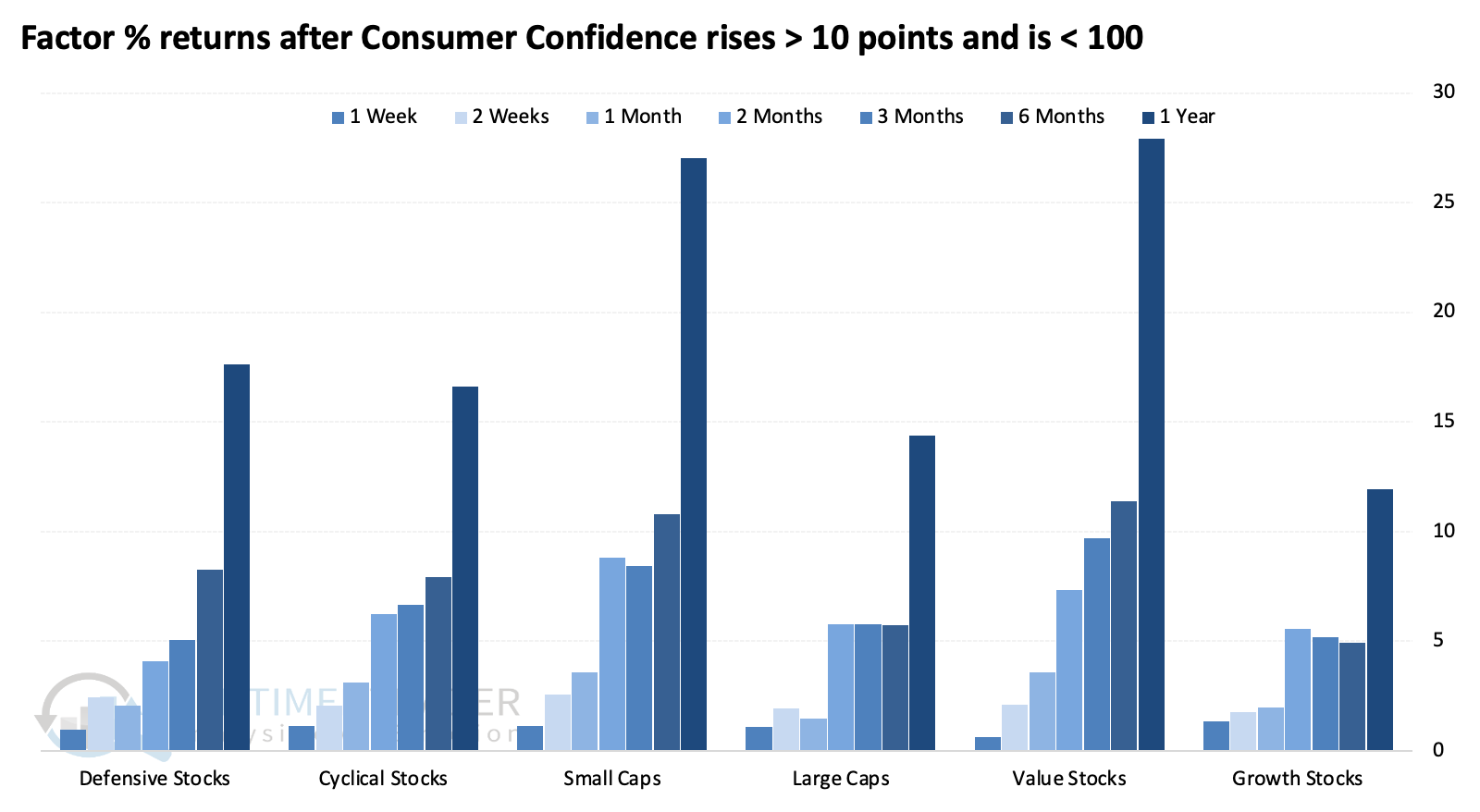
The rise in Confidence showed a large jump in the one-year average return for small-cap and value stocks, averaging returns exceeding +25%.
They now expect stocks to rise
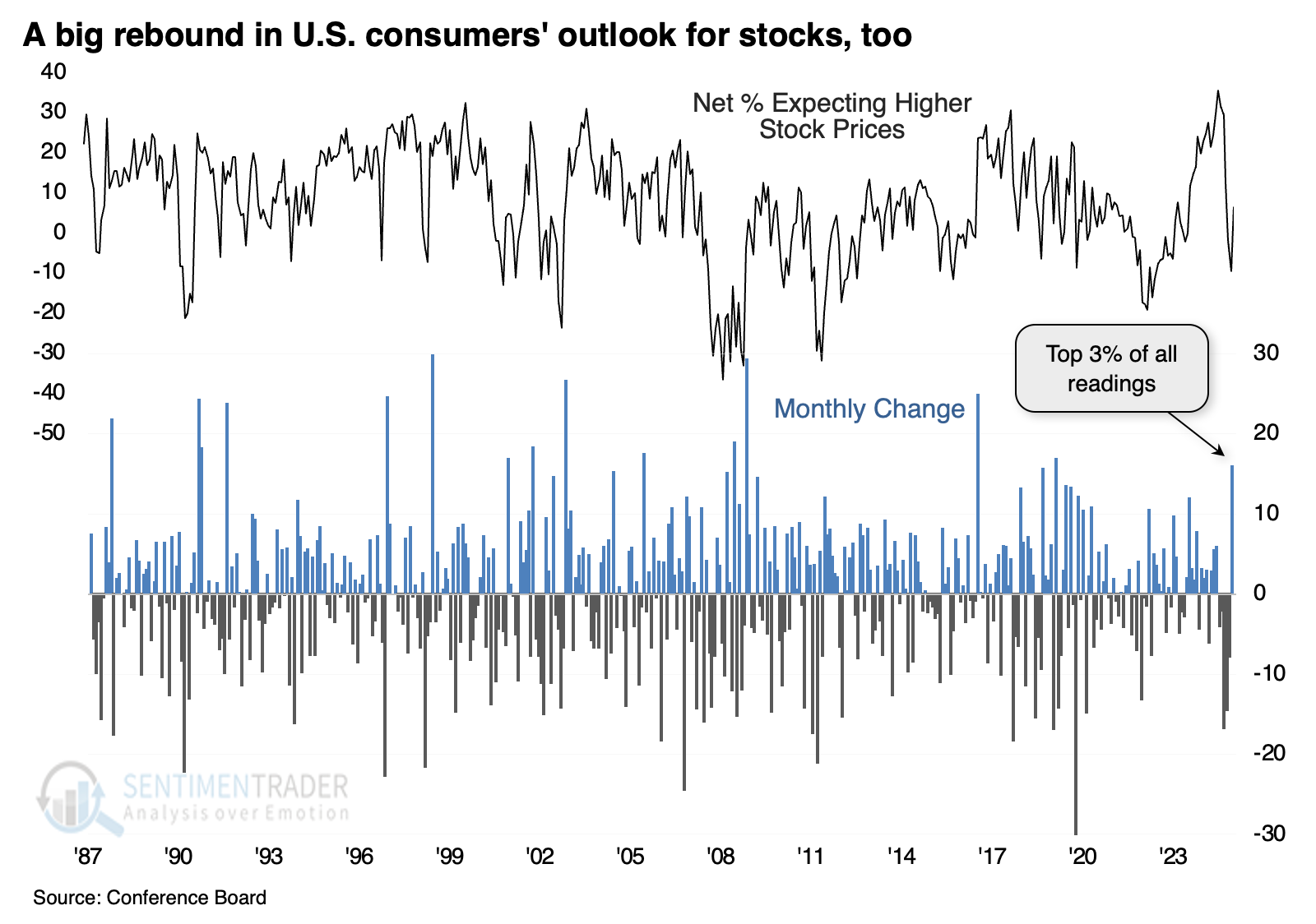
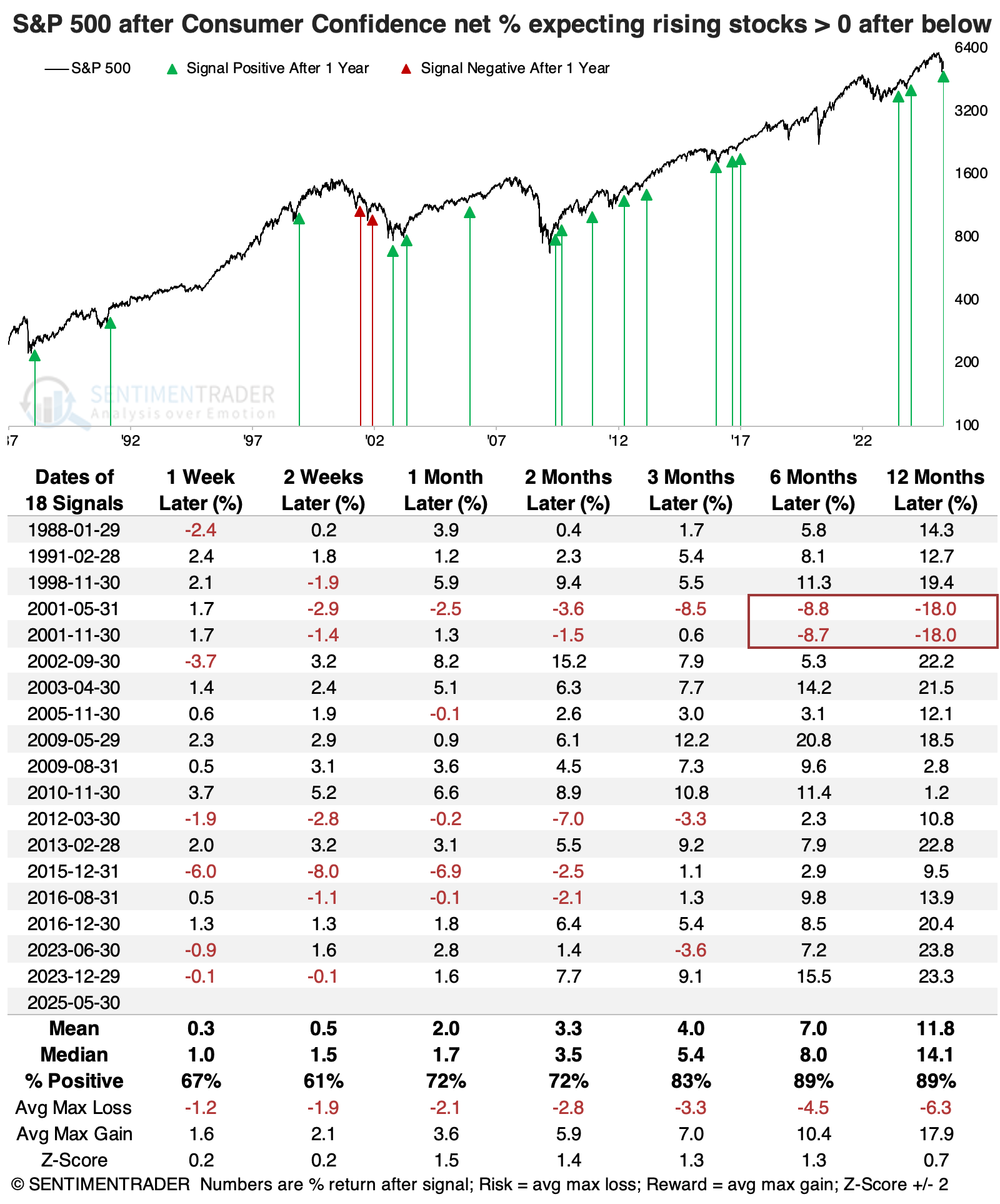
Consumers also quickly adjusted their expectations for the stock market, with one of the biggest jumps in the percentage of people expecting prices to rise rather than fall.
Contrarians like to think everything is a contrarian sign, but that hasn't been the case most of the time with big jumps in expectations. It most definitely was in 2001 and 2008, with horrid losses in the months ahead. Outside of those two bear markets, returns were universally positive.
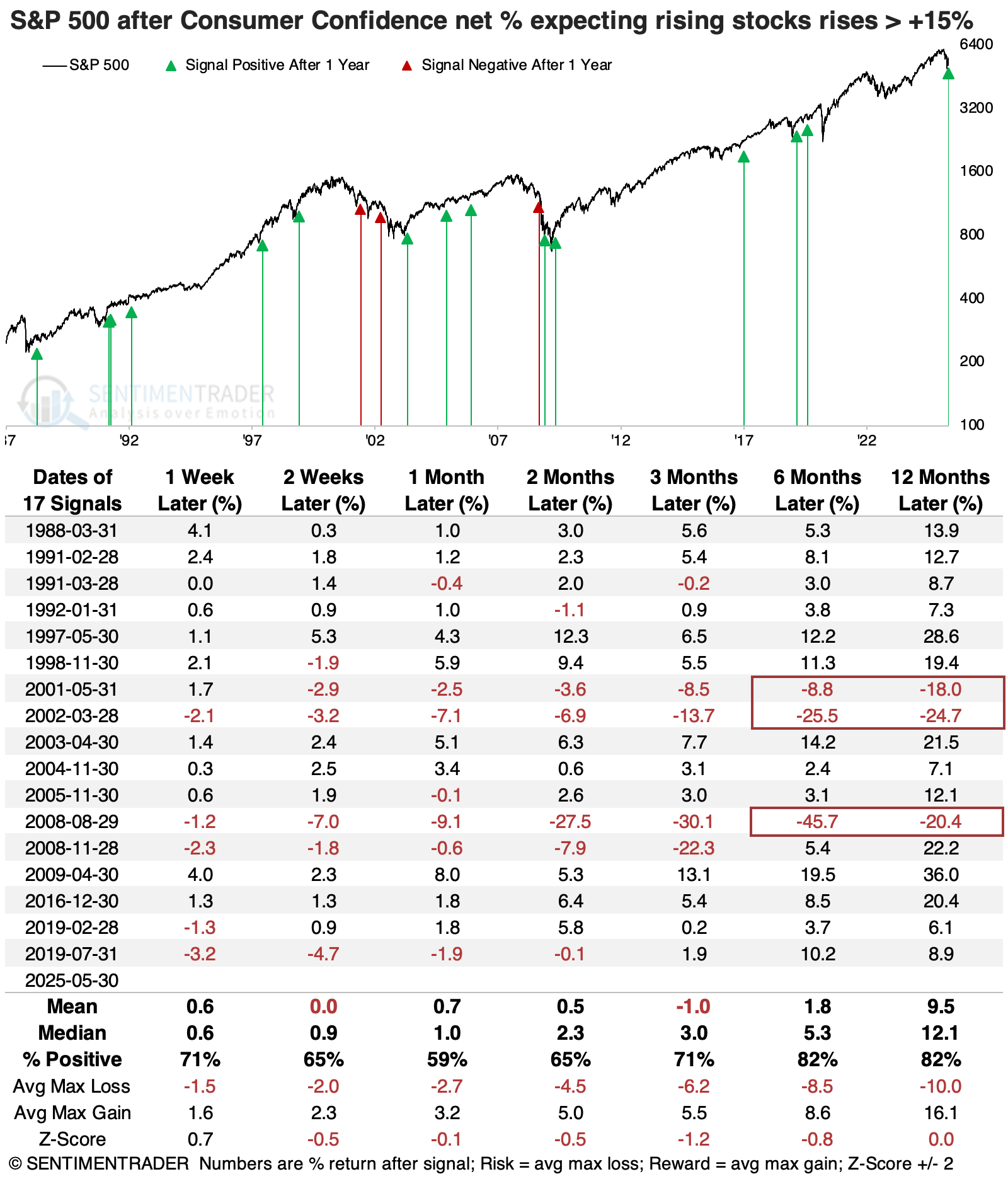
It was the same situation when we look for times when expectations turned positive after two or more months of investors expecting stocks to decline. The only losses over the following six to twelve months were in 2001.
What the research tells us...
Bull markets need investors to become more optimistic. Contarians generally dislike seeing a rising number of bulls, but optimism is needed when submitting buy orders. The more optimistic investors are, the more willing they are to push the button. Most surveys show only moderate levels of optimism, especially broader surveys that poll consumers, not just investors. The fact that optimism is rising in these surveys has historically been a good sign for stocks, especially from moderate readings.