
Canada triggers an optimism index sell signal

Key points:
- The optimism index for the Canadian ETF (EWC) reversed lower relative to its recent range
- The long-term trend for the ETF shows a declining 200-day moving average
- Canada has fallen 69% of the time over the next 2 months after other signals
Using the optimism index to identify bearish sentiment reversals in downtrends
A trading model that uses the Optix Index to identify when sentiment reverses from a period of optimism issued a sell signal for the Canadian ETF (EWC) at the close of trading on 6/14/22.
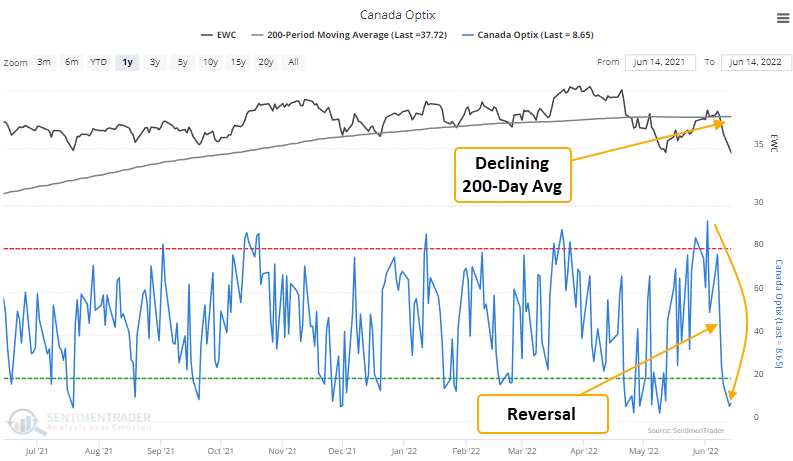
Sentiment signals work best when they reverse from an extreme
The model applies a 42-day range rank to the 10-day moving average of the Optimism Index for the Canadian ETF (EWC). As a reminder, the range rank indicator measures the current value relative to all other values over a lookback period. 100 is the highest, and 0 is the lowest. An optimistic reset condition occurs when the range rank for the Optix Index crosses above the 99th percentile. A new sell signal triggers when the range rank crosses below the 58th percentile. Within five days of the cross, the 5-day rate of change for the EWC ETF must be <= -2.5% and the 200-day moving average must be sloping downward. I use one final condition to avoid signals after a significant decline. Once the 252-day rate of change for the ETF crosses below -31%, an alert cannot occur again until the ETF closes at a new high.
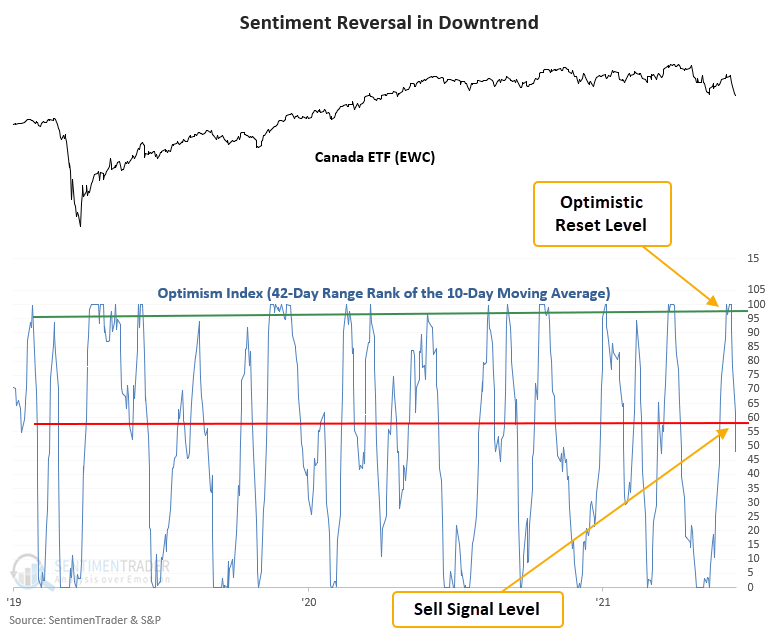
The Canadian ETF (EWC) has fallen 69% of the time after other signals
This model generated a sell signal 16 times over the past 24 years. After the others, the Canadian ETF's future returns, win rates, and risk/reward profiles look unfavorable across all time frames. The signal shows a negative return at some point in the first 2 months in 14 out of 16 instances.
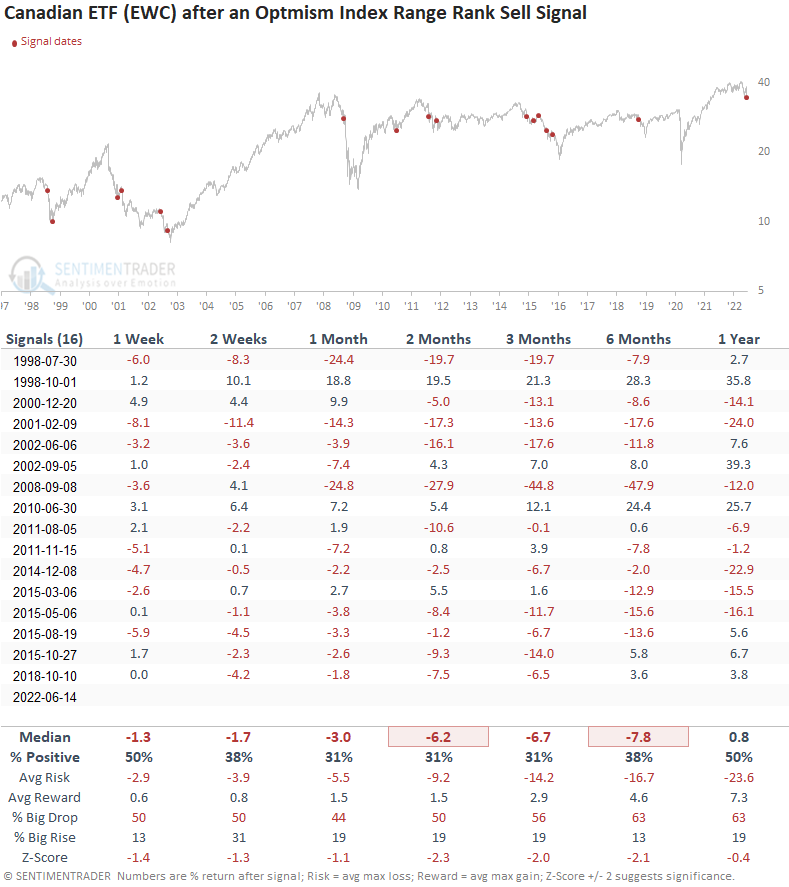
What the research tells us...
When the optimism index reverses from its recent range within an established downtrend, it signals that traders have become more pessimistic about the future direction of stocks. Using the Optix index to measure that change in sentiment, similar setups to what we're seeing now have preceded falling prices for the EWC ETF across almost all time frames.
Country ETFs like Canada, with a heavy weighting toward natural resources, have outperformed the S&P 500 on a YTD basis by a wide margin. I've shared several notes highlighting buy signals in the energy sector, with the most recent alert coming last week. So, I'm treating the sell signal from Canada as a friendly reminder that eventually, everything succumbs to the pressure of a bear market. Remember, energy stocks peaked 6 months after the S&P 500 in the 2007-08 bear market.