
Calmer Waters Prevail

Key points
- Implied volatility has significantly retreated, with the VIX falling below the critical 20 threshold, signaling a return to a "calm" market environment.
- Historically, the S&P 500 delivers exceptionally strong forward returns when the VIX is below 20 and the index is trading at least 2% above its 200-day moving average.
- A rare VIX Range Rank reversal buy signal has triggered. While historical win rates are high, the aggressive nature of the recent V-shaped rally suggests some near-term upside may already be priced in.
The return of calm conditions
Investors don't like uncertainty. Uncertainty breeds volatility, and elevated volatility increases the probability of seeing deep drawdowns on account statements. Conversely, when market conditions are calm, institutions and retail traders alike are far more likely to deploy capital.
Implied volatility fell below 20 last week, confirming a transition back into a calm environment.
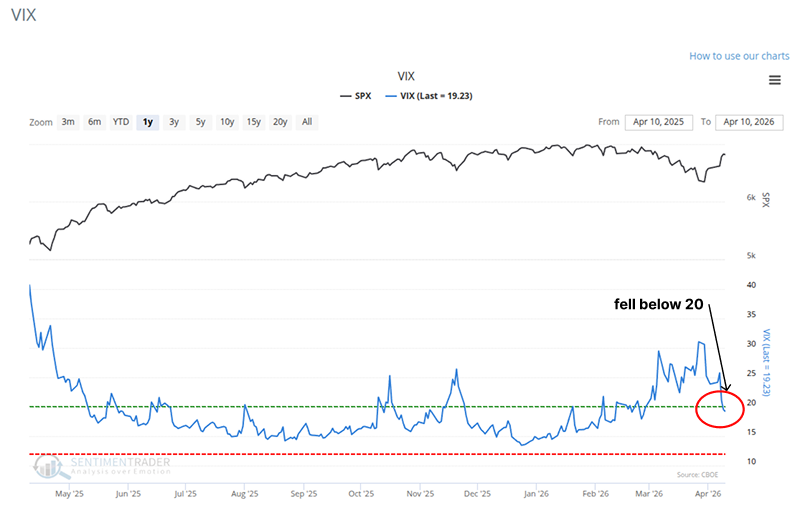
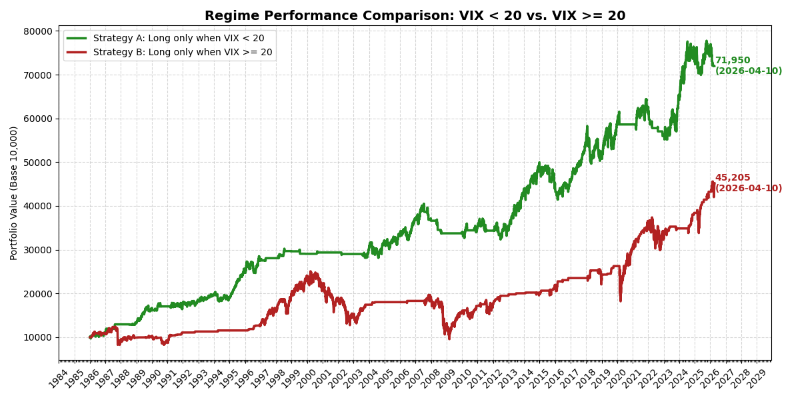
The chart below provides clear evidence of this dynamic. When the VIX "fear gauge" is sitting below 20, the S&P 500 has historically fared much better on a next-day return basis compared to when the VIX is elevated. In fact, during these periods of low volatility, total returns are more than 1.5 times higher than usual.
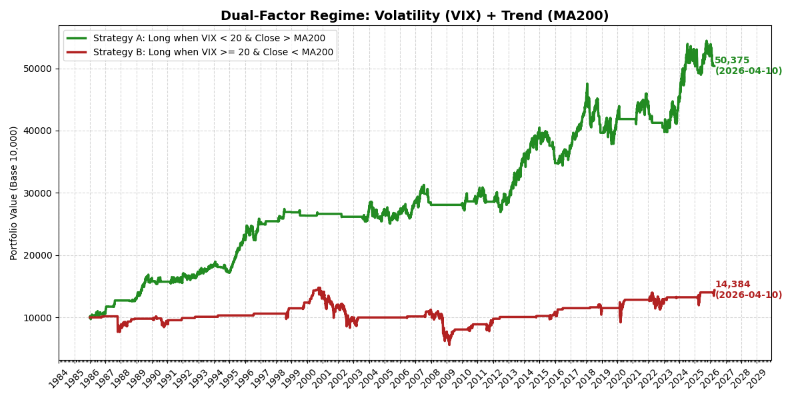
This should provide significant relief to investors, as the VIX has finally closed below 20. Not only that, but the S&P 500 has simultaneously climbed back above its 200-day moving average. While waiting for both conditions reduced overall returns, if neither condition was in force - meaning the VIX was above 20 and the S&P was below its 200-day average - it proved a disastrous time to be an investor.
Trend matters
When a streak of VIX prints above 20 finally ends, and the S&P 500 is concurrently trading at least 2% above its long-term average, forward returns improve dramatically. To be fair, there have still been some notable failures-this specific setup was triggered during the initial stages of the 2001-02, 2008, and 2022 bear markets.
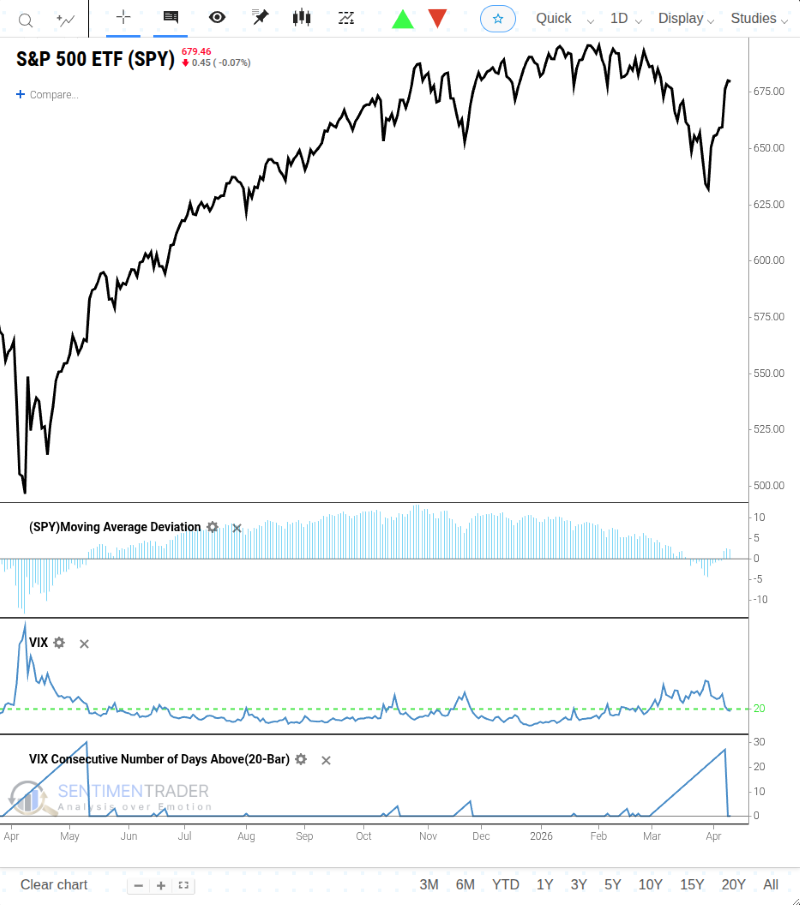
When the S&P 500 successfully pushes at least 2% above its 200-day moving average, it indicates that buyers have sufficient conviction to drive prices significantly above the long-term trend.
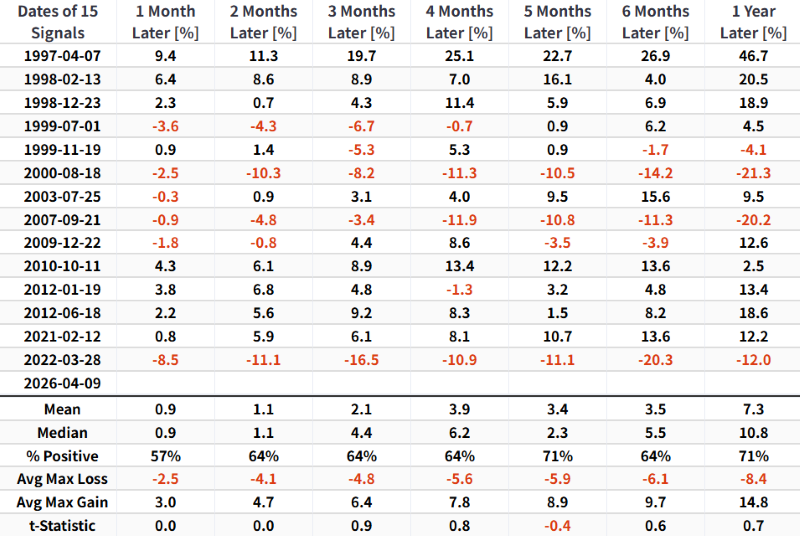
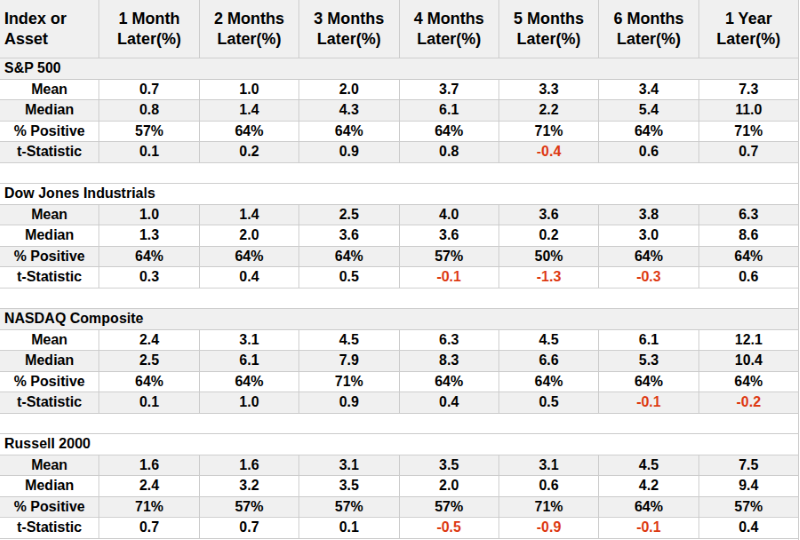
Running this test and clicking the "Major Indices" tab reveals the forward performance of other key equity benchmarks after the signal triggers. Among the majors, the Dow Jones Industrial Average matched or slightly outperformed the S&P 500. Unsurprisingly, the higher-beta Nasdaq Composite experienced wider price swings and deeper drawdowns.
VIX Range Rank Reversal Buy Signal
The VIX Range Rank signal seeks to identify historical instances where the 4-month range rank for the VIX violently reverses from a period of high volatility to low volatility. The quantitative model issues an alert based on the following strict parameters:
Signal Criteria
- Condition 1 = 4-month range rank crosses above 99.9
- Condition 2 = 4-month range rank crosses below 40
- Condition 3 = If Condition 2 is met, start counting the days since true
- Condition 4 = If days since true <= 10, and the SPY 5-day rate of change is > 0%, then trigger a buy.
Let's take a look at the historical charts and the resulting forward performance of this signal.
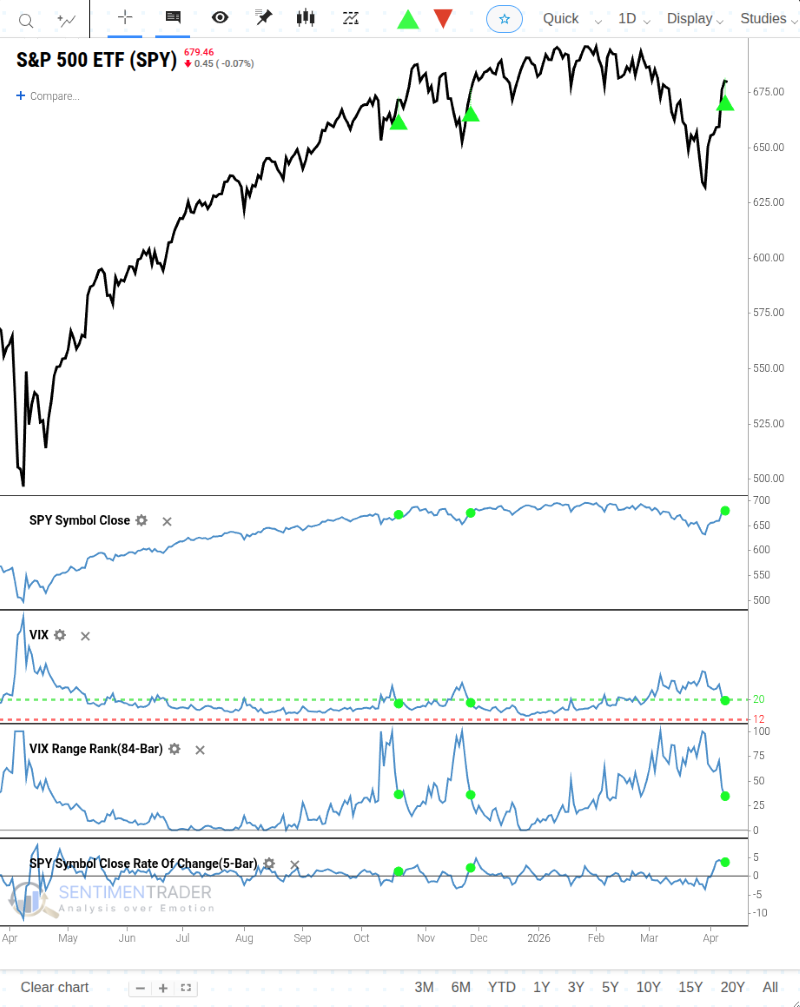
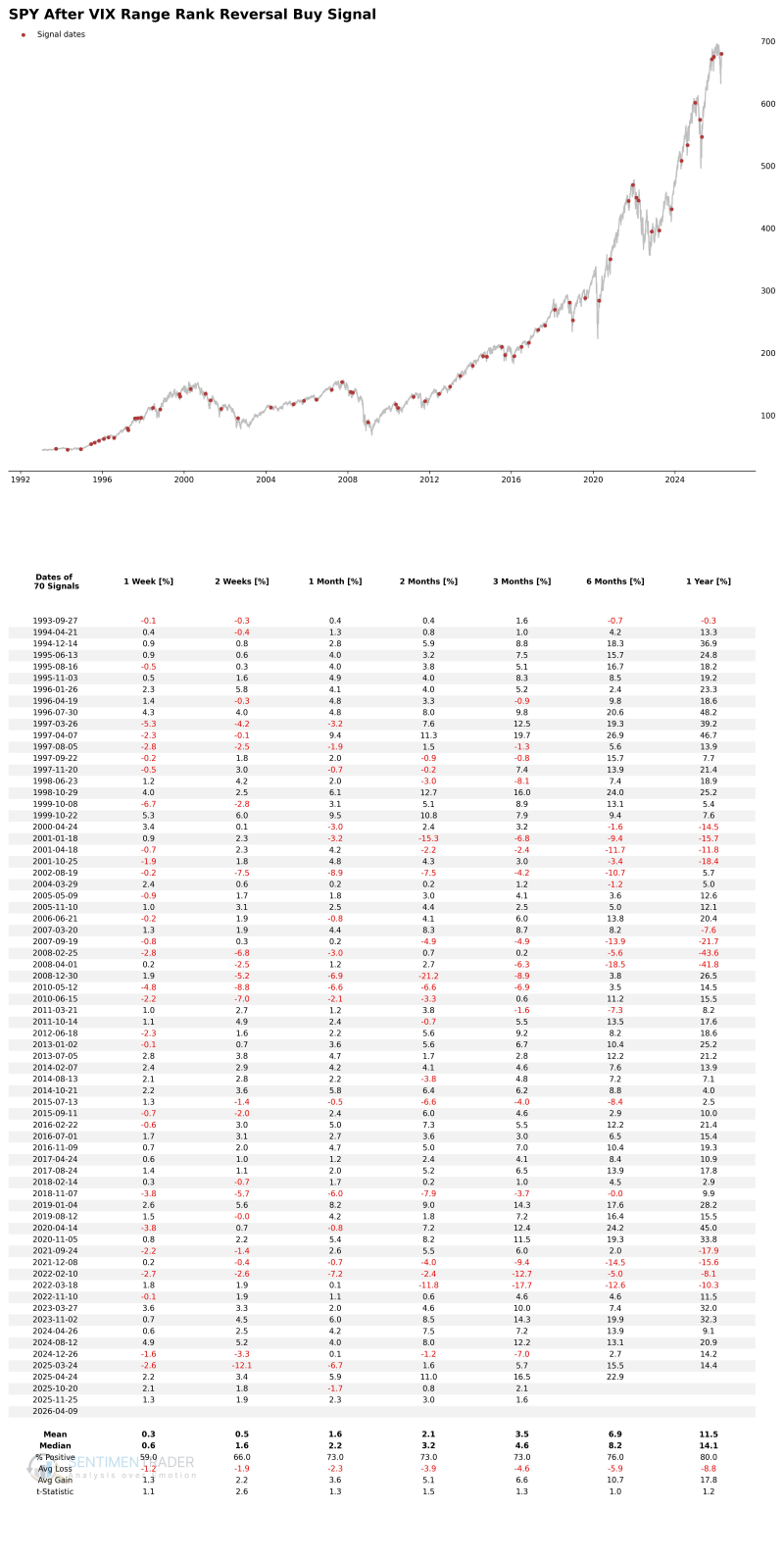
The performance results look incredibly solid. The most recent signal triggered last November, initially posting a 2.3% gain over the first month before broader price action softened. Similar to the current technical setup, that prior signal emerged just after the S&P 500 had staged a sharp "V-shaped" rally. We expect forward performance may not be quite as robust this time around; because the current V-shaped bounce has been even more aggressive, the market has likely already pulled forward a significant portion of the near-term upside.
What the research tells us...
The rapid unwind in implied vol (VIX < 20) marks a definitive regime shift. When you pair this volatility reset with the S&P successfully defending its 200-day, forward returns historically skew heavily to the upside. The VIX Range Rank model has officially flashed a buy signal, confirming the transition from panic to calm. However, traders should temper immediate expectations: given the sheer velocity of the recent V-shaped recovery, a brief period of consolidation wouldn't be unusual as the market digests the recent gains before moving structurally higher.
"We do not provide investment advice. Our goal is always to find some practical angle, but what you do with the research is up to you. By no means is it ever suggested that you make a trade or investment based on a single reference; we consider our research to be only one part of what should be a comprehensive investment philosophy that includes fundamental and technical data."