
Bullish markets break records

Key points:
- The S&P 500 registered its sixth straight record close on Monday
- Similar persistence saw the index rally 80% of the time from three to twelve months later
- Cyclical sectors tended to outperform the broad market in the initial three months
An impressive win streak
Stocks continue their relentless rally off the April lows, with an increasing number of indexes breaking out to new highs. Given the market's substantial advance, investors now wonder-do record highs alone justify taking profits?
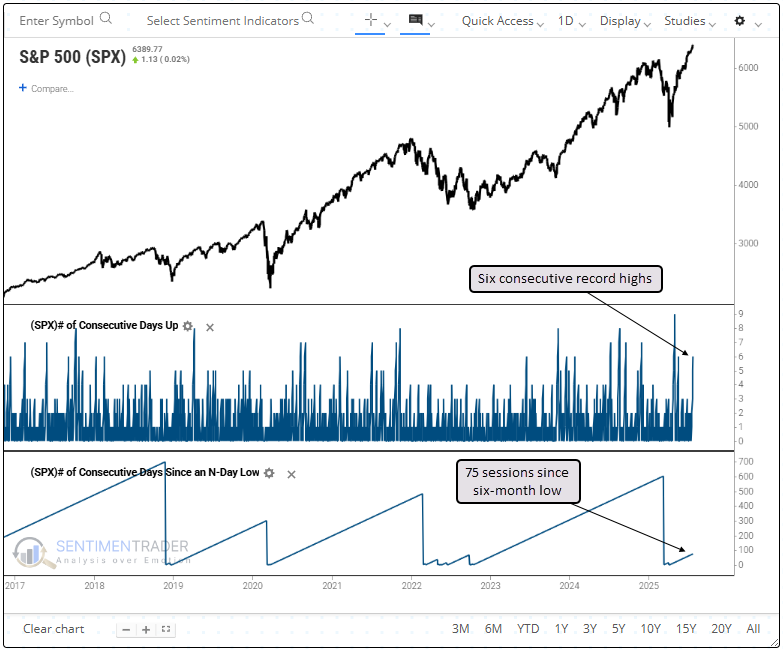
On Monday, the world's most benchmarked index notched its sixth consecutive record high, completing the second-fastest rebound from a six-month low to this many all-time highs, trailing only 1961.
Consistent returns
Whenever the S&P 500 logged six consecutive record highs for the first time following a six-month low, the world's most benchmarked index showed strong persistence, with solid returns over the next three to twelve months. The only major exception was in 1972, though it's worth noting that those record highs occurred long after the six-month low.
Given the initial month's coin-flip performance, it's worth noting that we're moving into a time of year that's typically sluggish.
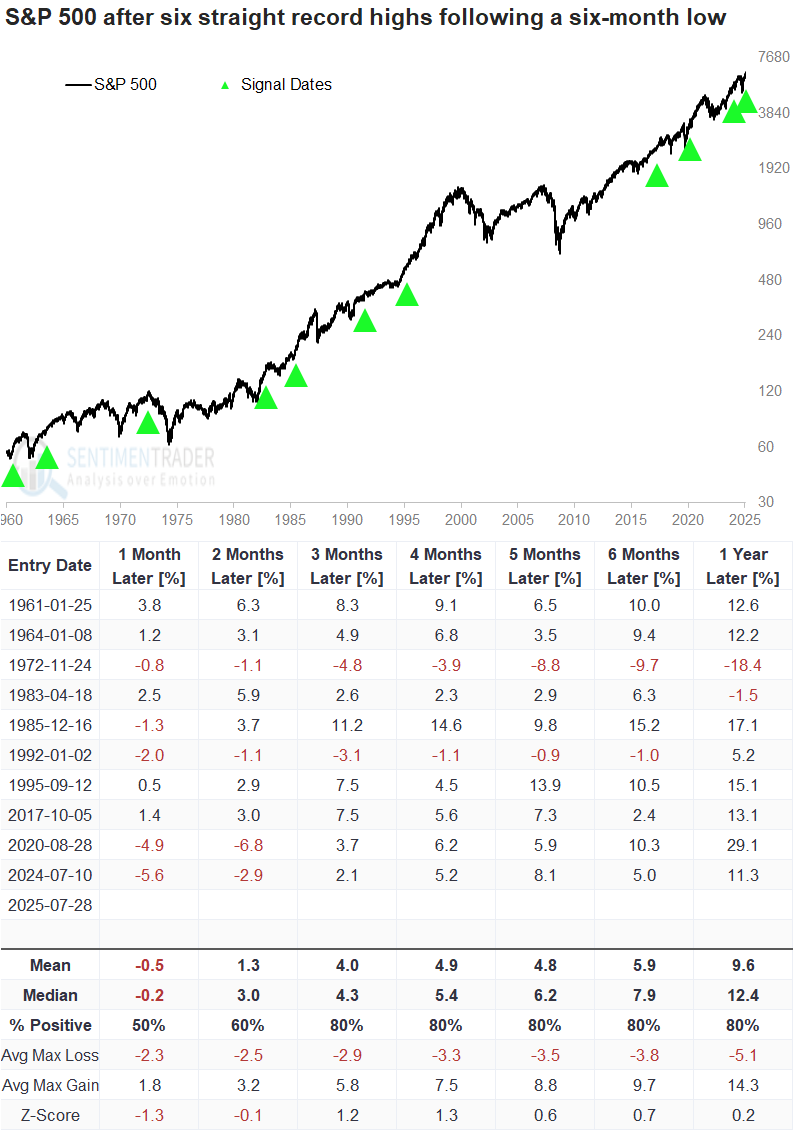
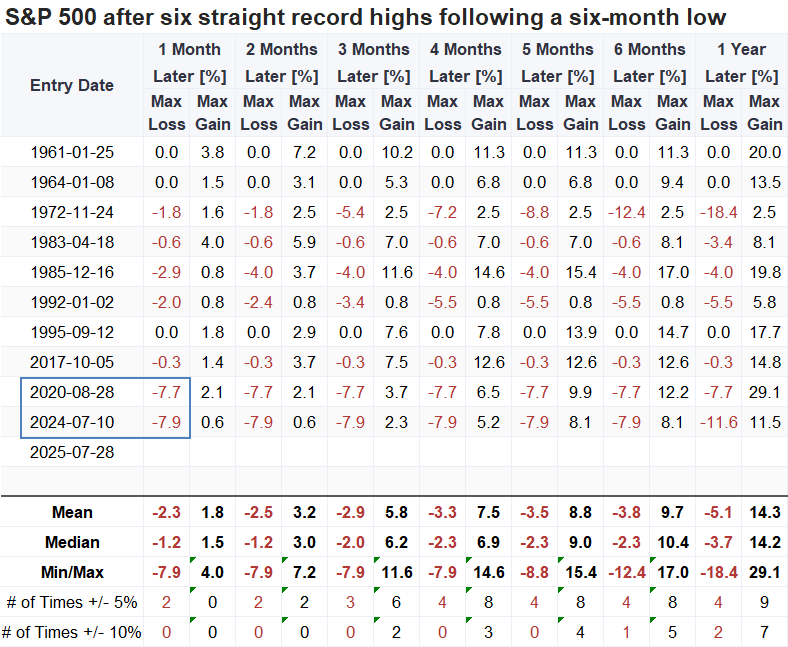
The S&P 500 was more likely to rally 10% over the subsequent year rather than decline by that amount. However, note that the last two signals occurred in July and August, during a seasonal window prone to market hesitation, and preceded declines of just over 7%.
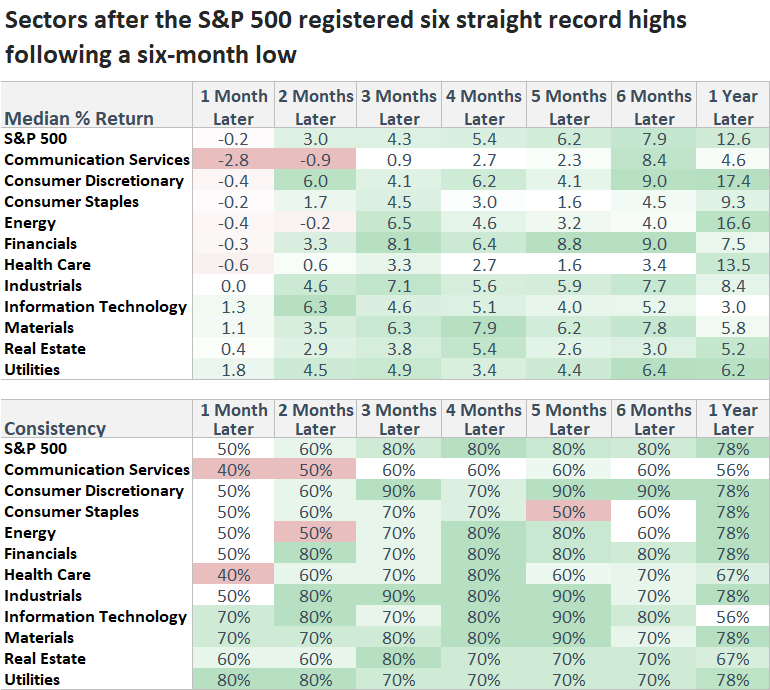
The persistence in record highs typically signaled a momentum-driven market, initially favoring cyclical sectors, outperforming the broader market over the first three months. However, most of that relative strength began to fade by the fourth month, except in consumer discretionary.
Cyclical relative strength persists
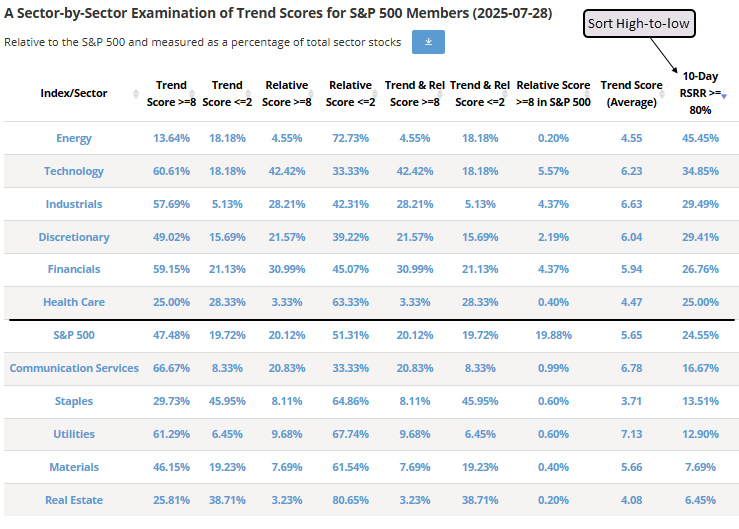
Record highs typically favor cyclical sector outperformance over the medium term, so it's worth examining whether that historical tendency aligns with current trends. Encouragingly, cyclical groups show relative leadership, even over a short time frame, like 10 sessions.
What the research tells us...
The S&P 500 has been on a tear, notching its sixth consecutive record high on Monday, a notable feat that comes on the heels of a six-month low as recently as April. Historically, this persistence following a significant low has boded well for equities, with the index going on to rally over the medium to long term roughly 80% of the time, initially led by cyclicals. A pause or consolidation phase wouldn't be unusual in the near term, especially as the market enters a seasonally dull stretch that has often lacked strong directional bias.