
Big Money gets even more bearish

Key points:
- The latest survey of large money managers by Barron's showed another drop in sentiment
- The percentage of bears jumped to the 2nd-highest level in the history of the survey
- While considered "smart money," the poll tends to have a modest contrary history
Big Money becomes even more bearish
Many contrary indicators are showing some of the most depressed sentiment in 20 years or more. There are always two sides to the coin; while others are selling, some intrepid (or foolhardy) souls are doing the opposite.
At extremes, the two groups tend to be diametrically opposed to each other, and there are compelling signs that we've been seeing that, with Smart Money Confidence pinned above 70% for a month.
Not all "smart money" indicators are showing optimism, though, and not all indicators that we think should be considered smart money genuinely are. One of those is the semi-annual Barron's survey of the Big Money. These are large money managers with hundreds of billions under management. But like we've seen repeatedly over the years, they can collectively suffer group-think just like the rest of us.
The latest survey, which concluded in early October, showed another dip in the percentage of bullish managers minus those who are bearish. It overtook the prior survey to claim infamy as the 2nd-lowest reading in the survey's history.
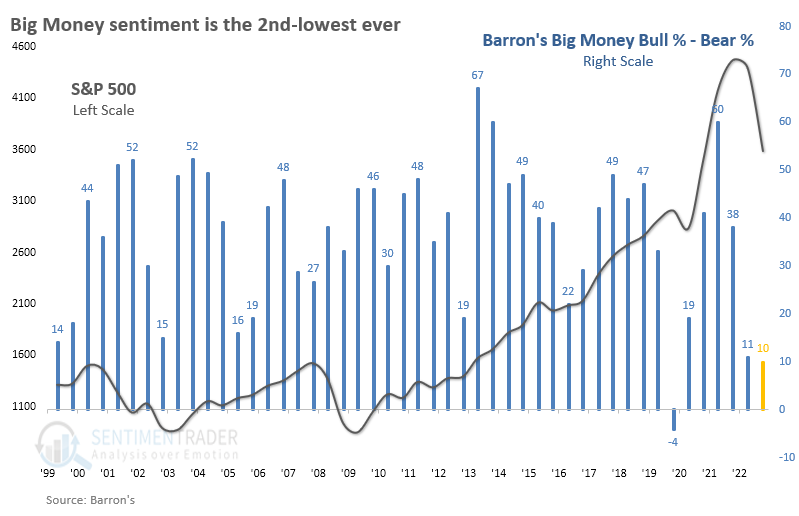
The primary culprit was a surge in bearish managers. The summer decline moved a lot of folks out of the neutral camp, and most of those decided the negative trend was here to stay. The only survey with (slightly) more bears was from the fall of 2019, when 31% of managers expected stocks to fall.
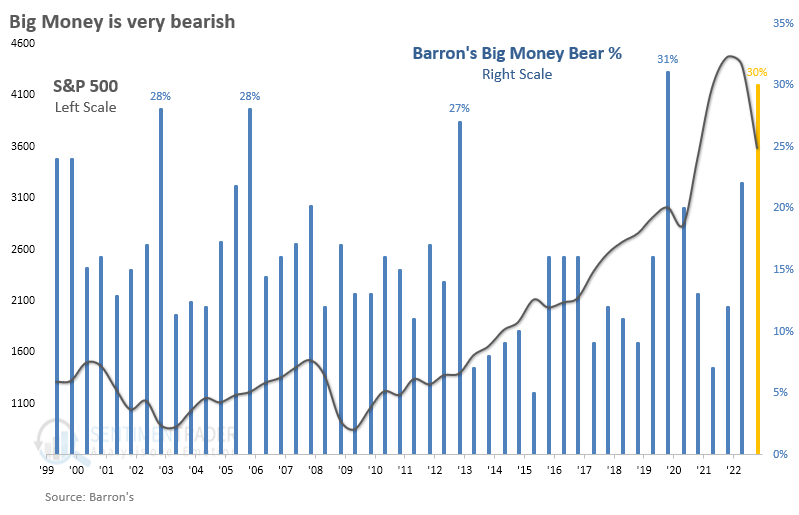
There are few precedents of so many bears, given the tendency for money managers to be optimistic, the twice-yearly nature of the survey, and the inherently limiting function of looking at extremes.
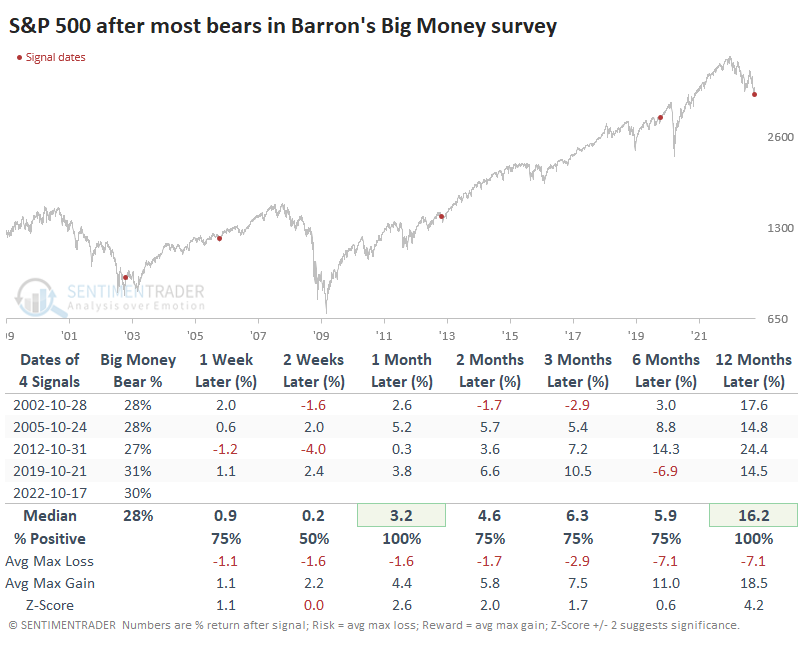
What the research tells us...
If we're cautious because of the continual failure of buyers to show any follow-through, then it's comforting to see that some of the largest and brightest investors in the world agree with us. But they're not perfect, and when they swing to extremes, stocks still tend to do the opposite, or at least not fully realize big money managers' hopes and fears.