
An easing in financial conditions bodes well for stocks

Key points:
- The Goldman Sachs Financial Conditions Index cycled from a one-year high to a three-month low
- Comparable shifts with stocks in an uptrend saw the S&P 500 rise 92% of the time over the next year
- Cyclical sectors led, with technology outperforming the S&P 500 across all time frames
One measure of macroeconomic factors suggests a more favorable environment for stocks
The Goldman Sachs Financial Conditions index, which incorporates a policy rate, a long-term bond yield, a credit spread, a valuation metric, and the dollar, surged to a one-year high during the April stock selloff before reversing to a three-month low, signaling less burdensome macro pressures that are generally more supportive for equities.
This easing in financial conditions reinforces the trends we've been highlighting, namely, improved stock participation and a rebound in investor risk appetite, as seen in sentiment data, which strengthens the argument for a sustainable cyclical advance in stocks.
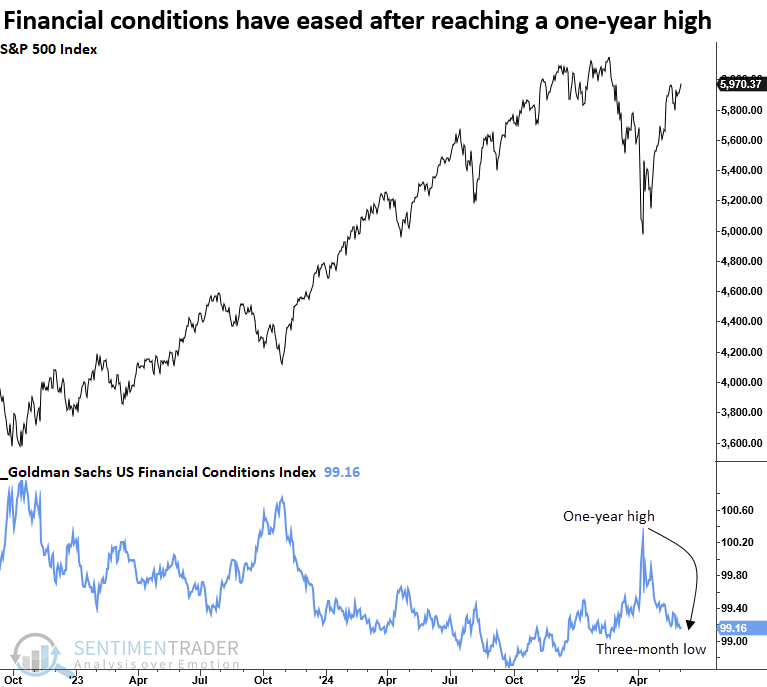
Similar reversals in financial conditions preceded positive gains for stocks
Each time the Goldman Sachs Financial Conditions Index cycled from a one-year high to a three-month low, with the broad market in a long-term uptrend, the S&P 500 rose in all but one case over the subsequent year, with a median gain of 14%.
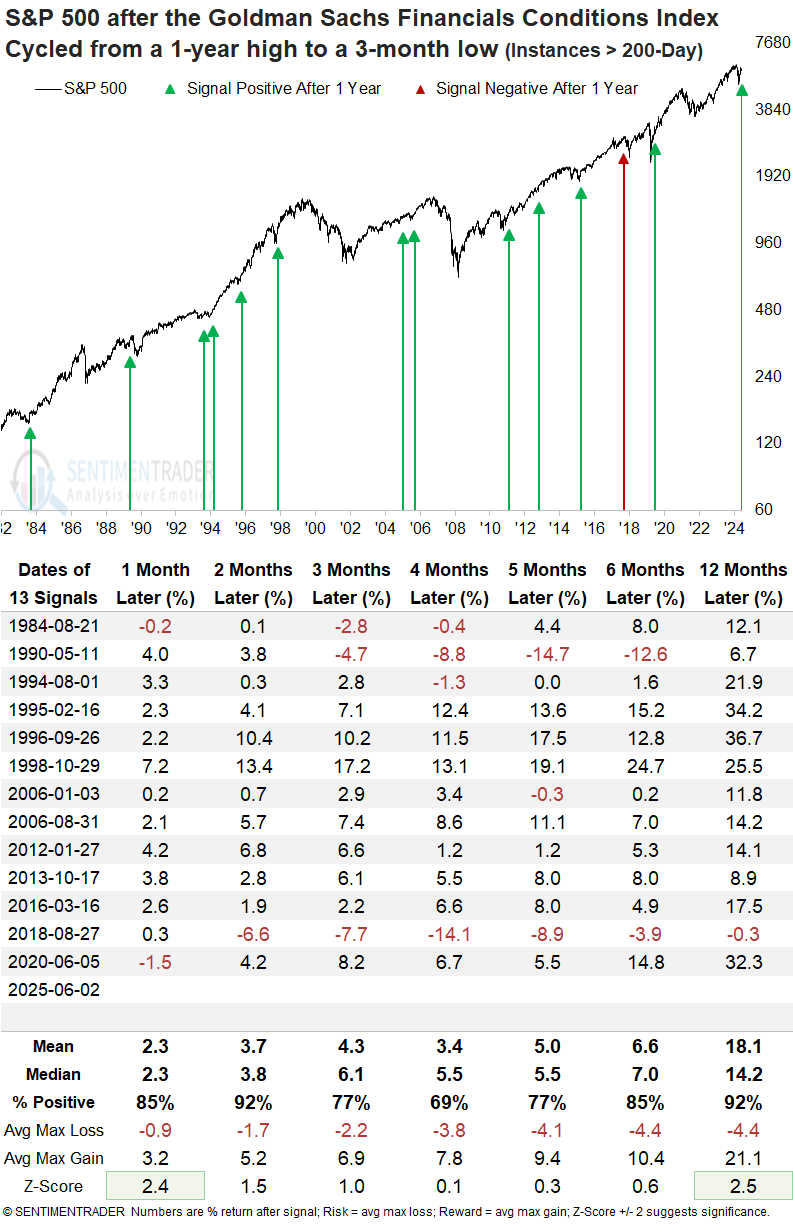
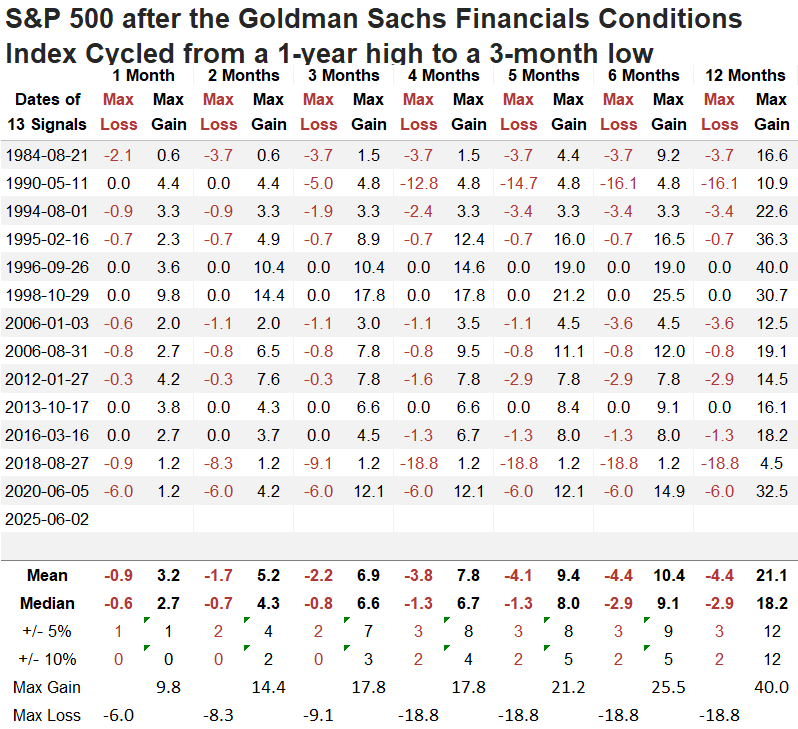
A year later, the S&P 500 declined more than 10% only two times. In contrast, it posted rallies of over 10% in 12 cases, suggesting a favorable risk/reward scenario.
When signals experienced a significant drawdown, such as in 1990 and 2018, the Fed's interest policy couldn't have been more different. In 1990, it had already cut rates five times; in 2018, it hiked them seven times. So, if you're looking for historical analogs, 2018 isn't the best baseline.
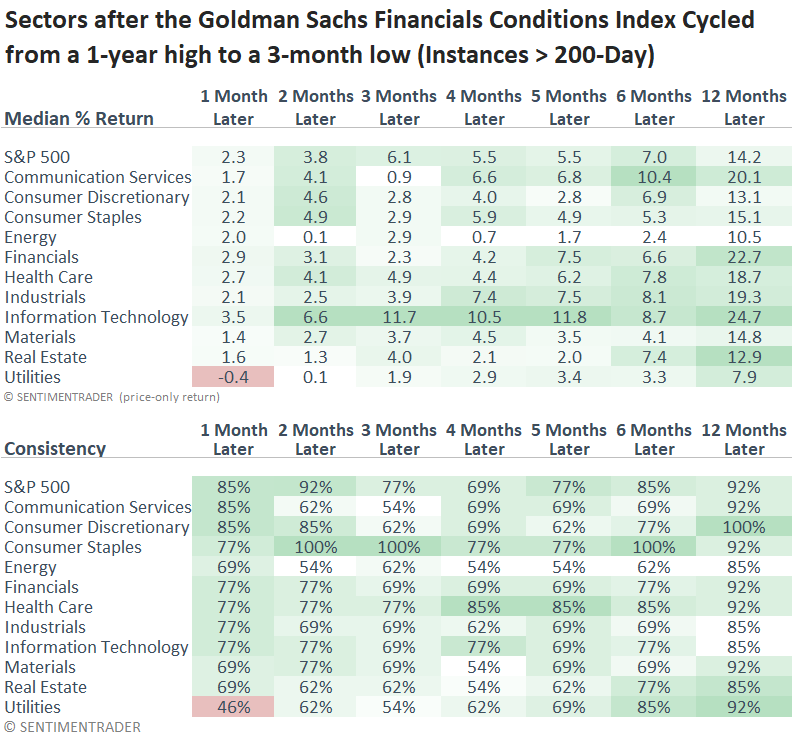
Over the next 12 months, the top-performing sectors were technology and financials, with technology posting gains that exceeded the S&P 500 across all periods.
What does the aggregated evidence indicate?
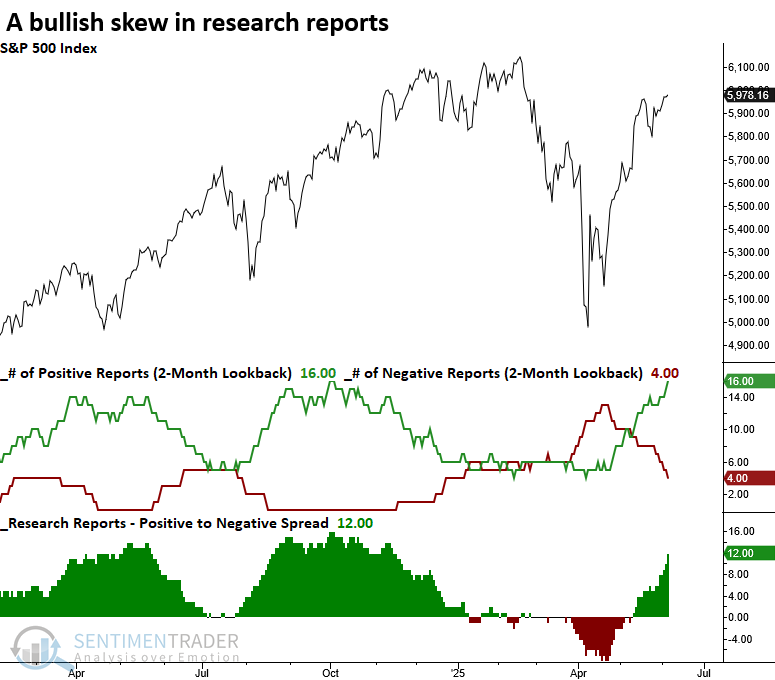
The growing dominance of positive research reports over negative ones is consistent with the behavior of a market in a sustainable uptrend.
What the research tells us...
The Goldman Sachs Financial Conditions Index declined to a three-month low after reaching a one-year high during the February-April market drawdown. This reversal signals a favorable shift in macroeconomic factors, as tighter conditions had previously weighed on risk assets. With financial conditions now less burdensome, the environment is turning more favorable for stocks, potentially providing fuel for further gains.