
A systematic approach to a simple S&P 500 momentum signal

Key points
- The S&P 500 is poised to close the month of March with a higher close for the fifth consecutive month
- Historically, this has been a favorable momentum signal for the broader stock market
- In this piece, we apply a few simple rules to utilize this signal in a systematic manner
Five consecutive up months for the S&P 500 Index
The S&P 500 Index is poised to close the month of March with its fifth consecutive higher monthly close. If we consider overlapping readings, this has happened 118 times since 1922.
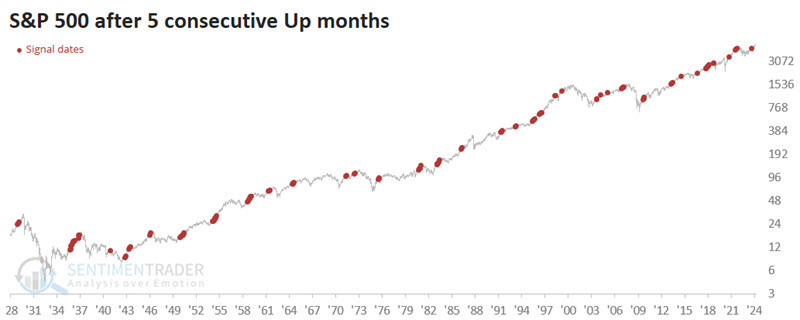

While we don't advocate using this as a standalone trading model, it is interesting to consider the results if we apply systematic rules.
A systematic approach to "5 Up Months."
The trading rules are simple:
- If the S&P 500 closes higher for five straight months, we buy and hold the index for nine months
- If a new signal* occurs within the initial nine months, we extend the holding period another nine months
*Note that if the S&P 500 closes higher, for example, eight months in a row, each new higher close after the initial five-month signal constitutes a "new signal." To spell it out:
- If January through May all closed higher, we would start a nine-month holding period from June through February the following year. If the S&P 500 also closes higher in June, we extend the holding period another month to the end of March of next year, and so on.
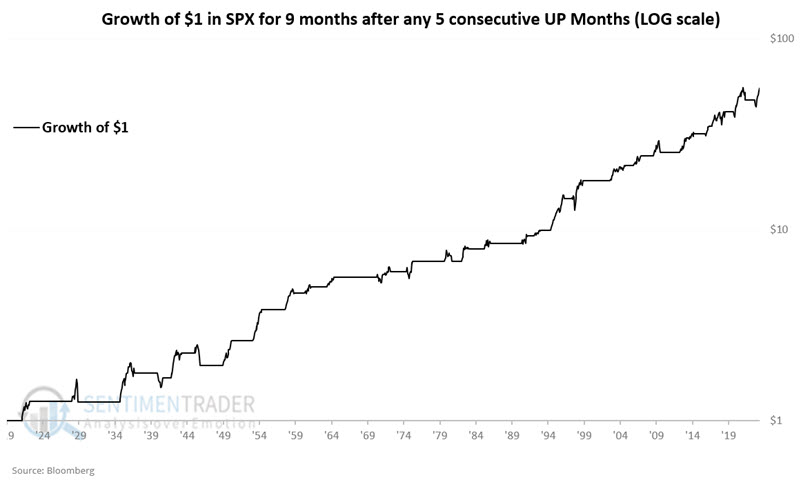
The chart below displays the hypothetical equity curve (using month-end closing prices) for the "strategy" (such as it is) above.
The table below displays trade-by-trade results.
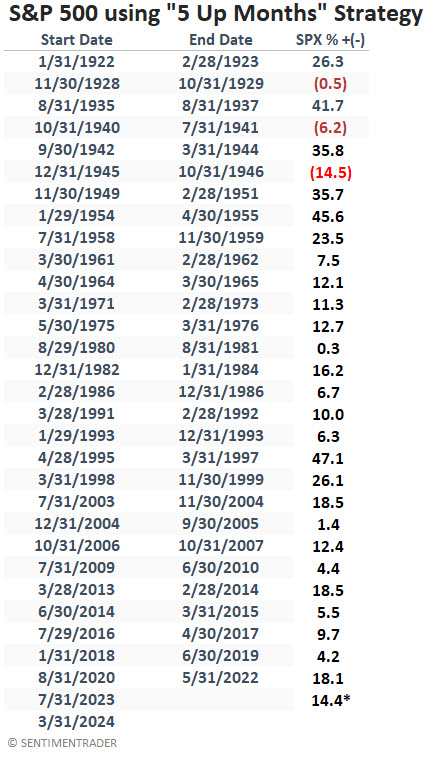
* - SPX up 14.4% from 2023-07-31 through 2024-03-26.
The table below summarizes the results.
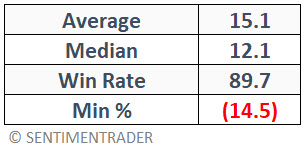
Key things to note include an 89.7$% Win Rate and the fact that the method has not shown a loss since 1945-46. That said, nothing is ever guaranteed to work ad infinitum into the future, and momentum is only one factor in the market.
What the research tells us…
History has long demonstrated that momentum is one of the most critical factors in the stock market. This study is not the "definitive" approach to momentum investing. It is merely just one more brick in the wall. The bottom line is that while investors must always remain vigilant about managing risk, studies like this remind us to give the bullish case the benefit of the doubt (and to ignore subjectively bearish narratives) until the market itself tells us otherwise.