
A substantial drop in a key mortgage rate foreshadows good things for stocks

Key points:
- The average 30-year fixed-rate mortgage dropped by 98 basis points over 52 weeks
- Similar declines in this popular financing vehicle produced stellar returns for the S&P 500 over the next year
- The Consumer Discretionary sector outperformed all other groups, and housing-related industries thrived
Could green shoots emerge following a significant decline in mortgage rates?
Hockey legend Wayne Gretzky is often credited with the following quote: "Skate to where the puck is going to be, not where it has been."
For only the 13th time since 1971, the average 30-year fixed-rate mortgage has dropped over 95 basis points in 52 weeks, setting up a more favorable environment for the housing market. Could this be an early indication of green shoots, where a housing recovery propels economic activity, fueling the next leg higher in the bull market?
As illustrated in the chart below, when the 52-week net change in the average 30-year fixed-rate mortgage falls below -95 basis points, the S&P 500 produces an annualized return of 16%. In contrast, when it increases above 95 basis points, the world's most benchmarked index declines at a -2.4% annualized rate.
The S&P 1500 Homebuilding sub-industry group displayed an annualized return of 31.4% under the same yield backdrop.
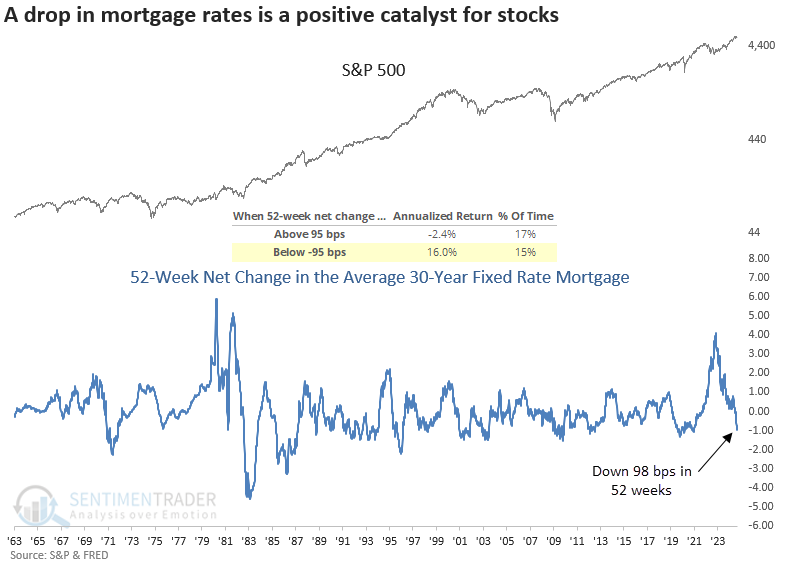
To identify the first instance, I required the 52-week net change to rise above zero before a new signal could trigger again.
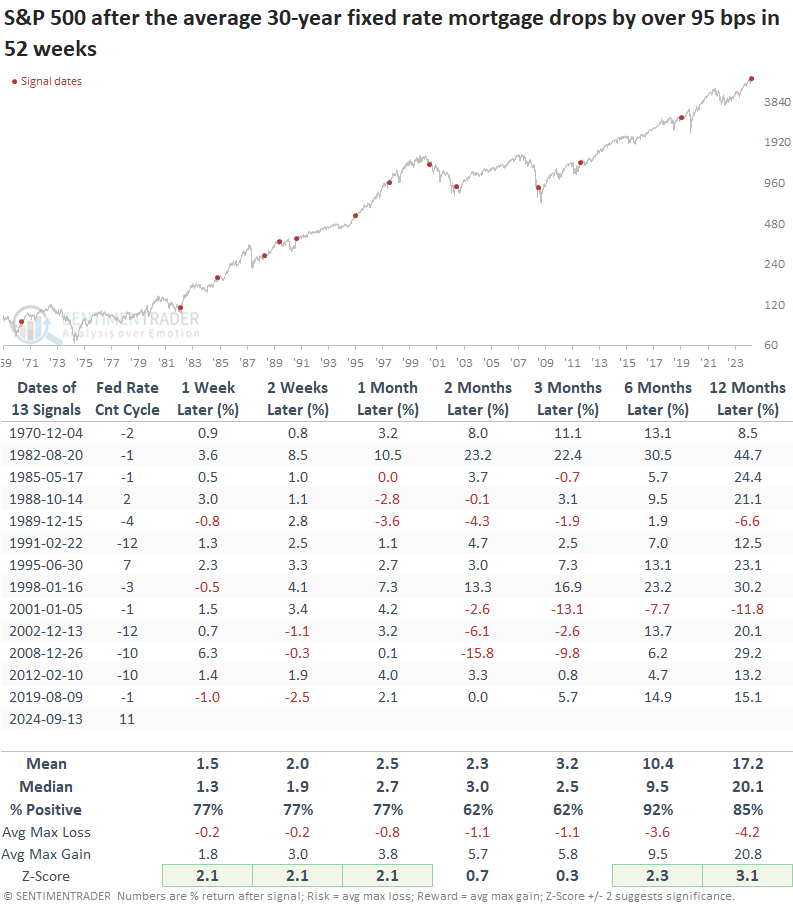
Similar drops in a popular financing rate preceded excellent returns for the S&P 500
Following precedents when the 30-year fixed-rate mortgage dropped by over 95 bps in 52 weeks, the world's most benchmarked index displayed outstanding returns, win rates, and significance relative to random returns across most time horizons. Furthermore, instances with the index above its 200-day, like now, resulted in a 100% win rate over the subsequent six months.
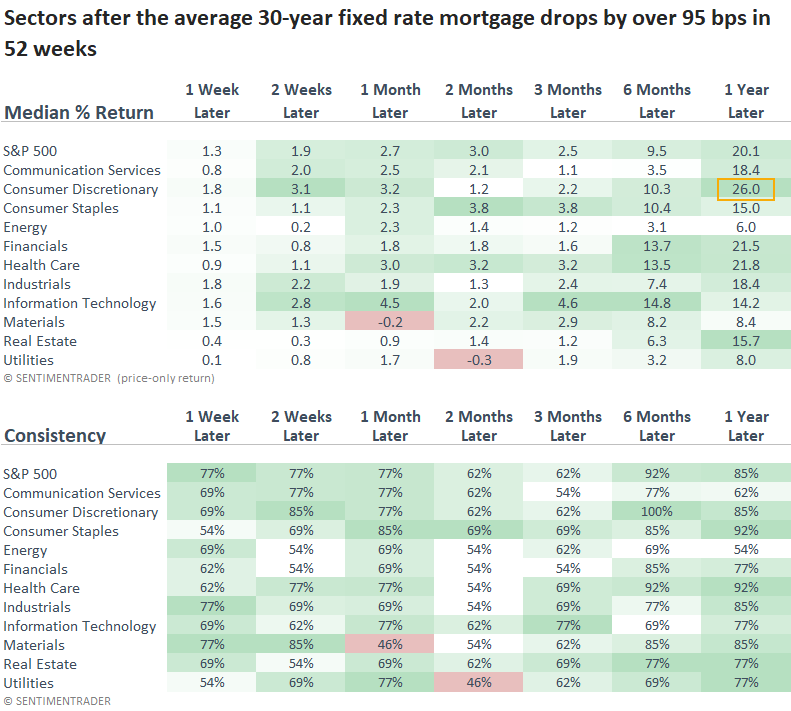
A more favorable mortgage rate environment tends to benefit consumer-oriented groups
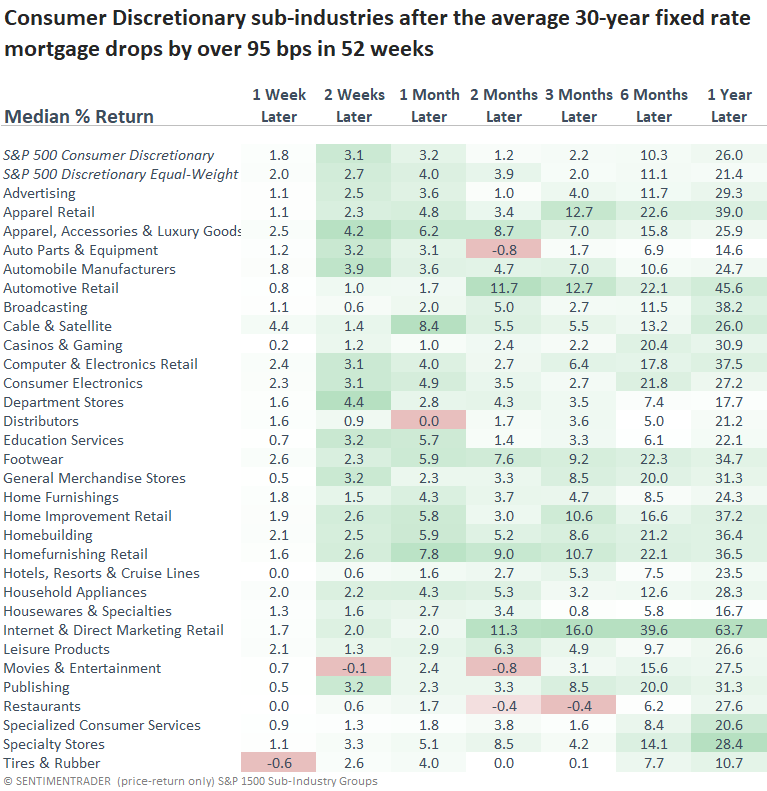
When the average 30-year fixed-rate mortgage drops by over 95 bps in 52 weeks, the more favorable interest rate environment creates a spark in the Consumer Discretionary sector. The group outperformed the S&P 500 in 5 out of 7 intervals and was the best-performing sector the following year.
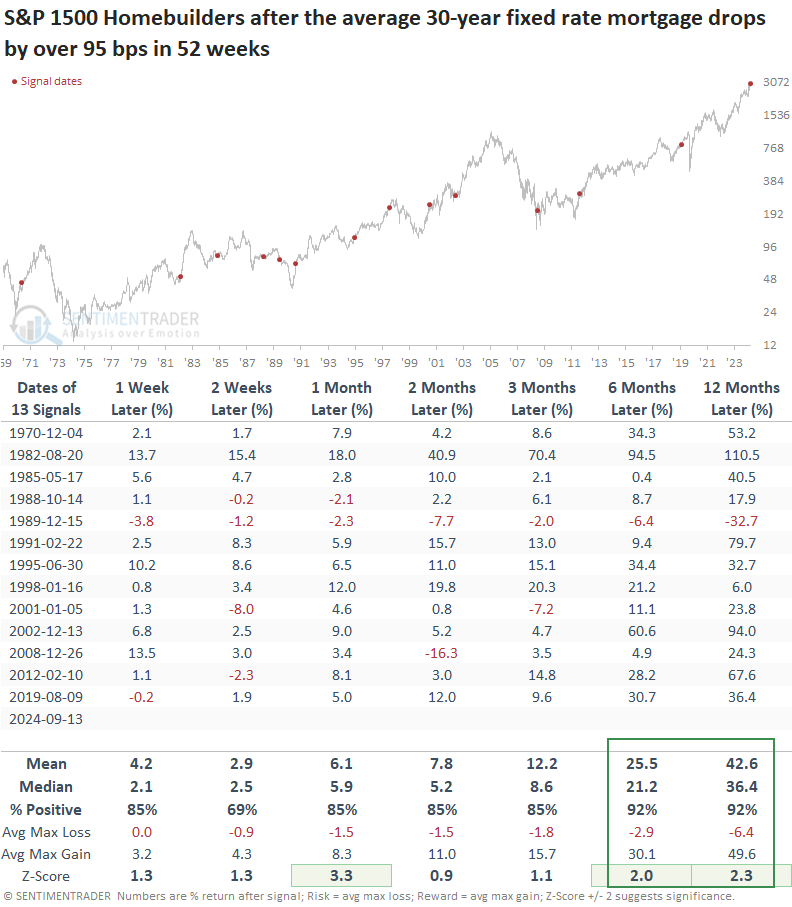
Homebuilders are among the most sensitive groups to shifts in mortgage rates. Consequently, the nearly 100 basis point drop in the 30-year rate has historically triggered massive rallies in these stocks over the subsequent year, with the group displaying a median return of 36%.
Over the following year, sub-industry groups within the S&P 1500 Consumer Discretionary sector produced outstanding returns, especially those in the housing industry, such as home improvement and home furnishing retail.
Current market trends
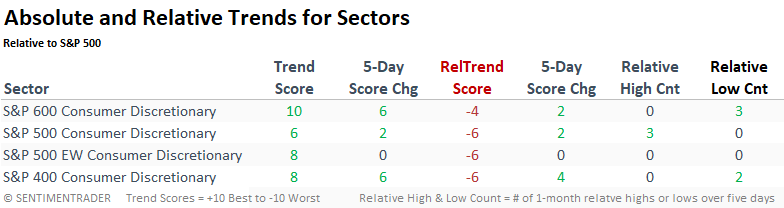
Although relative trends for the Consumer Discretionary sector across market capitalizations and index weighting methodologies are unfavorable, I would closely monitor these indexes as interest rates operate with a lag.
The equal-weighted S&P 500 Discretionary sector may provide the most reliable insight into a shift in relative performance, as it is not swayed by Amazon's and Tesla's dominance.
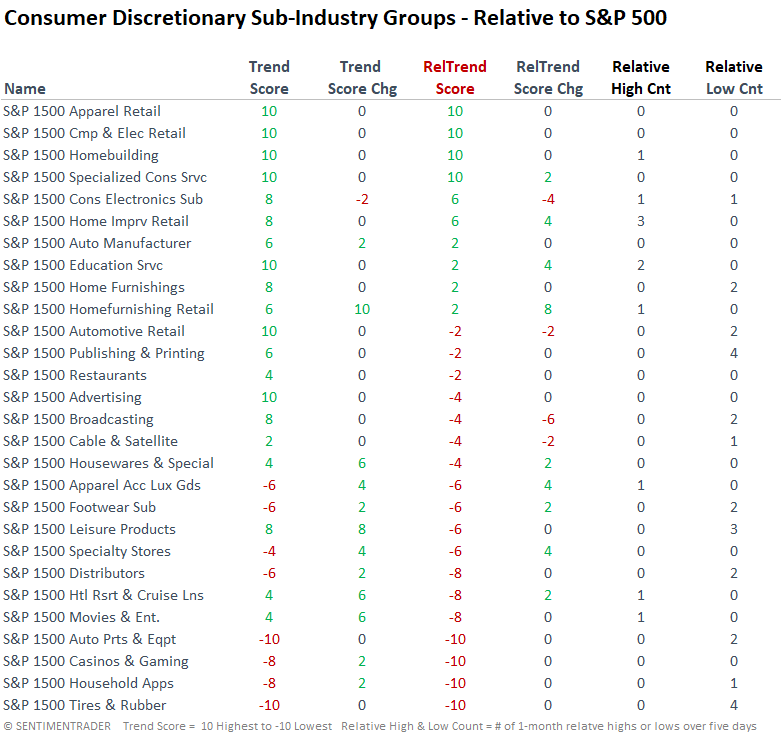
The homebuilding sub-industry group maintains a perfect absolute and relative trend score, aligning with historical precedents following a plunge in the average 30-year fixed-rate mortgage. Investors who don't yet hold a position should take note.
Furthermore, the relative trend scores for home improvement and home furnishing retail improved, especially home furnishing, which jumped 8 points.
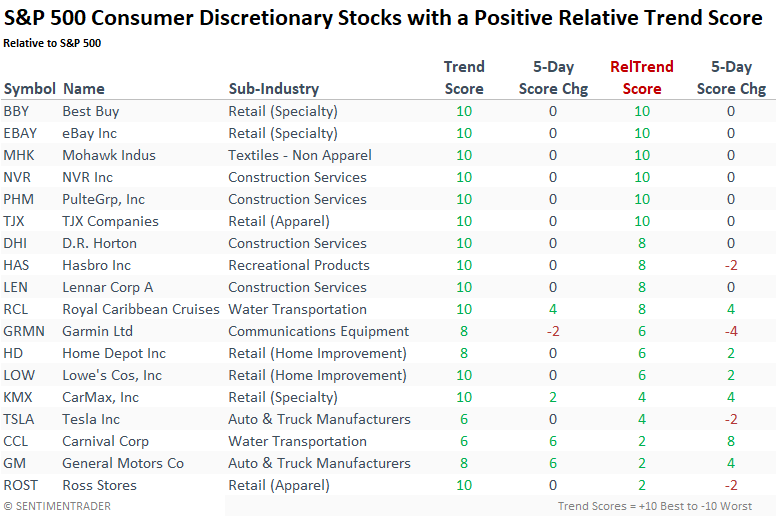
Several homebuilders, such as NVR Inc., Pulte Group, D.R. Horton, and Lennar, exhibit favorable relative trend scores compared to the S&P 500.
Other considerations
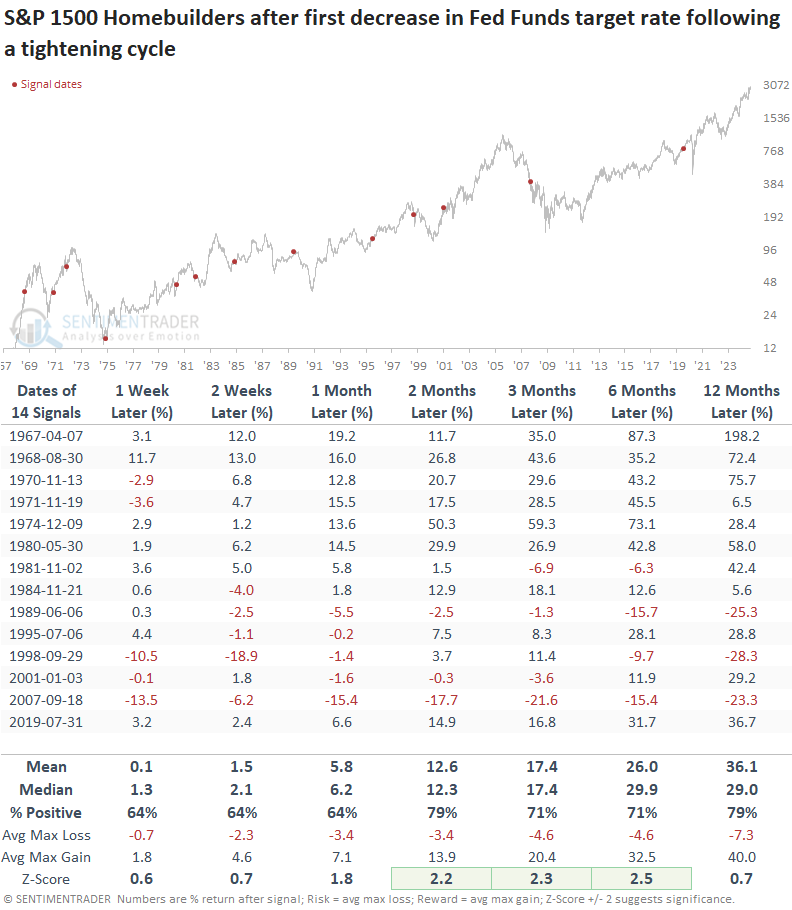
Although more recent precedents display mixed results, historically, homebuilders have benefitted after the Federal Reserve cut its target rate for the first time following a tightening cycle. The previous instance led to a 31% gain over six months.
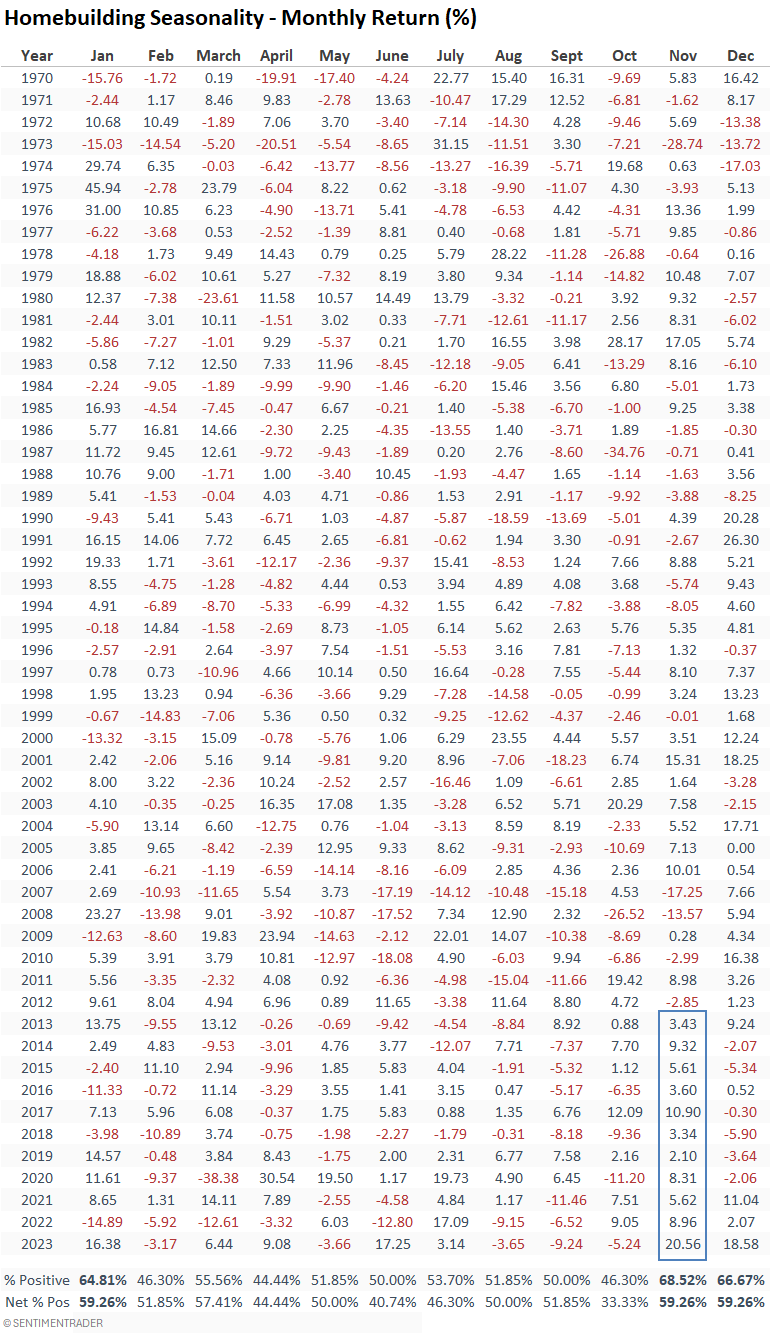
November brings a robust seasonal tailwind for homebuilders, boasting a 68% win rate since 1970. It also signals the beginning of the industry's most favorable period of relative outperformance, with homebuilders surpassing the world's most benchmarked index 59% of the time from November through January.
Moreover, homebuilders have posted a gain in November for 11 straight years, outperforming the S&P 500 in 9 of 11 instances.
What the research tells us...
Housing market activity will likely increase, with the average 30-year fixed-rate mortgage falling by 98 bps over the past year. While the impact may be gradual due to the delayed effect of interest rate shifts, we could see a notable increase by next spring-assuming employment remains stable. If history rhymes, this rebound could ripple through the broader economy, potentially fueling the next leg up in stocks. Investors should monitor the Consumer Discretionary sector, particularly housing-related groups, for a bullish shift in relative trends.