
A reversal in sentiment suggests higher energy stocks

Key points:
- XLE put volume increased relative to call volume
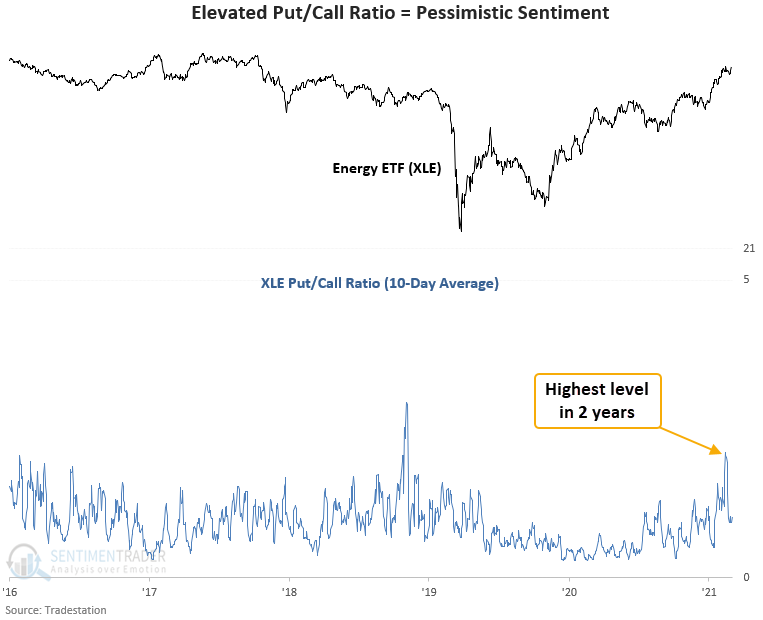
- The XLE put/call ratio has now reversed lower from an elevated level
- Energy stocks have rallied 78% of the time after other signals
The put-call ratio as a contrary sentiment indicator
When investors are bullish on stocks, they buy call options to bet on rising prices. Conversely, when they are bearish on stocks, they purchase put options to bet on declining stocks. The put/call ratio can be used as a contrary indicator to identify an environment where sentiment has become too pessimistic on the future direction of stocks. When opinions become too bearish, stocks tend to rally.
A trading model that identifies a reversal in the put/call ratio
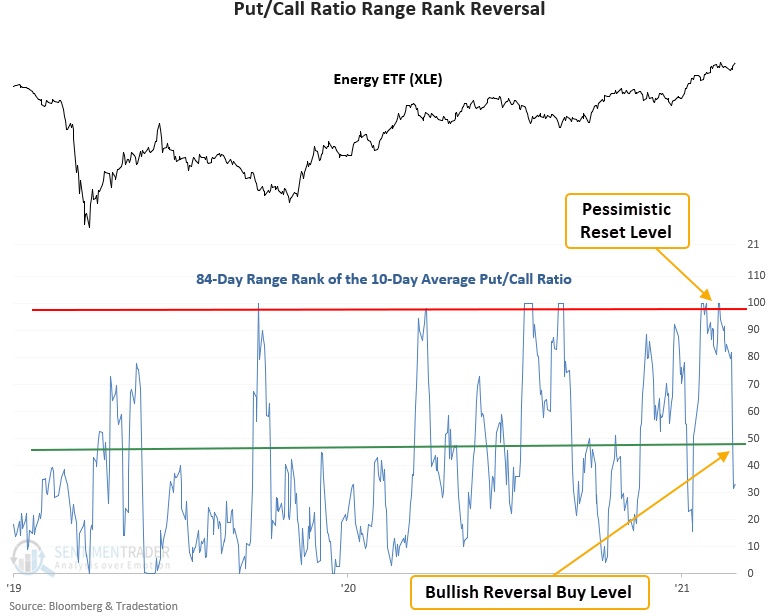
The put/call ratio trading model applies an 84-day range rank to a 10-day moving average of the XLE put/call ratio. The pessimistic reset condition is confirmed when the range rank indicator crosses the 99th percentile. A new buy signal occurs when the range rank crosses back below the 49th percentile. Within 5 days of the cross, the 5-day rate of change for the XLE ETF must be >= 0.5%. i.e., market momentum is positive.
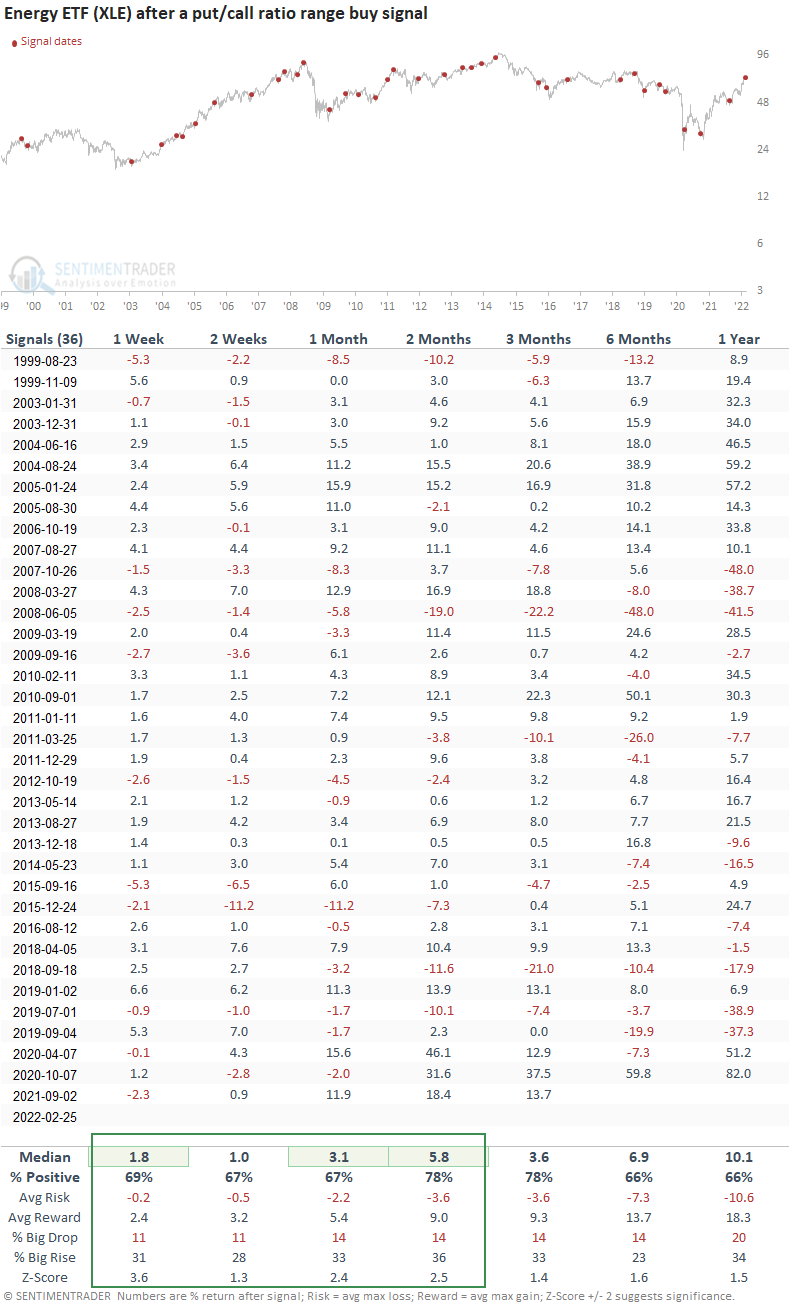
Similar reversals in the put/call ratio have preceded gains 78% of the time
This signal has triggered 36 other times over the past 23 years. After the others, XLE future returns, win rates, and z-scores were solid across all time frames, especially the 2-month window. The model had only 1 drawdown greater than 10% in the first month.
I've highlighted several bullish signals for the energy sector since 1/5/22. So, I would use this signal as additional confirmation of a bullish trend for energy stocks.
What the research tells us...
When put volume increases relative to call volume, traders have become too pessimistic on the outlook for stocks. Stocks are likely to reverse higher when the pessimistic extreme reverses. Similar setups to what we're seeing now have preceded rising prices for the energy sector ETF (XLE), with a 2-month win rate of 78%.