
A rare pattern triggers for only the 12th time since 1928

Key points:
- The S&P 500 remains rangebound across multiple time frames
- After similar consolidations, the index made very little progress over the next three months
- The current environment looks similar to the 1946-49 bear market
Nothing is more frustrating than a trendless market
Consolidations are typically only recognized in hindsight, making them frustrating, especially for trend followers.
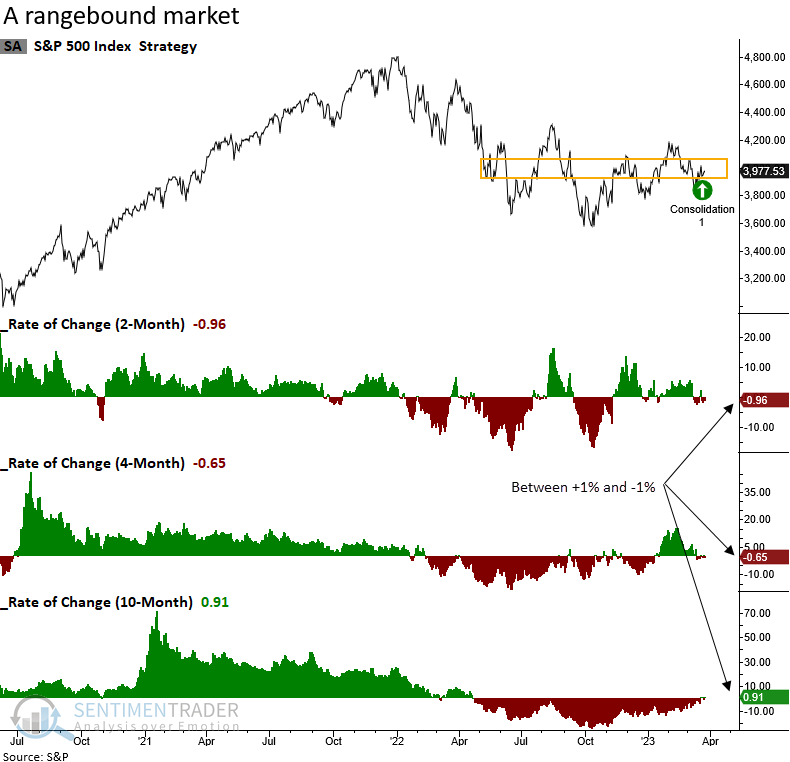
Over the last two, four, and ten months, the S&P 500 has gone nowhere. A trendless environment, like now, is rare. I could only find 12 historical cases when the price change over those periods closed within a range of 1% to -1%.
Usually, consolidations resolve themselves in the direction of the prior primary trend.
Similar consolidations led to more frustration over the next three months
When the S&P 500 consolidates in a pattern identical to now, the odds of a sustainable breakout in either direction over the next three months are not great. While the long-term results look excellent, equity markets have an upward bias over time. So, consolidations usually resolve to the upside.
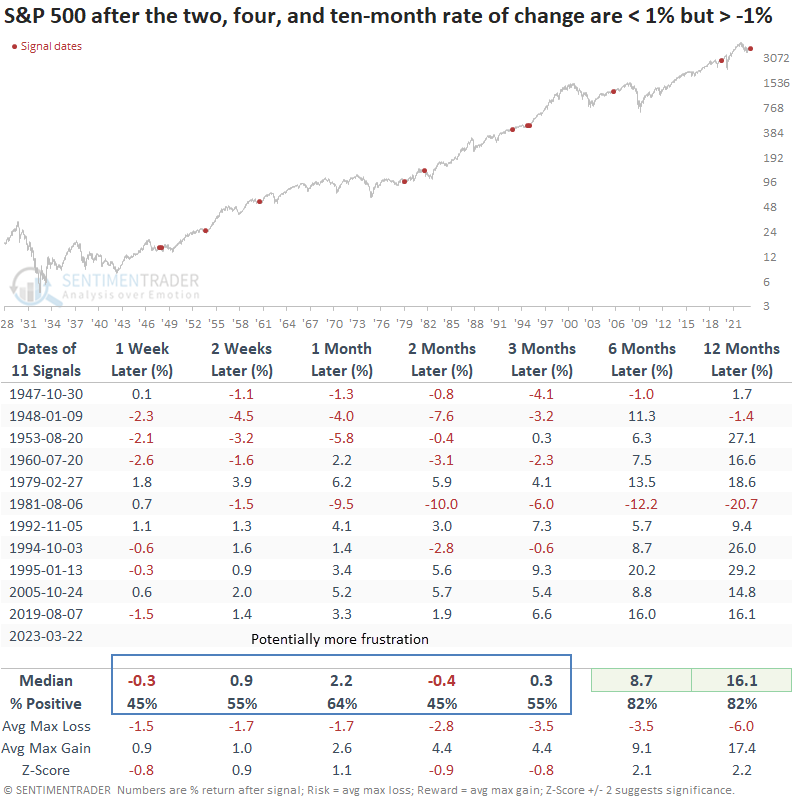
I screened out repeats by identifying the first signal in two months.
Some additional conditions worth noting
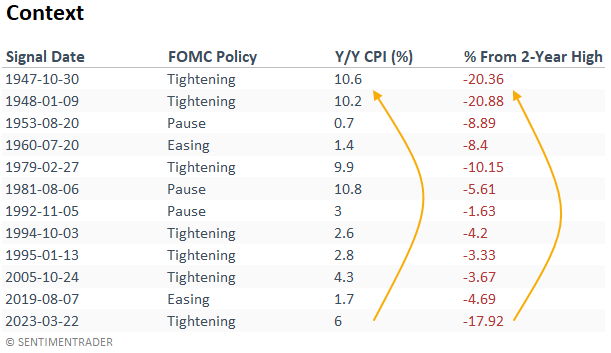
The consolidation pattern occurred during an FOMC tightening cycle in 7 out of 12 cases. The adjustment to higher rates impacts stocks.
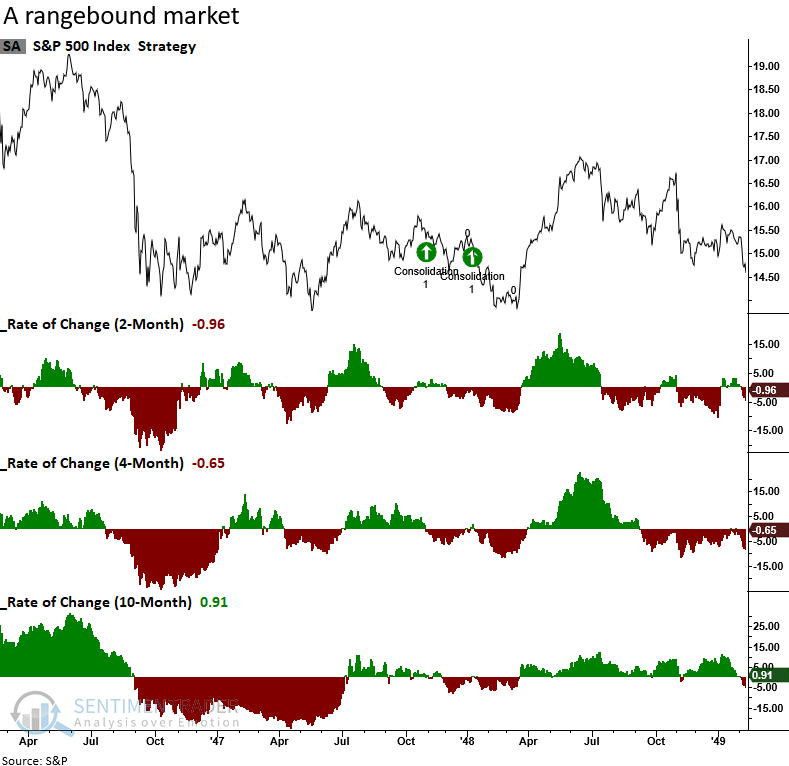
Inflation and the S&P 500's distance from its 2-year high are two conditions that look most similar to the consolidation signals that occurred in the 1946-49 bear market.
A potential analog
The S&P 500 declined from 1946 to 1949 by slightly less than -30%. If the current rangebound market is similar to that period, the bulk of the peak-to-trough drawdown could be over.
However, the bad news is one must consider even more base building and a potential retest of the October low, given that most consolidations resolve in the direction of the primary trend before the consolidation period.
What the research tells us...
Consolidations typically indicate that traders and investors are indecisive about the future direction of a market. The churning environment can be highly frustrating as trading and trend-following signals produce whipsaw situations. Over the last two, four, and ten months, the S&P 500 has gone nowhere. After similar rangebound patterns, the likelihood of a breakout in either direction in the next three months does not look encouraging. Several market conditions suggest the current consolidation pattern could be similar to the 1946-49 period. So, one must keep an open mind to a potential retest of the October low and a multi-year base-building process.