
A quick recovery from a real scare

Key points:
- RSP recovered from an 8% drawdown back to breakeven in roughly 42 trading days, one of the fastest recoveries from that depth
- The tightened signal, -8% to 0% in 42 days, has only 6 prior occurrences, and RSP was higher six months later every single time
- Loosening the filter to -5% drawdown recoveries still shows positive forward returns, with tech and discretionary leading
- Energy is the lone sector that has struggled after these recoveries, with a negative median return a year later
A rare roundtrip
The equal-weight S&P 500 did something this month that it has almost never done before. It fell 8% from a three-year high in early April, then clawed all the way back to breakeven by late May. Roughly 42 trading days from trough to recovery. A roundtrip from a real scare.
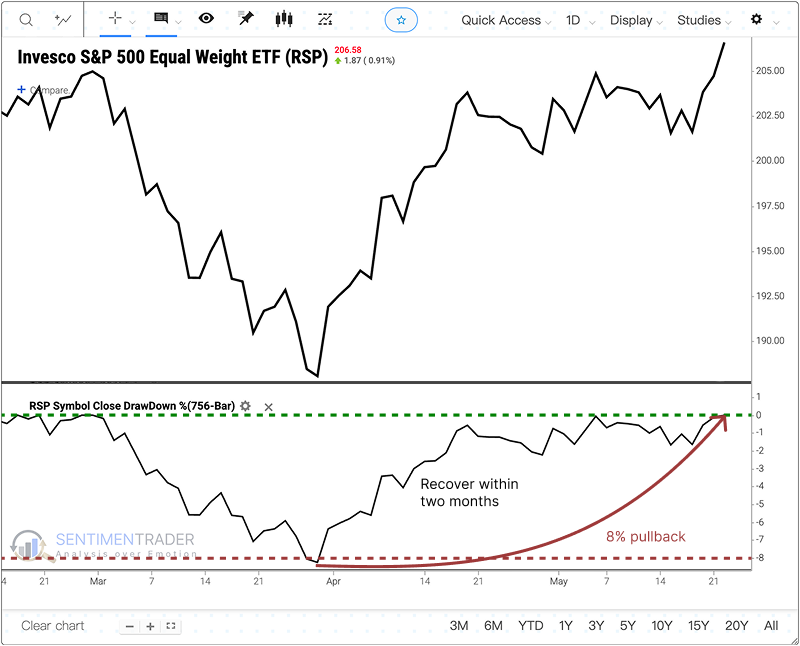
Not many pullbacks of this depth in the average stock resolve this fast. That is partly the point.
The tightest sample
Require the recovery to go from -8% to 0% within 42 trading days and the sample shrinks to six prior signals. Six. That is minuscule, and three of them cluster in 2011-2012, so we are not working with independent draws from separate regimes. Fair warning.
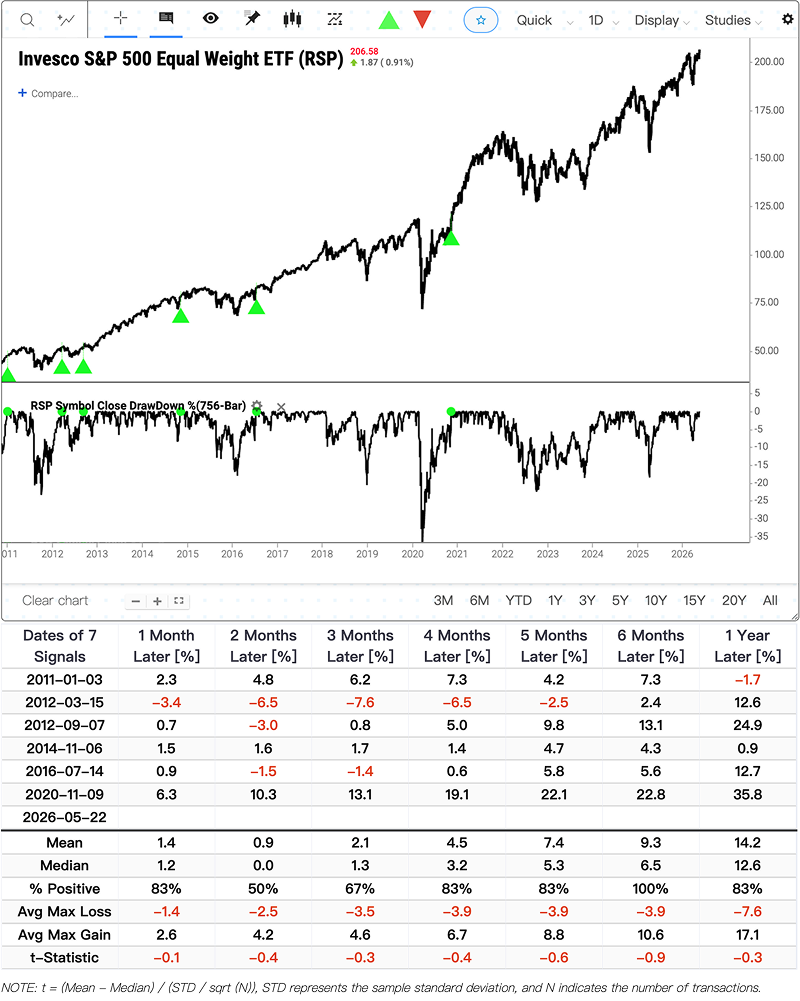
But the outcomes are hard to ignore. RSP was higher a month later five out of six times, averaging a 1.4% gain. Six months later, it was higher every single time, six for six, averaging more than 9%. A year out, five of six were positive, with an average gain exceeding 14% and a median north of 12%. The worst loss over a full year was under 8%. The risk/reward in this tiny sample leans hard in one direction.
Unfortunately, six is six. We need more.
Loosening the filter
Drop the speed requirement. Just -8% to 0%, at any pace. The sample grows to 11 prior signals.
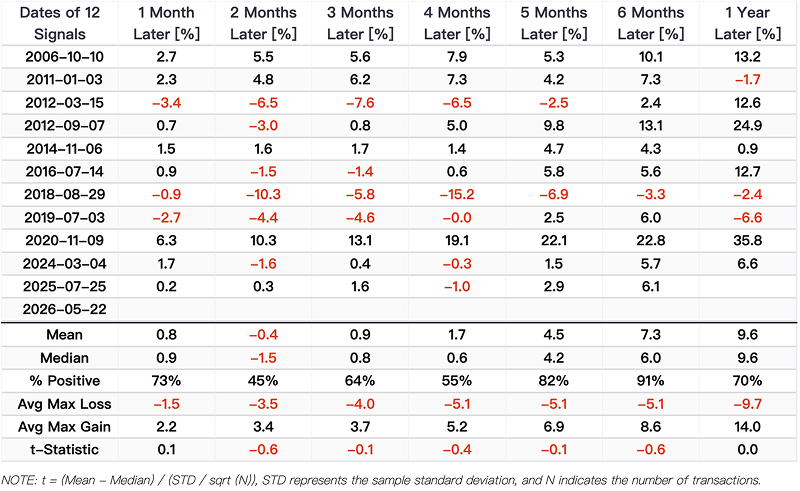
The results hold up, though the edges soften. The short-term gets choppier, two months later the index was higher less than half the time. The medium-term stays strong. The 2018 and 2019 signals produced the only real failures, and both tied to macro events that had nothing to do with breadth or recovery speed.
Still only 11. So we loosen again. Drop the drawdown threshold from -8% to -5% in 2 months. Now we have 22 prior signals.
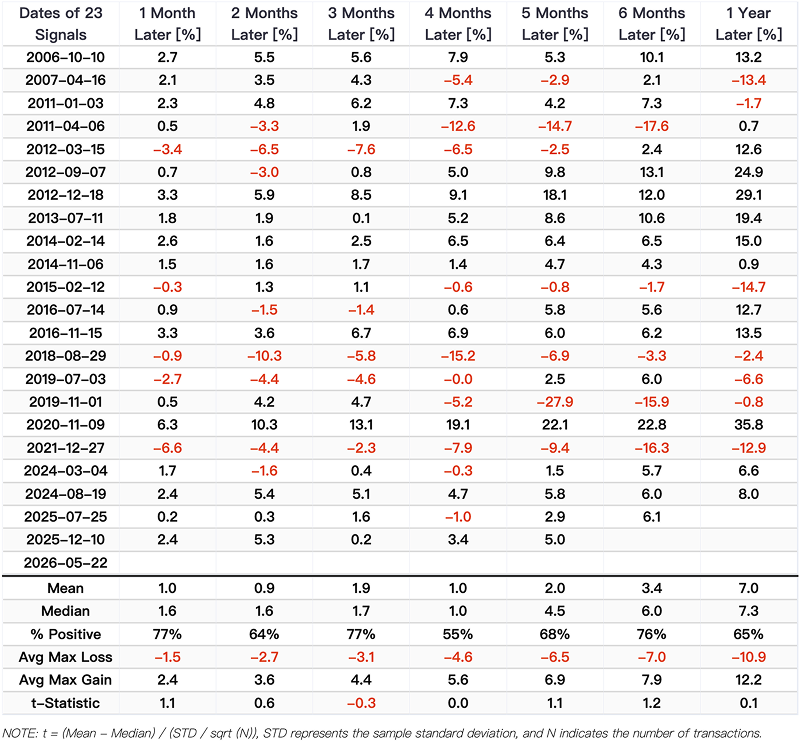
The forward returns remain tilted positive across every horizon. The edge is smaller than the tightest sample, as you would expect, a -5% recovery is less of an event than an -8% recovery. But the direction holds. Drawdown recoveries in the average stock, across thresholds and speeds, have tended to precede further gains.
The failures cluster where you would expect them to 2007, 2015, and the 2021 signal that preceded the 2022 bear market. Signals that fired into softening macro backdrops did not hold. Signals that fired into stable or improving environments mostly did.
Where the money went
The sector table shows where the buying pressure concentrated after these recoveries.
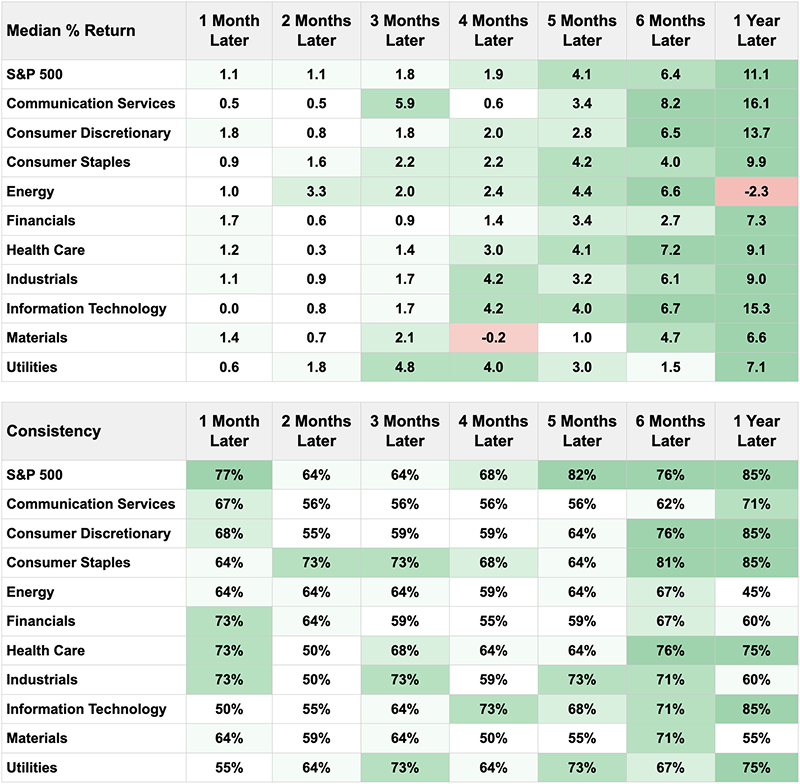
Tech and communication services led. A year later, the median tech stock was up more than 15%, with gains 85% of the time. Consumer discretionary followed at nearly 14%. These are the sectors you would expect to catch a bid when confidence returns after a scare, the names people reach for when they stop worrying.
Energy was the outlier in the other direction. The median energy stock was down 2.3% a year later, higher just 45% of the time. Materials and financials were positive but unremarkable. The defensive sectors, staples, utilities, health care, were consistently profitable but unspectacular, which is exactly what defensives are supposed to be.
Not a single sector outside of energy showed a negative median return at the one-year mark. That is a breadth of recovery that goes beyond the headline index numbers.
The sample-size problem
The tightest samples are tiny, and the looser samples add noise. Three of the seven total signals in the -8%/42-day bucket came from 2011-2012. That cluster followed the European debt crisis and preceded years of steady gains, but the macro backdrop then, zero rates, post-crisis healing, is not this one.
The looser samples help. Across 22 signals in the -5% threshold, the pattern is consistent enough to take seriously: quick recoveries from pullbacks in the average stock have historically been a tailwind, not a headwind. The failures came when the macro floor gave way underneath, not when the recovery signal itself was wrong.
What the research tells us...
RSP just completed one of the fastest recoveries from an 8% drawdown on record. The historical sample is tiny at the tightest setting, six prior signals, but every one of them saw RSP higher six months later. Loosening the filter to build sample size confirms the direction, drawdown recoveries in the average stock have tended to precede further gains, with tech and discretionary capturing the follow-through and energy sitting it out. The sample-size caveat is real, and the current rate environment does not mirror the average historical window. But across thresholds and across timeframes, the asymmetry favors the upside.