
A "perfect" sector trend signal just triggered

Key points:
- All but one equal and cap-weighted S&P 500 sectors closed above their 200-day averages
- Similar conditions saw the S&P 500 rally 100% of the time over the subsequent six months
- Cyclical sectors tended to outperform, led by discretionary, industrials, and technology
Additional confirmation of a supportive environment
Stocks continue to see a broad and sustained shift toward bullish trend conditions.
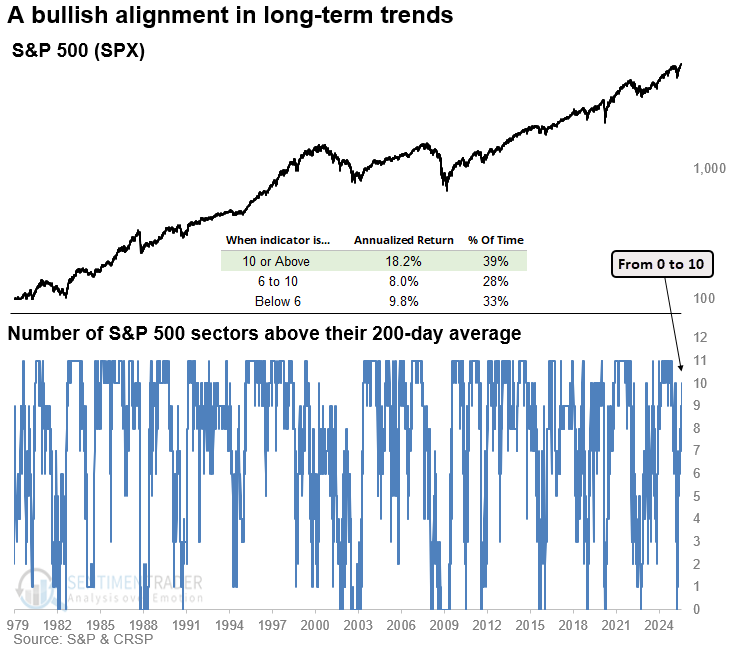
Every S&P 500 sector except health care has closed above its 200-day moving average. This kind of alignment is particularly encouraging after a period when none of the sectors were trading above their 200-day averages.
As shown in the chart below, the S&P 500 delivered an annualized return of 18.2% when at least 10 sectors traded above their 200-day average, significantly outperforming periods with fewer groups above that threshold.
Outstanding returns
Whenever the number of S&P 500 sectors above their 200-day average rose from 0 to 10, the index delivered exceptional returns and consistency over the following year, with a flawless track record at the six-month mark.
It's worth noting that none of those prior instances occurred with the index having recorded an all-time high, although 1991, 2016, 2019, and 2020 were relatively close.
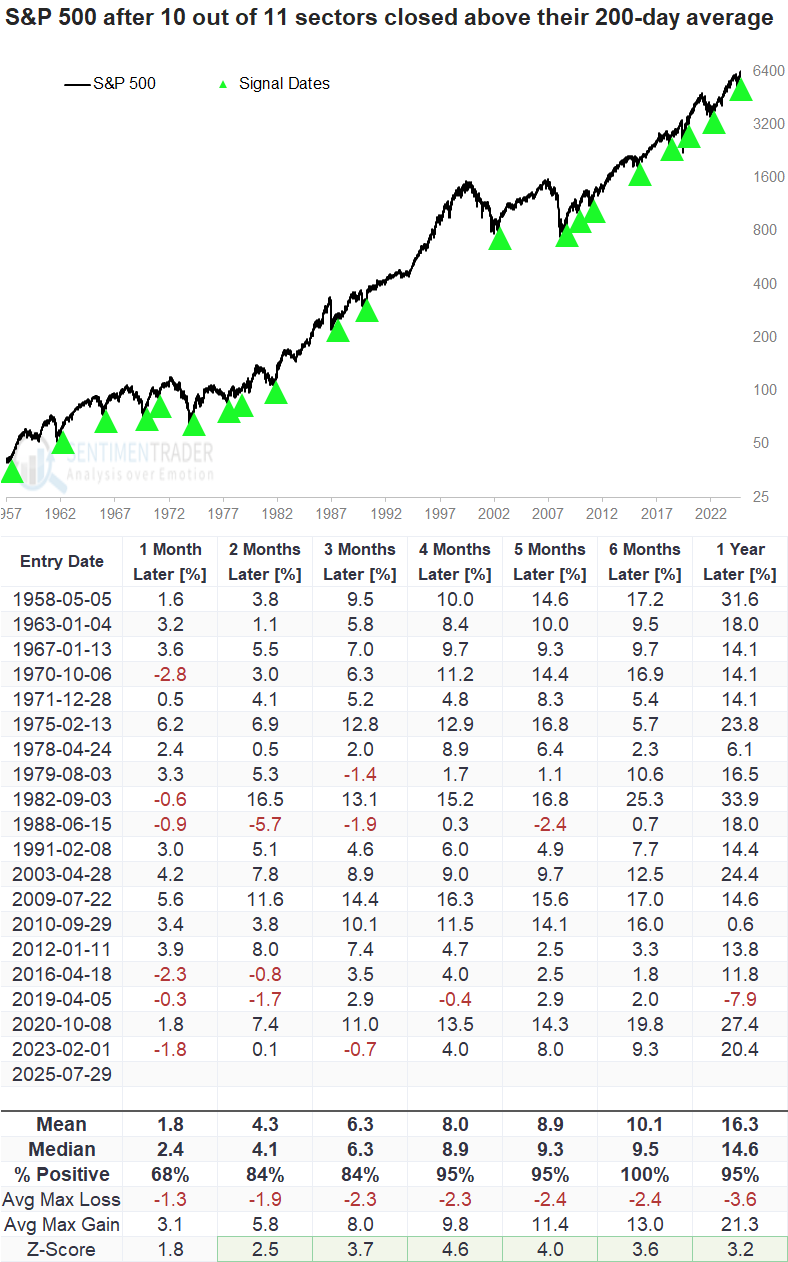
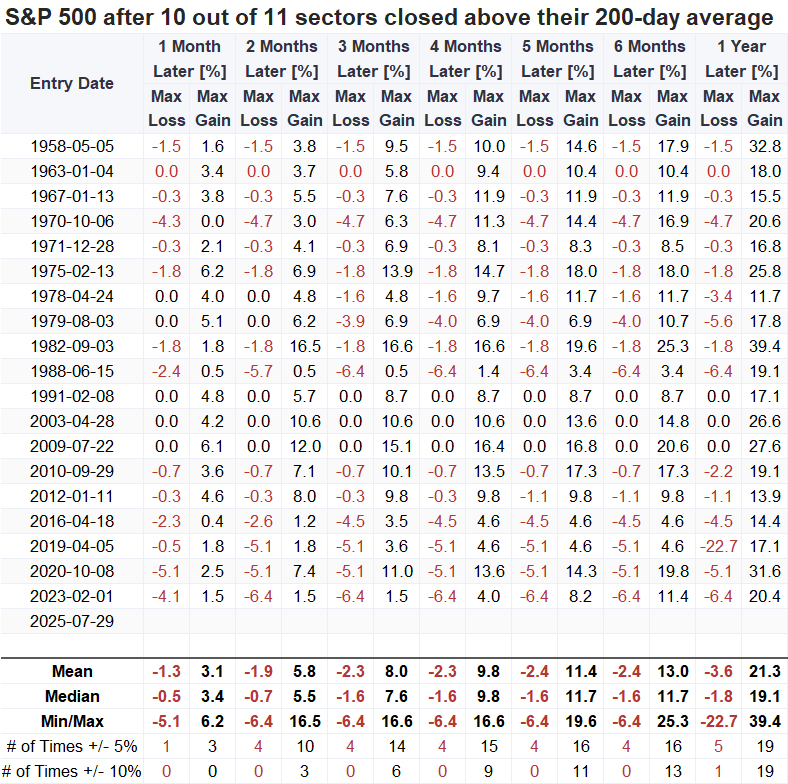
Within the following year, the S&P 500 saw only a single maximum loss of more than 10%, while nineteen signals produced double-digit gains. Remarkably, in 1991, 2003, and 2009, the index never declined during the entire twelve-month period.
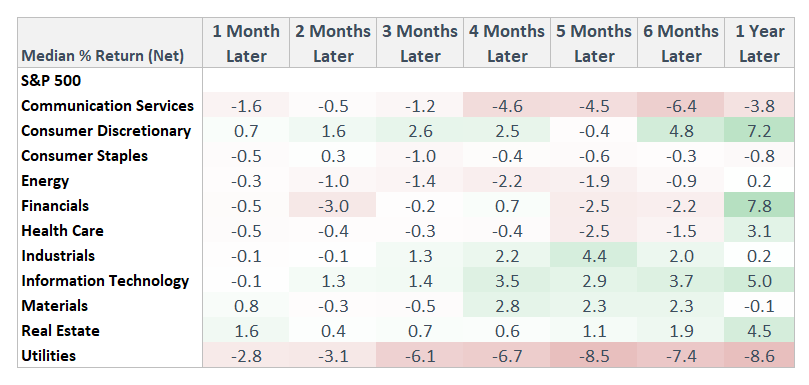
Given that most signals emerge after bear markets tied to recessions, it's no surprise that early-cycle offensive sectors tended to lead the market higher over the next year.
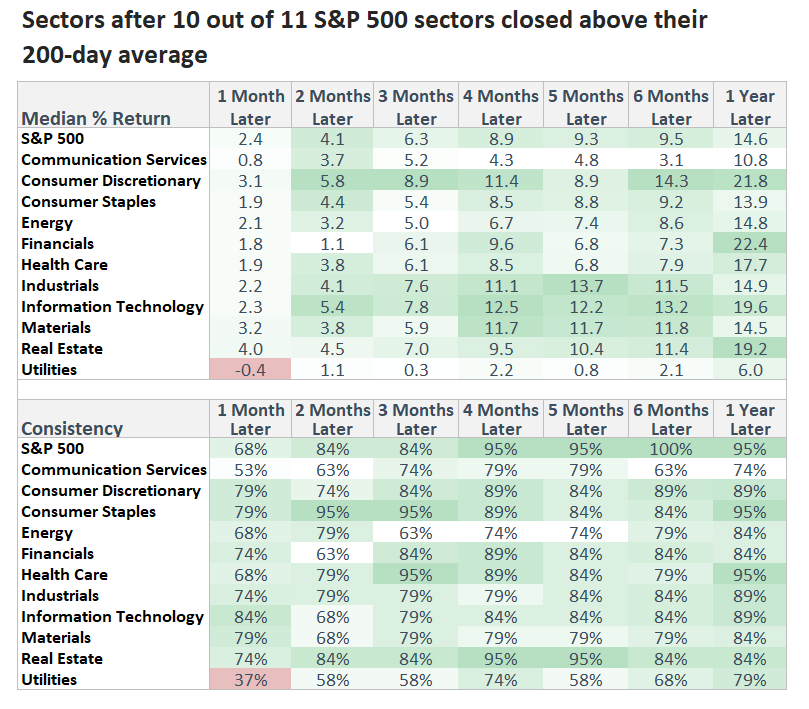
Measuring the net difference between a sector and the S&P 500 enhances the clarity of cyclical sector performance trends versus the broad index. With industrials and technology currently exhibiting relative strength, history suggests staying with these leaders.
Bullish trends for equal-weighted sectors
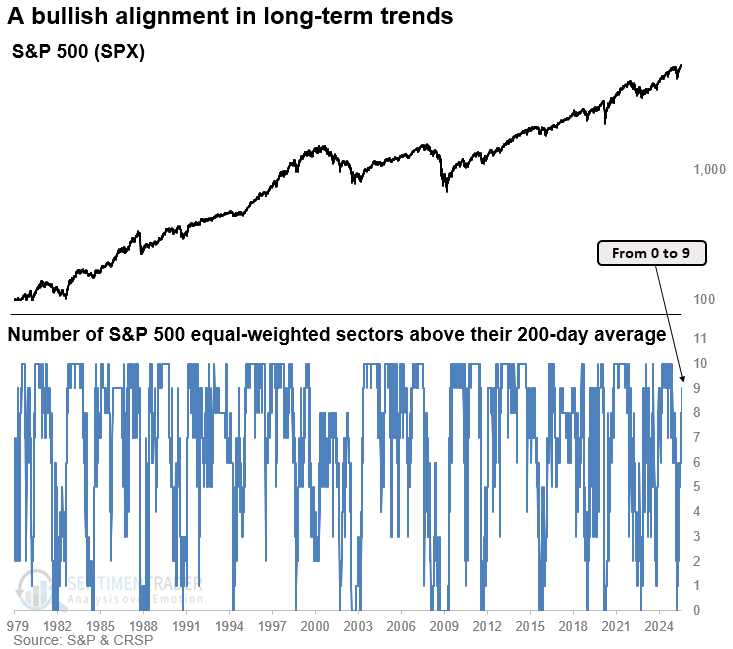
Among the equal-weighted sectors, with data available for all but real estate, 9 out of 10 closed above their 200-day moving average. That's an indication of broad strength, and when we've seen the sector count climb from 0 to 9 in the past, the S&P 500 has tended to shine.
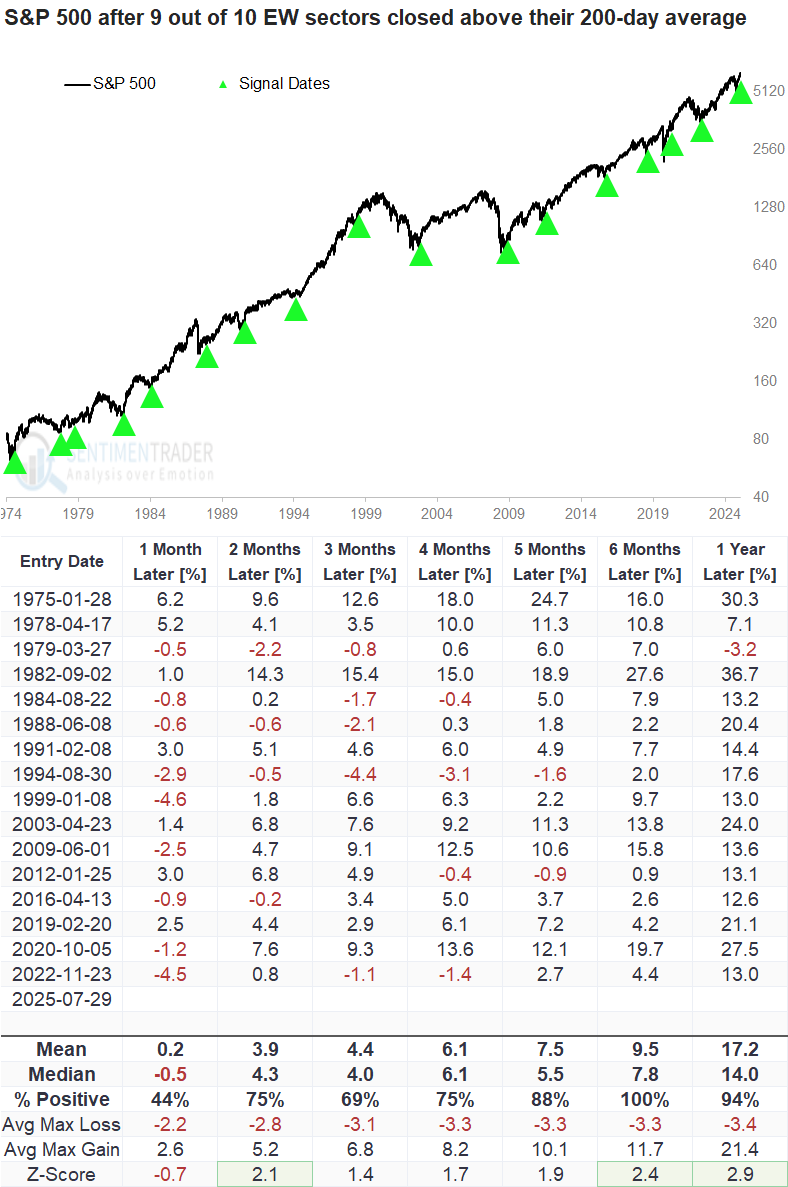
Over the next six months, the S&P 500 rallied without exception, echoing what we saw in the cap-weighted analysis. That said, the initial three months were not as impressive, especially at the one-month mark. 1999 was the last time a signal coincided with an all-time high.
What the research tells us...
The near-uniformity among equal and cap-weighted sectors trading above their 200-day moving averages is a strong sign of broad participation. Such synchronized trend conditions have historically aligned with sustained advances. The world's most benchmarked equity index rallied 100% of the time over the following six months with muted drawdowns. Cyclical sectors like consumer discretionary, industrial, and technology mostly outperformed the S&P 500.