
A massive surge in a consumer sentiment index

Key points:
- The University of Michigan Consumer Sentiment Index increased by 13.4 points over the last two months
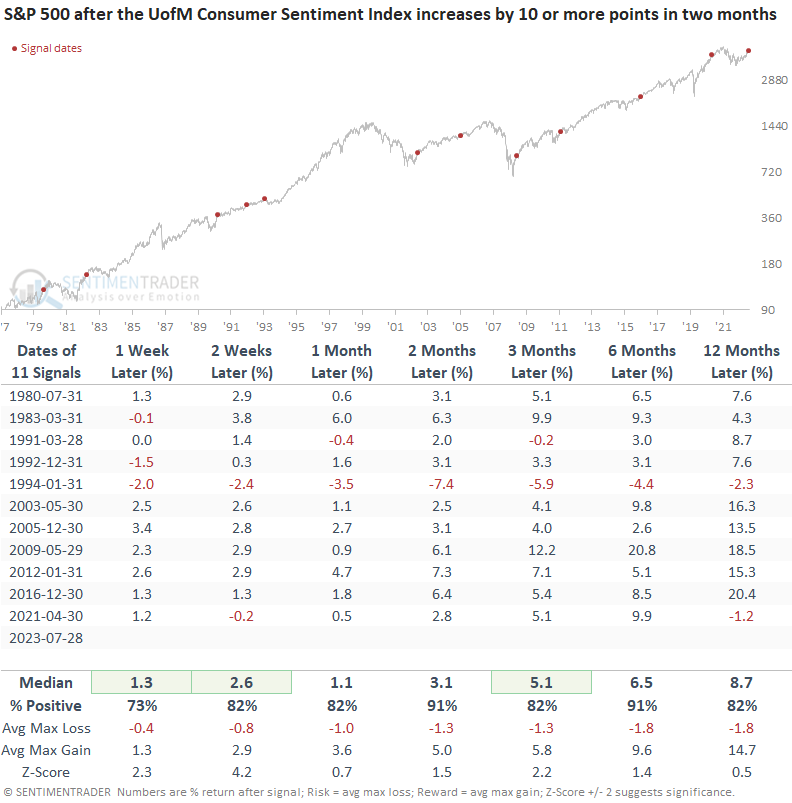
- After similar two-month surges, the S&P 500 was higher 91% of the time over the next six months
- Similar to the S&P 500, cyclical sectors and other risk assets follow a similar upward trajectory
Lower inflation makes for a happy consumer
Last November, Jason published an excellent research note titled, more evidence of consumer depression. The report highlighted the near depression-like readings for the University of Michigan Consumer Sentiment Index. Although the index remains depressed, lower inflation and a resilient labor market appear to have triggered an inflection point for consumers.
Over the last two months, the University of Michigan Consumer Sentiment Index surged by 13.4 points, registering the 6th largest increase in history and the most significant surge since 2005.
From the University of Michigan:
"Consumer sentiment rose for the second straight month, soaring 13% above June and reaching its most favorable reading since September 2021. All components of the index improved considerably, led by a 19% surge in long-term business conditions and 16% increase in short-run business conditions. Overall, sentiment climbed for all demographic groups except for lower-income consumers. The sharp rise in sentiment was largely attributable to the continued slowdown in inflation along with stability in labor markets."
Let's assess the outlook for stocks, other assets, and economic indicators after the consumer sentiment index from the University of Michigan increases by 10 points or more over a two-month period.
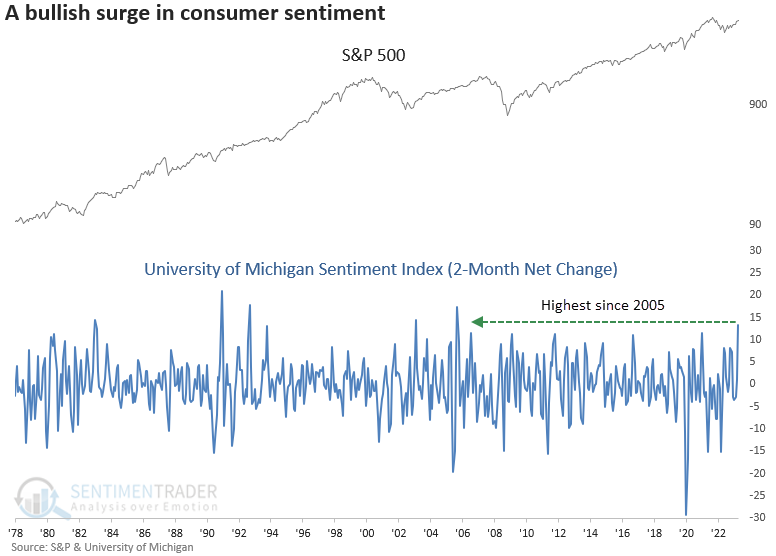
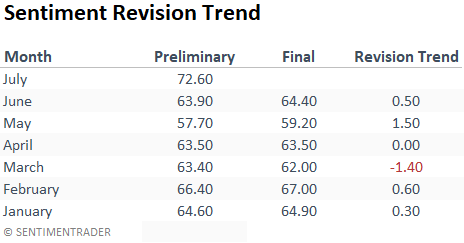
The increase in the sentiment index to 72.6 was a mid-month preliminary number. The final reading will hit the tape on the last trading day of July. Based on recent revision trends, the signal condition, a 2-month increase of 10 points or more, should hold.
Similar surges in consumer sentiment preceded solid returns
When the University of Michigan Consumer Sentiment Index increases by 10 points or more over a 2-month period, S&P 500 returns, win rates, and z-scores were excellent across all time frames. Over the next six months, the large-cap index was higher in all but one case.
The 2005 signal occurred after the FOMC raised the target rate 13 times. So, this time is not different.
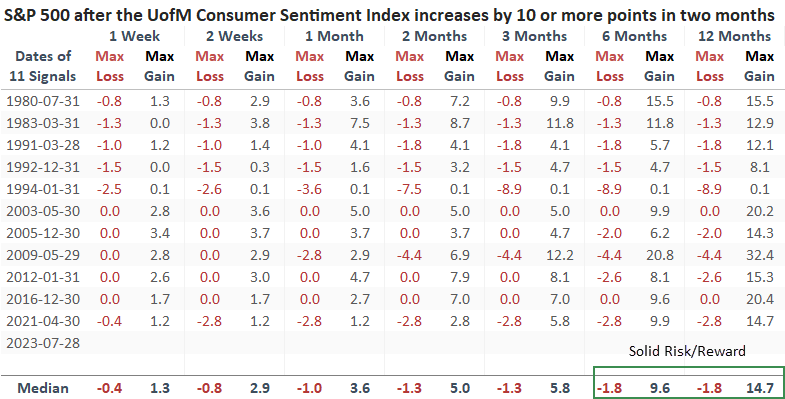
The maximum gains and losses table shows no previous occurrence resulted in a loss greater than -10.0% over the next year. And the skew heavily favored gains over losses.
Given historical returns after a consumer sentiment signal, the current favorable relative strength trends in the Consumer Discretionary and Technology sectors will likely persist.
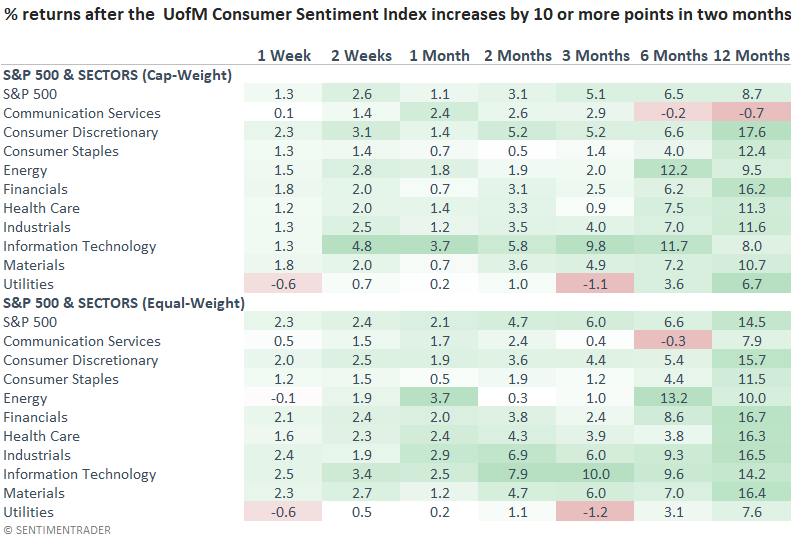
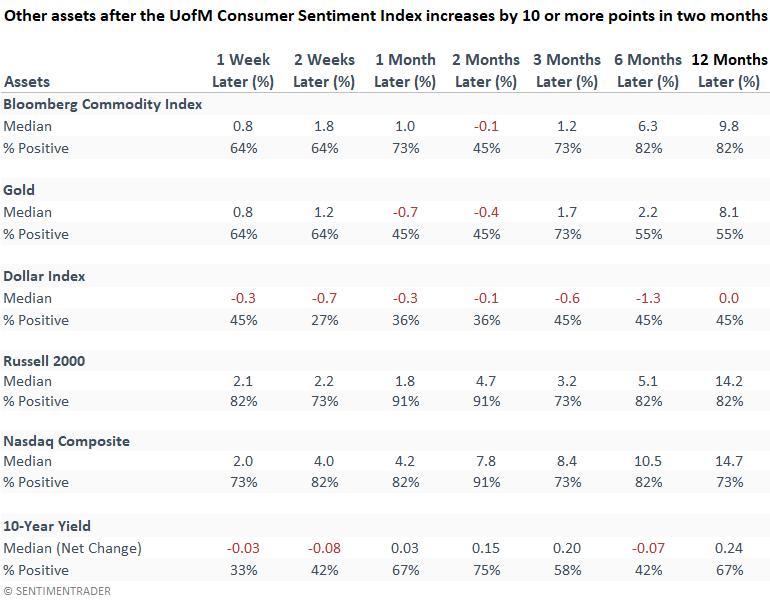
A potential turning point in consumer sentiment could favor risk assets like the Russell 2000, Nasdaq Composite, and commodities. The current downtrend in the dollar index looks poised to continue, and we should be mindful that a more confident consumer could lead to an uptick in spending, bolstering the economy. Under this scenario, the 10-year Treasury yield could rise over the next one to three months.
Could a turn in consumer sentiment bolster the economy?
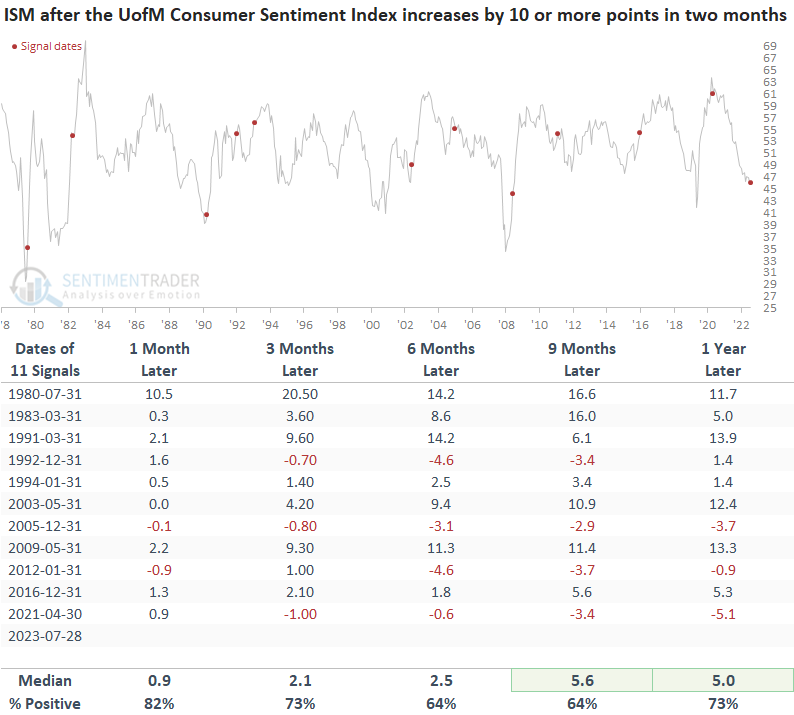
A surge in consumer sentiment typically leads to a consistent upswing in the ISM manufacturing survey over the next year. The trend becomes even more pronounced when manufacturing is contracting, as it is now.
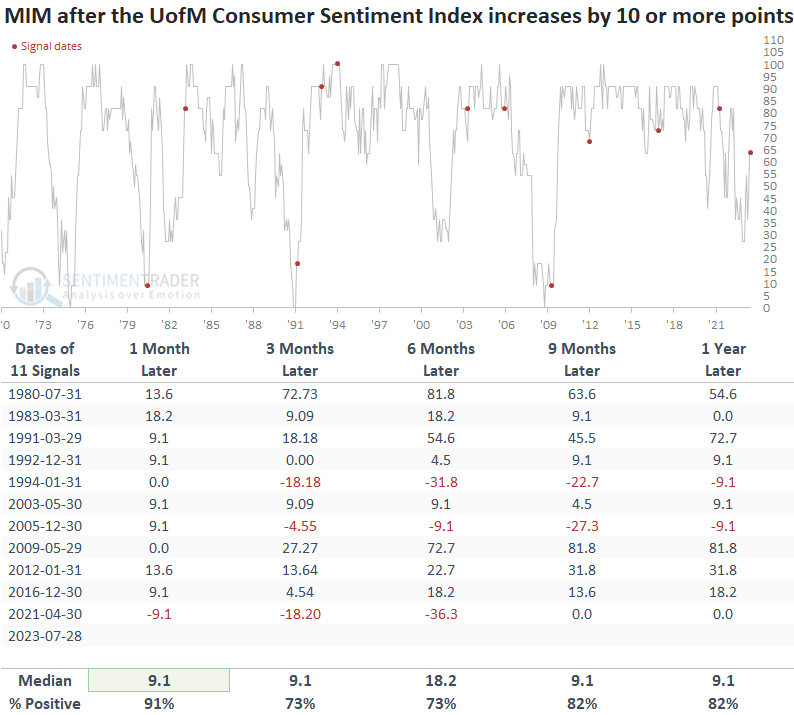
When I apply the consumer sentiment signals to the Macro Index Model, a broader measure of economic trends, the MIM also showed a upward bias over the next year.
What the research tells us...
As a result of lower inflation and a resilient job market, consumer sentiment has experienced a significant surge over the past two months. The upswing should set the stage for a more favorable environment for consumer spending, which tends to have a cascading effect on the economy and the stock market.