
A Major Shift in Market Sentiment

Key Points:
- A Major Sentiment Trend Has Turned Negative
- This Sustained Shift Has Historically Preceded Choppy Markets
- Despite Low VIX, Short-Term Returns Have Been Weak
- Large/small-cap divergence, warns high-yield bonds
A Slower, More Significant Warning Signal
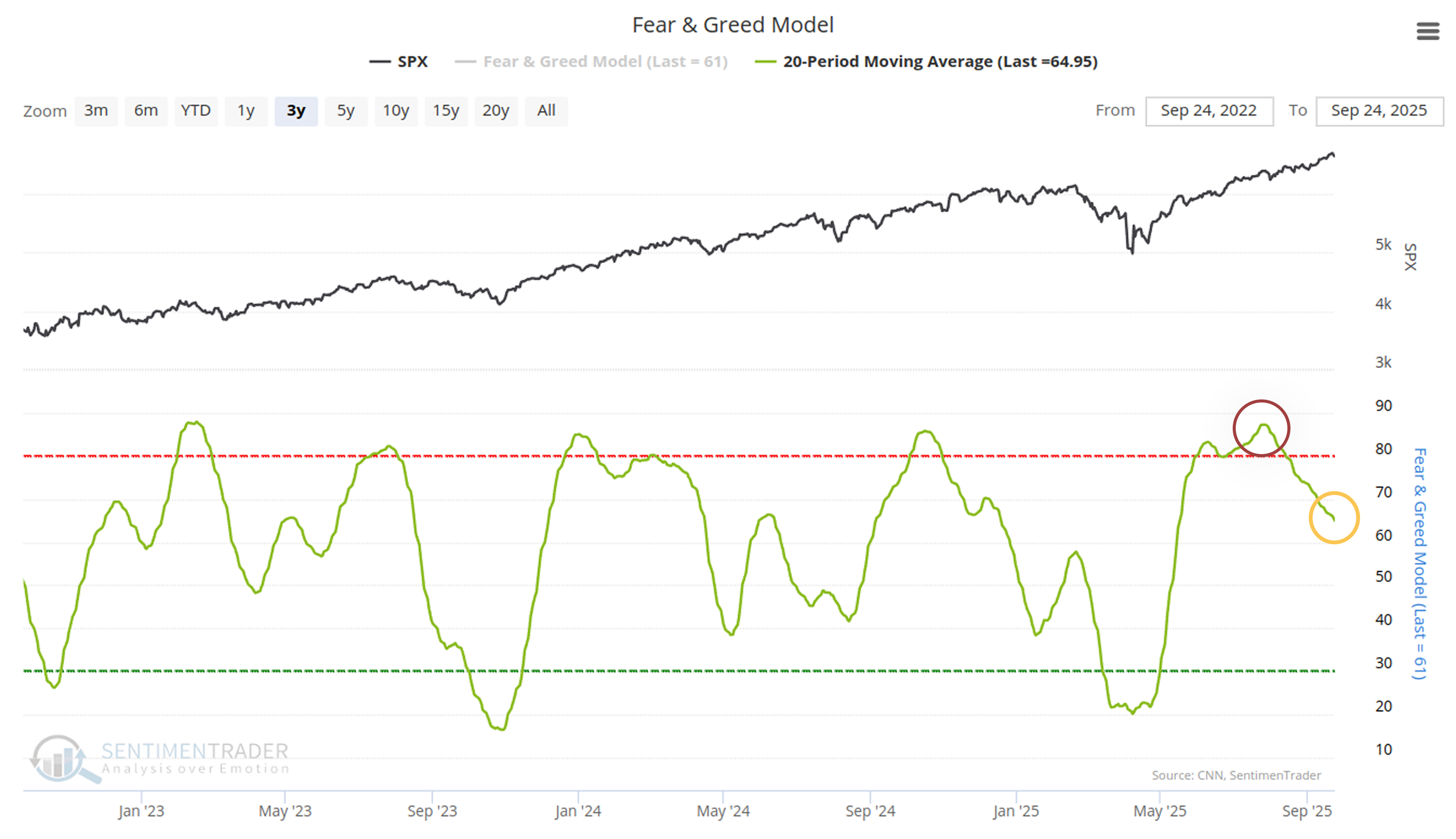
A significant change has occurred in the market's underlying sentiment trend. We are now focusing on the 20-day moving average (20DMA) of the Fear & Greed Model. For this smoother, slower-moving indicator to fall from above 85 to below 65, it requires a prolonged period of extreme greed to be followed by a sustained and significant deterioration in sentiment.
This is not a short-term fluctuation; it's the turning of a larger tide, representing a fundamental breakdown of a prolonged period of optimism.
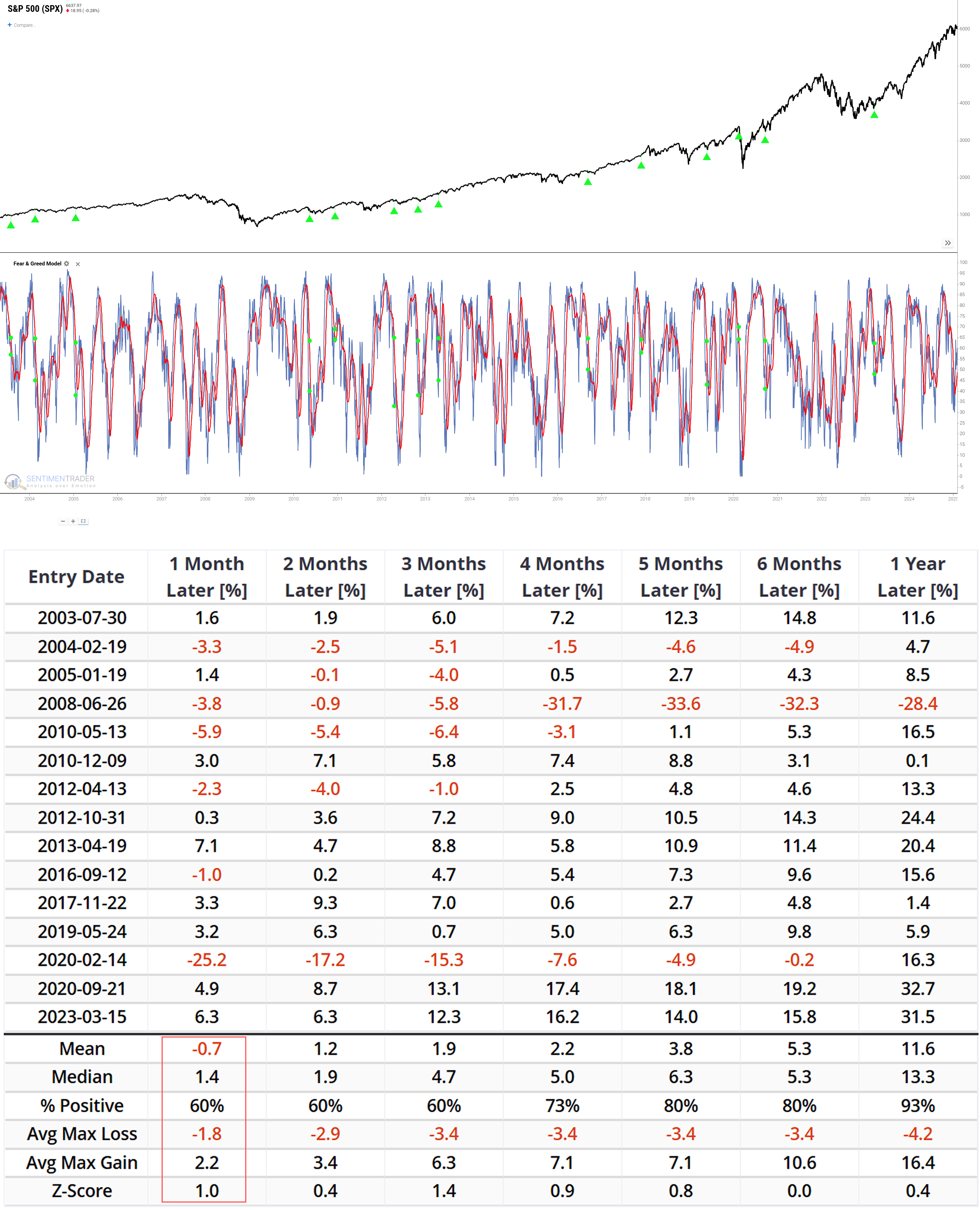
From the broadest historical data, this major trend shift is itself a mixed signal with poor short-term returns. As shown in the table below, across all historical cases that meet this condition, the market's median 1-month forward return was +1.4% but the average was -0.7%.
This indicates that when the market's underlying sentiment trend breaks down so significantly, it has often led to immediate weakness before a longer-term recovery.Related Backtest Click Here.
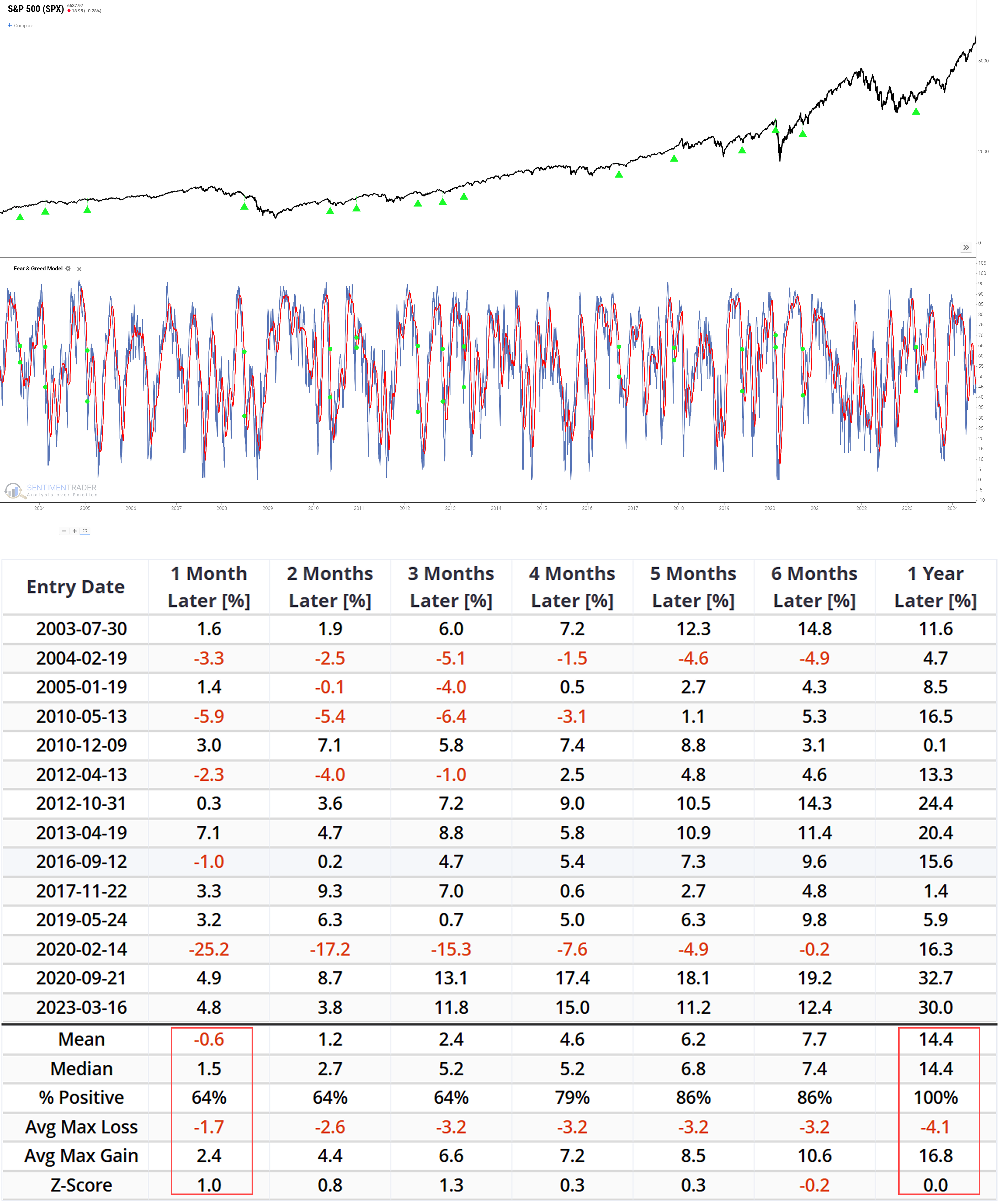
However, the market's background and environment are crucial. If we further narrow the screening criteria to only include signals that occur when the S&P 500 Index is above its 200-day moving average (i.e., in an established long-term bull market), historical returns become more encouraging in the long run, but still show significant short-term pain.
In such "correction within a bull market" scenarios, the market's median 1-year forward return is a strong +14.4%, but the median 1-month return is only +1.5% and the average return is negative. This strongly suggests that even within an uptrend, this major sentiment breakdown often triggers a significant pullback before the primary trend resumes.Related Backtest Click Here.
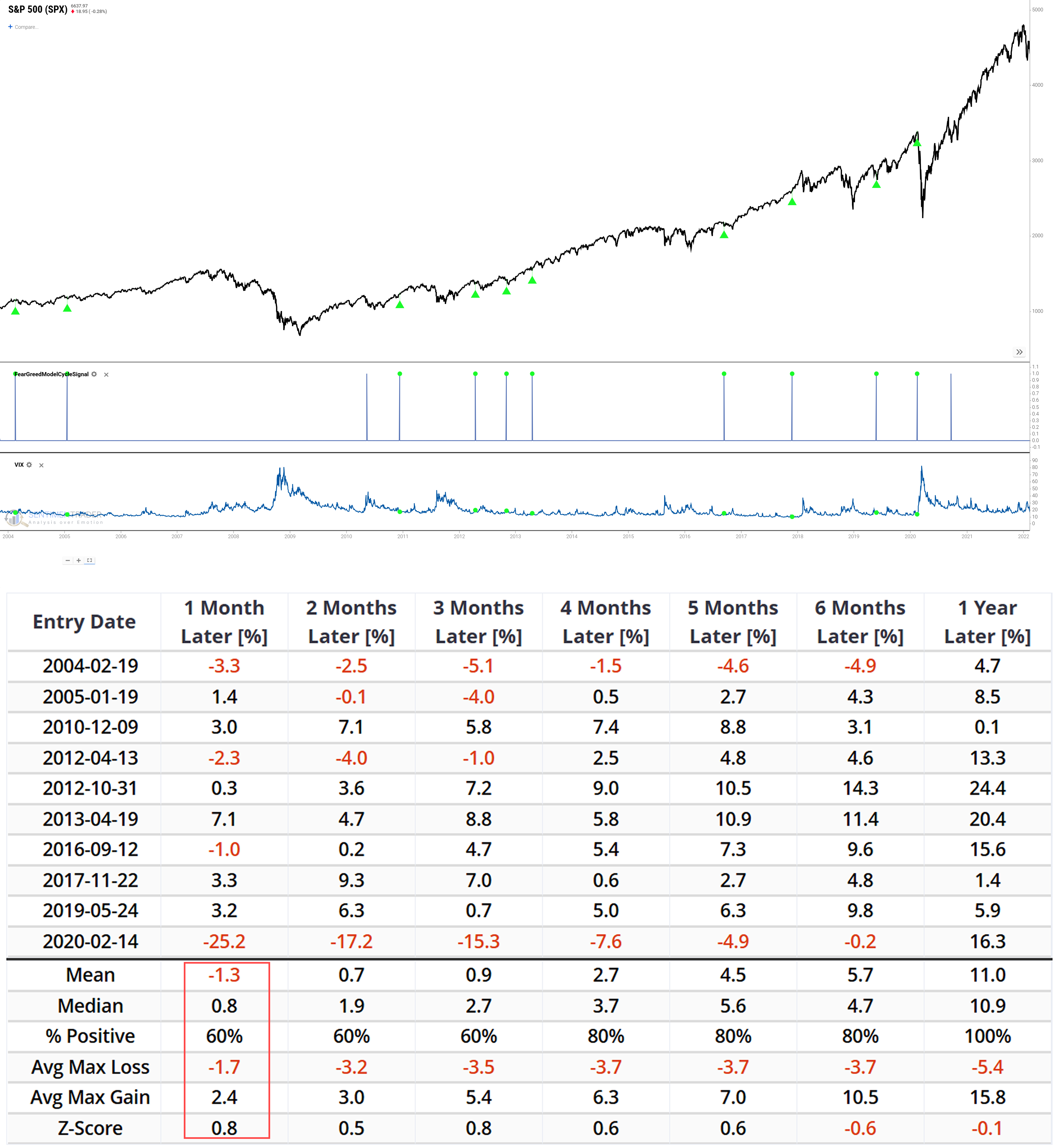
There is, however, a notable detail in the current situation. When we add a third screening criterion-the one that best fits the current market context-VIX Fear Index below 20, the short-term outlook becomes even weaker.
The VIX Index is the market's "fear gauge"; a low VIX means the market is extremely complacent and lacks risk-aversion sentiment.
Historical data shows that when this major sentiment breakdown coincides with "extreme complacency," the market often falls into a state of hesitation in the short term. As shown in the table below, the 1-month average return was a weak -1.3%. This suggests the combination of a major sentiment breakdown and high investor complacency is a potent recipe for short-term downside.Related Backtest Click Here.
A Warning Signal from the Credit Market
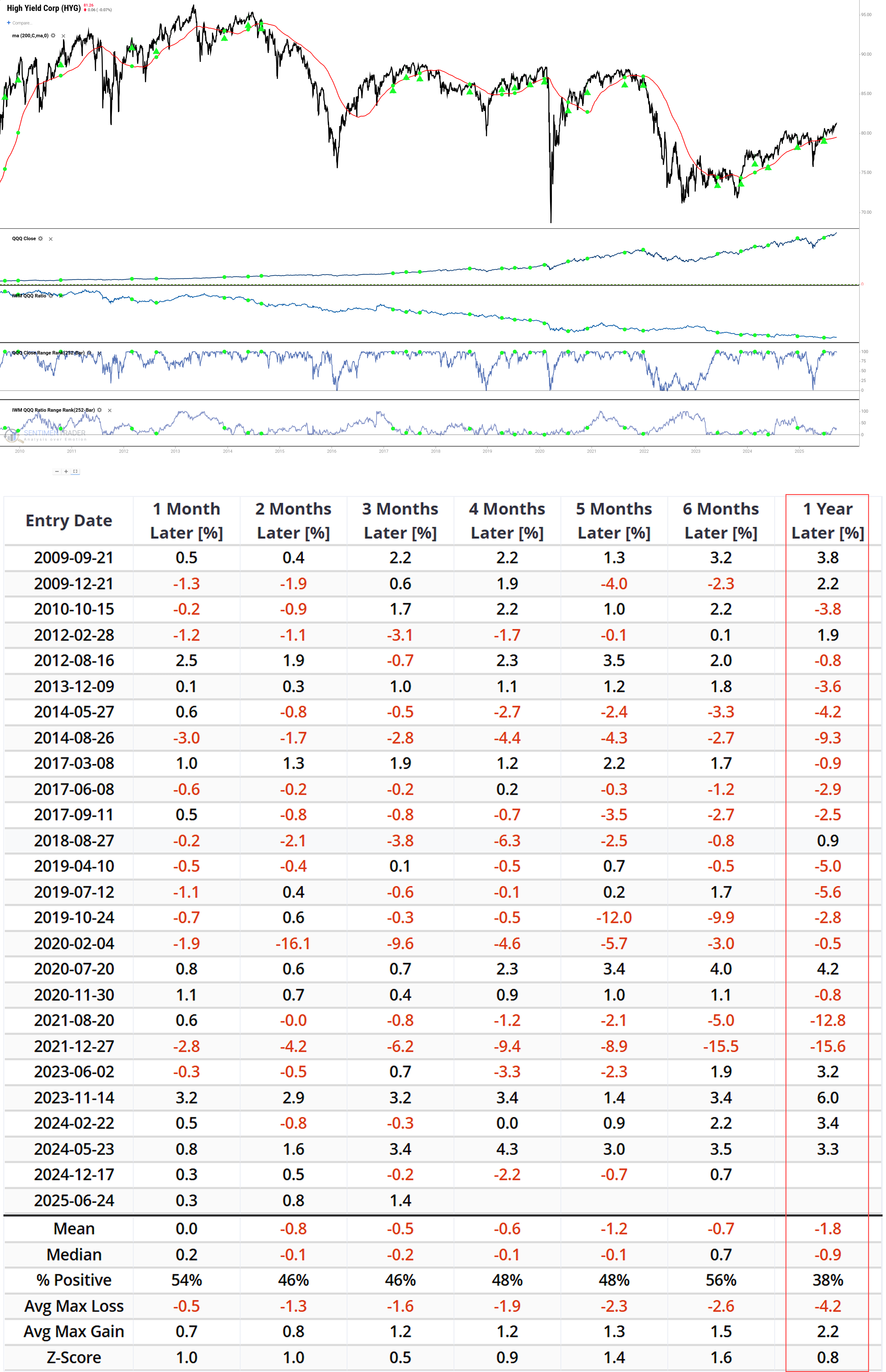
While the stock market's long-term outlook seems optimistic, an independent backtest on internal market structure has uncovered a potential risk-triggered when three conditions coincide, reflecting dangerous market divergence.
The credit market appears healthy (high-yield bond ETF HYG above its 200-day MA); large-caps (especially tech, via QQQ) stay strong near 52-week highs; small-caps (via IWM) underperform sharply, with IWM/QQQ ratio in the bottom 30% of the past year's trading days.
The market rally relies only on a few large-cap leaders, while small/mid-caps-more reflective of overall economic health-lag, a typical sign of worsening market breadth.
History doesn't repeat, but it rhymes: this "generals charge, soldiers lag" divergence often leads to poor future HYG performance.
Data shows a clear negative trend: in a year, HYG has negative average returns and a mere 38% rise probability. HYG is sensitive to economic slowdowns and defaults, and small-cap underperformance warns of economic trouble-making this divergence a "canary in the coal mine" for credit market risks.Related Backtest Click Here.
What the Research Tells Us...
Synthesizing the data, the signals are now pointing in a more consistent and cautionary direction.
On one hand, the breakdown of the 20DMA of sentiment is a serious warning that the long period of optimism has definitively ended. This is not a healthy cool-down but a significant loss of momentum that has historically led to short-term weakness.
On the other hand, internal structural issues can't be ignored. The HYG backtest reveals worsening market breadth-a clear short-term headwind and credit risk warning. This concern is now strongly validated by the major negative shift in the underlying sentiment trend.
In summary, the market is likely facing a more challenging period of correction or extended consolidation. Historical data points to a high probability of negative returns in the immediate month ahead, even if the one-year outlook may remain promising. Investors should be cautious of the significant short-term risks and monitor credit and small-cap trends; HYG breaking support or worse small-cap weakness signals higher risks.