
A historic surge in the price of cocoa suggests a blow-off top

Key points:
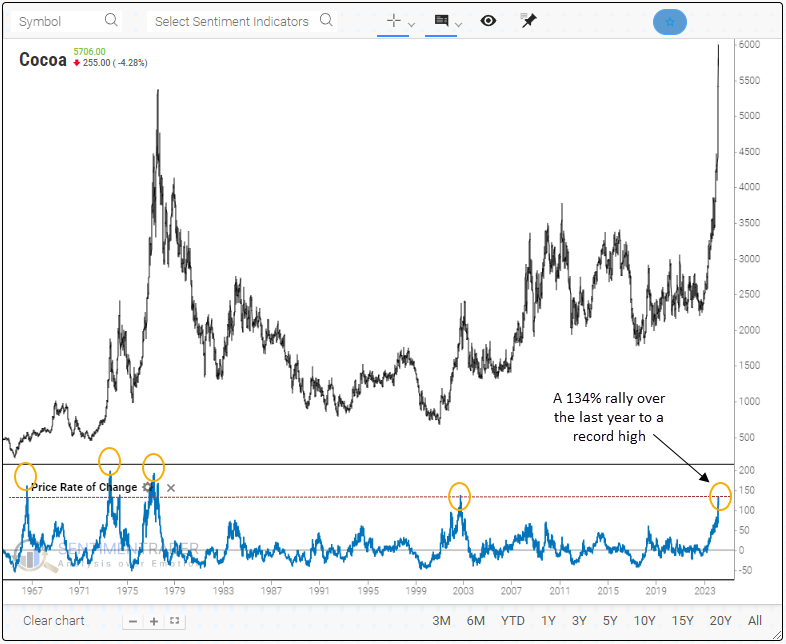
- Cocoa prices surged a little more than 134% over the last year, reaching the highest level in history
- Similar price behavior over several time frames suggests an impending reversal lower for the commodity
- Should the commodity reverse lower, stocks negatively impacted by the cocoa surge may revert to higher values
"Parabolic advances usually go further than you think, but they do not correct by going sideways." - Bob Farrell
The aforementioned statement by acclaimed market strategist Bob Farrell represents one of his well-known trading principles, a set of guidelines that investors have been passing down for decades, remaining just as relevant today as when he originally formulated them.
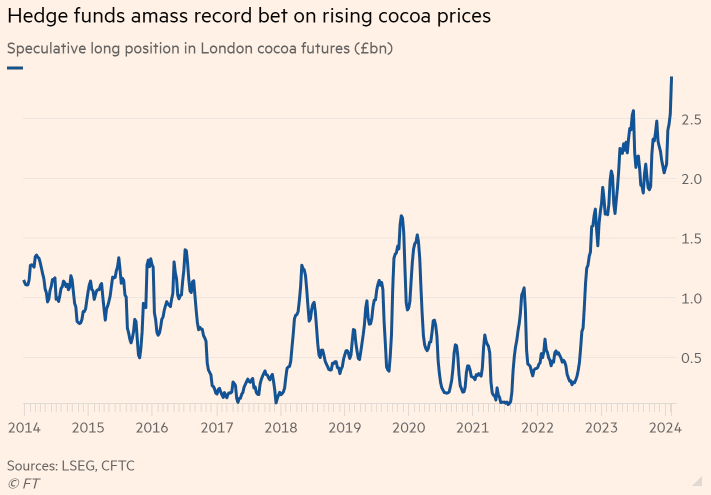
According to the Financial Times, the 134% rise in cocoa prices to a record high in the last year was initially driven by poor harvest yields and further exacerbated by massive speculation by traders, as the chart below indicates.
With Bob Farrell's rule in mind, let's analyze the cocoa market's outlook following similar parabolic surges.
The new Correlation Pattern Match tool provides a practical methodology for evaluating potential changes in cocoa prices by analyzing the correlation between current price behavior and historical trends.
The dramatic ascent witnessed over the past year has only been paralleled on four previous occasions in history. Is there a chance this instance will diverge from the norm? Remember, commodities rarely trend upward for extended periods.
The Correlation Pattern Match solution
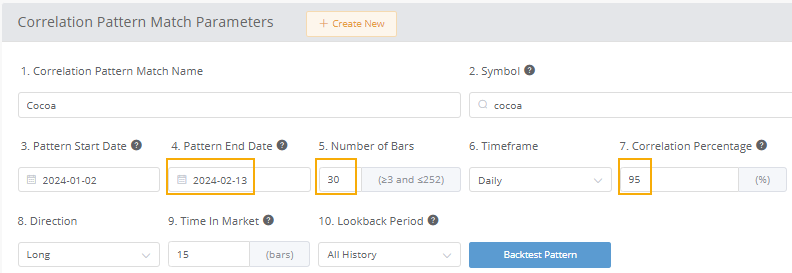
Using the new CPM tool, I will conduct a test to compare price behavior over the previous 30, 63, 126, and 252 sessions using a correlation percentage of 95% for each period. To reflect the most recent peak in the price of cocoa, I used 2024-02-13 as the pattern end date.
Here's an example of the parameters for the 30-day/bar correlation study.
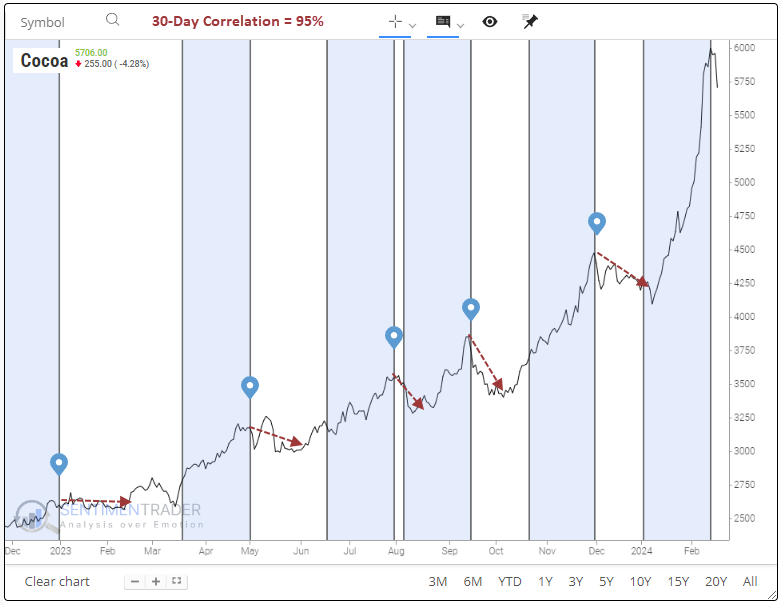
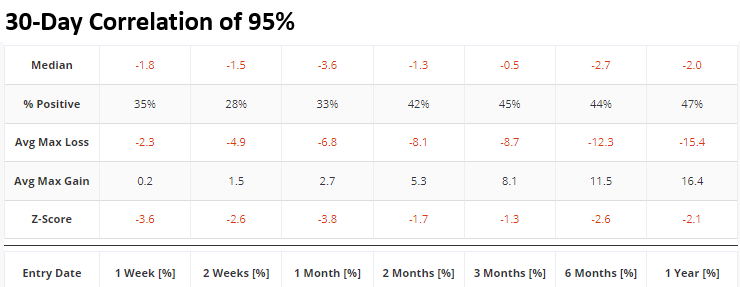
A 30-day correlation of 95% found 81 other periods since 1961 that matched the previous 30 sessions. Several of those instances occurred within the context of the parabolic rise over the last year, leading to short-term corrections.
In instances where cocoa prices surged over a 30-session period, similar to now, it's common to observe a downside reversal in the near term, especially over the subsequent two weeks, which shows a 28% win rate. Even when examining longer time horizons, the outlook remains bleak.
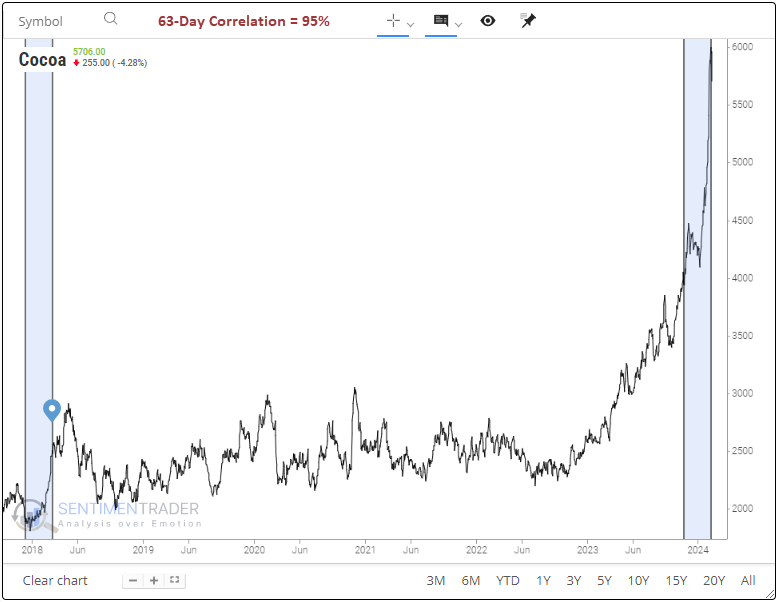
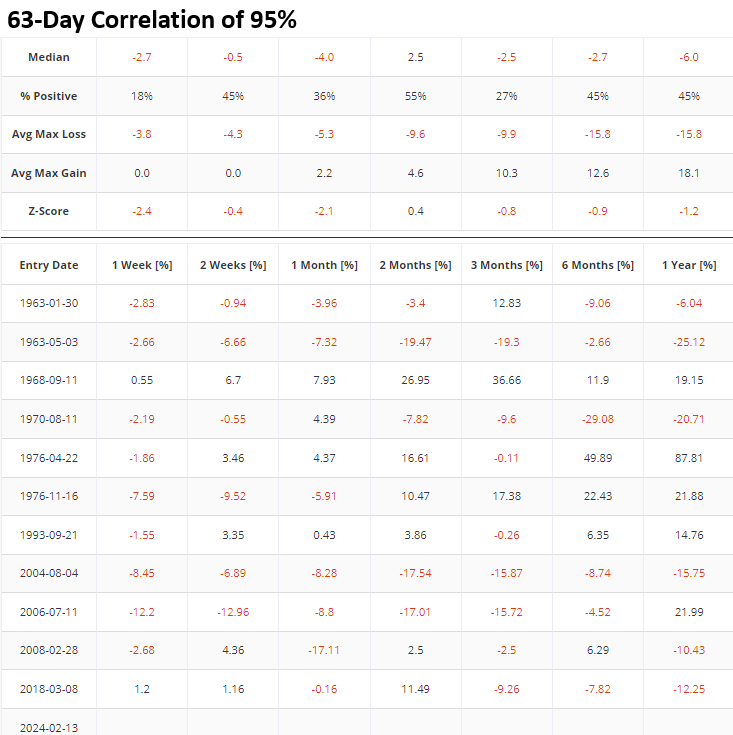
A 63-day correlation, boasting a confidence level of 95%, pinpointed 11 other precedents since 1963, with the latest instance recorded in 2018.
Similar price behavior over 63 sessions led to negative returns for cocoa across all time horizons except the 2-month window. Results a week later were abysmal, with an 18% win rate.
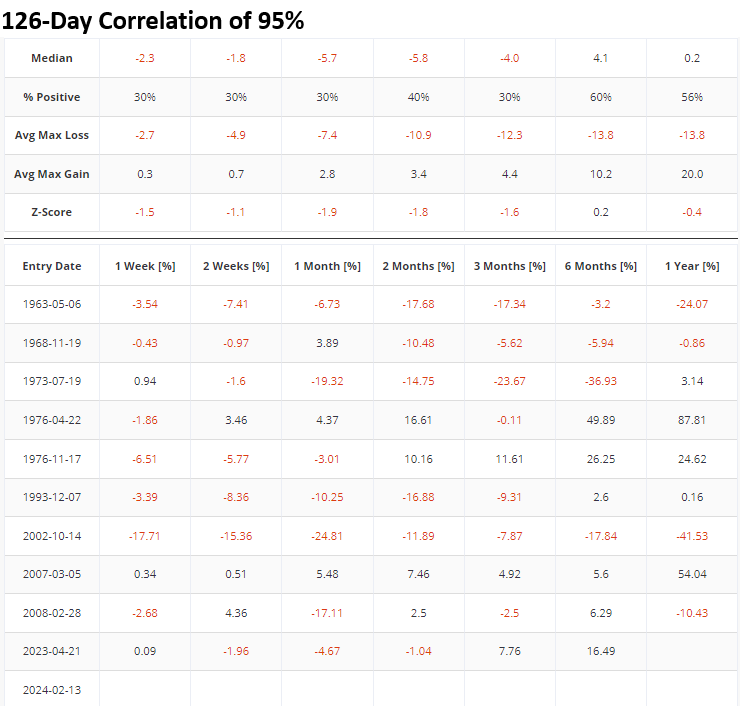
With a correlation level of 95%, a 126-day lookback detected ten precedents since 1963, the most recent occurring in 2023.
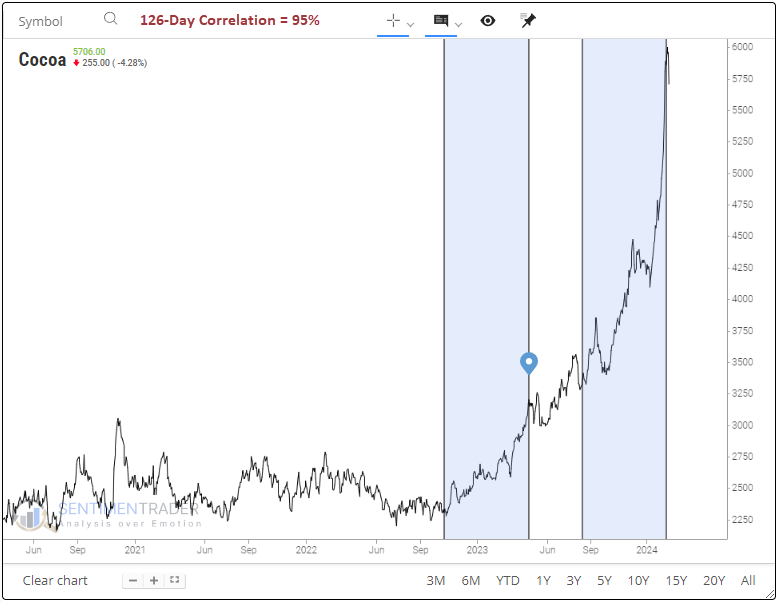
Comparable price behavior over a 126-session period preceded negative returns for cocoa over the subsequent three months. Despite a positive six-month horizon, the outlook a year later was lackluster.
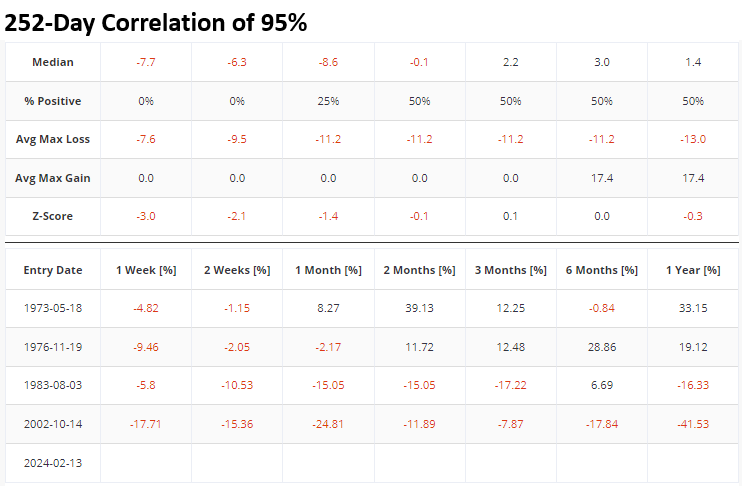
Price behavior similar to the last 252 sessions predominantly occurred in the 1970s and early 80s, a period that differed notably from the current broad commodity market landscape.
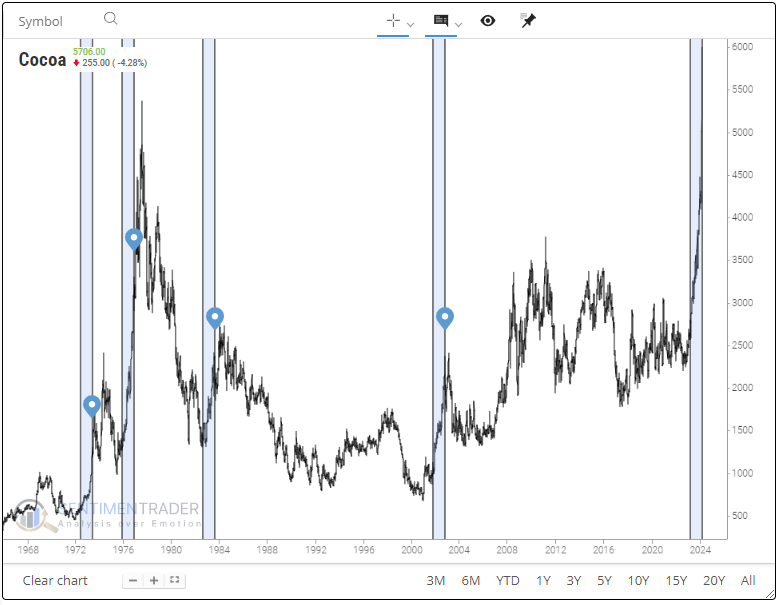
Even if cocoa is in a sustained uptrend like the 1970s, there's a chance it might undergo a downturn in the short term, echoing patterns observed in 1973 and 1976.
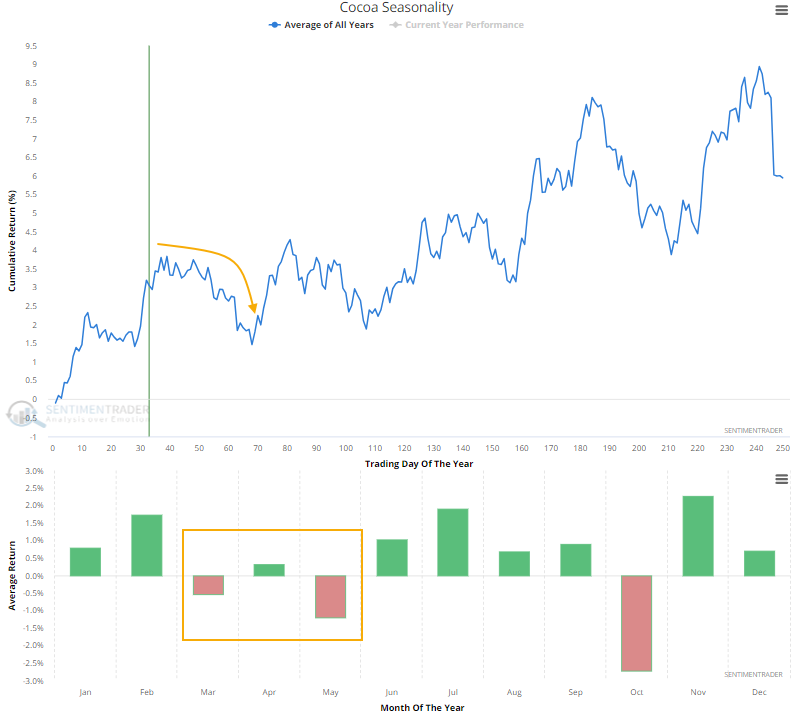
Seasonality
A seasonality chart for cocoa suggests the commodity is on the verge of entering a soft patch, with two out of the next three months exhibiting negative returns.
How can traders take advantage of a potential blow-off top in cocoa?
Unfortunately, the absence of a cocoa ETF poses a challenge for traders with a traditional brokerage account. Engaging in the cocoa futures market demands a level of proficiency in timing and risk management, making it a suitable avenue only for seasoned traders. Those with the capability to trade options on futures may find a put contract to be a preferable approach, as the primary risk is confined to the premium paid for the contract.
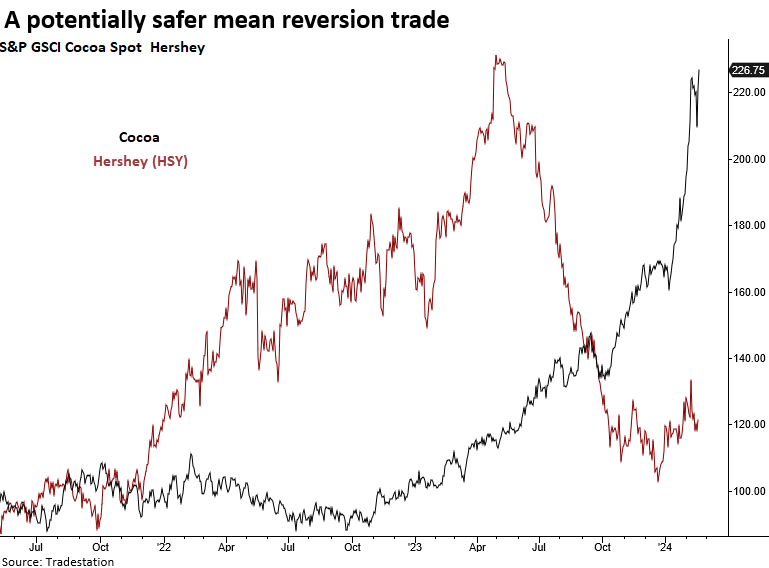
One other suitable choice might be to play a long position in a company like Hershey, which has been in a severe downtrend since last May as the price of cocoa exploded higher.
What the research tells us...
Over the past year, cocoa prices have experienced a remarkable rally, primarily influenced by adverse weather conditions that affected harvest yields. This supply shock and heightened speculation by traders propelled cocoa prices to unprecedented levels. Using the new correlation pattern match tool to assess the outlook for cocoa across multiple time frames suggests the commodity may have increased too much and is ripe for mean reversion, a common feature of commodity markets. A less risky approach to leverage a decline in cocoa prices is to purchase a stock, like Hershey, which the commodity's ascent has severely impacted.