
A Failed Zweig Breadth Thrust? Does it Matter?

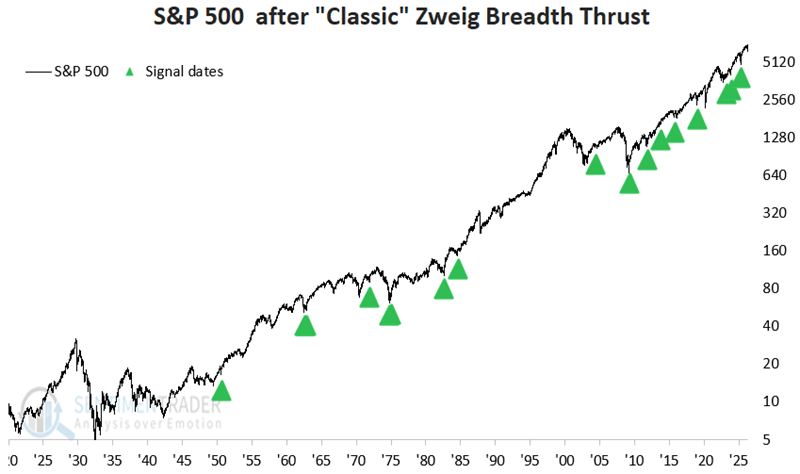
Key points:
- A "Breadth Thrust" detects market momentum, and typically involves a large number of stocks advancing over a given period relative to the number of stocks declining over the same period
- In this note, I detailed a setup that I refer to as a NASDAQ Breadth Thrust, which occurs when the 10-day total of Nasdaq advances exceeds the 10-day total of Nasdaq declines by 62% or more
- A "Classic" Zweig Breadth Thrust signal failed to occur during the recent rebound rally; However, the data detailed below raises the question, "Does close enough count?"
The Classic Zweig Breadth Thrust signal
The "Classic" Zweig Breadth Thrust (ZBT) involves the 10-day EMA of NYSE Advances divided by NYSE Advances plus NYSE Declines. This indicator triggers a favorable signal when it moves below 0.40 and then surges above 0.615 within 10 trading days. The most recent completed signal occurred on April 25th, 2025. Since that time, the S&P 500 has gained 30%. The figures below show the results of previous "Classic" Zweig Breadth Thrusts, and why they are such a popular and useful signal for investors.