
A crucial signal to monitor in bear markets

Key points:
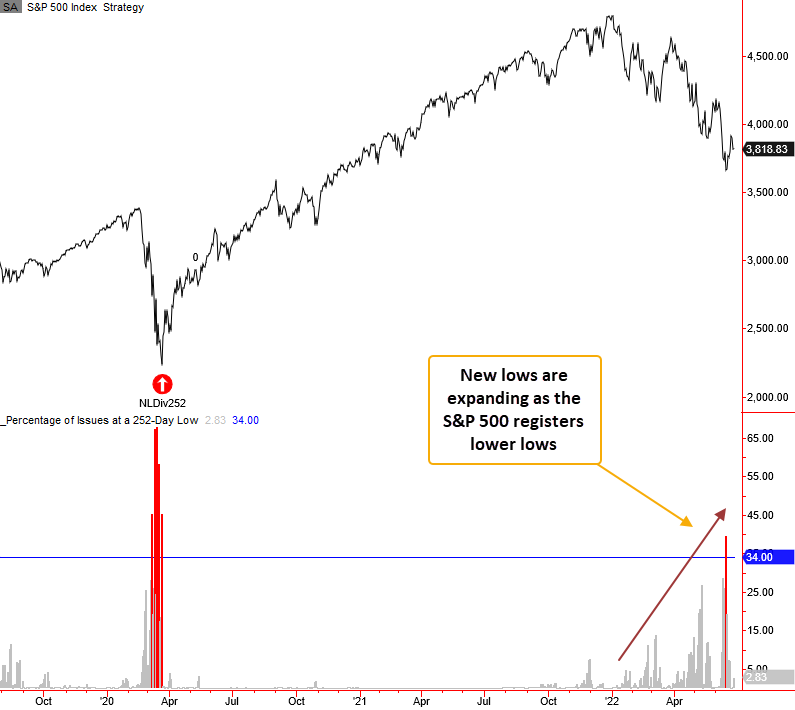
- 252-day lows for S&P 500 issues surged above 39% on 6/16/22
- With a cross above 34%, a model that identifies a divergence in new lows is locked and loaded
- We now need to see a lower low in the S&P 500 with fewer issues registering a low
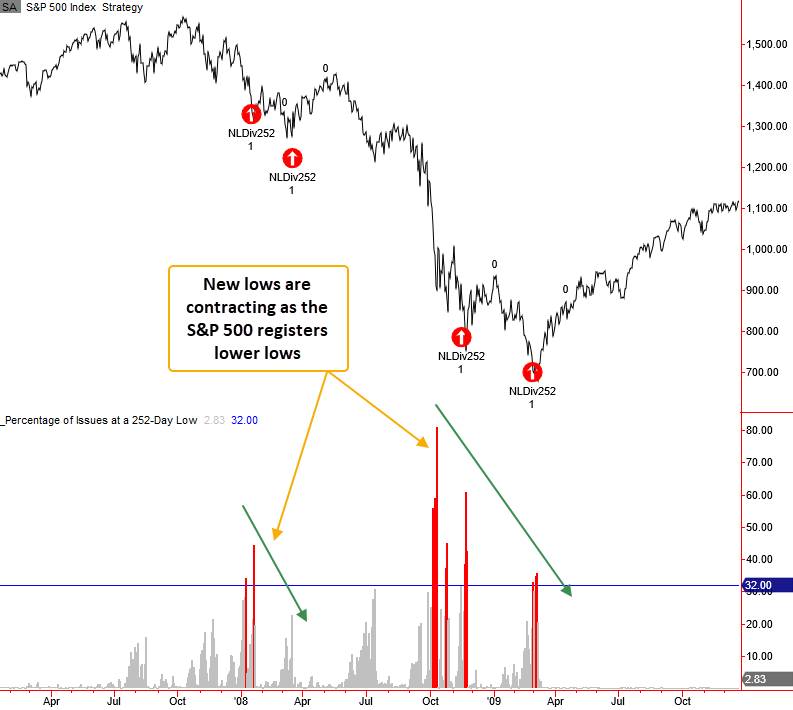
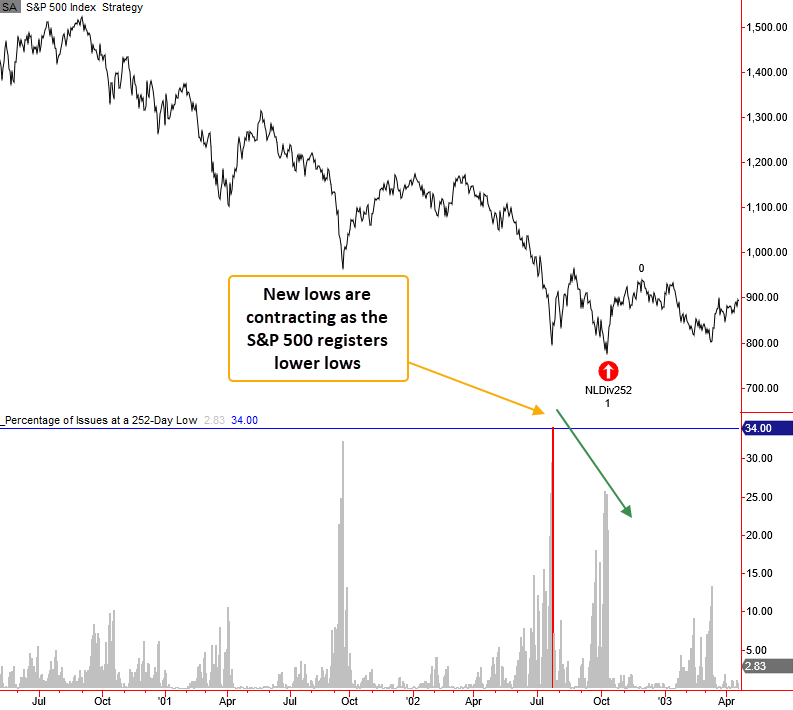
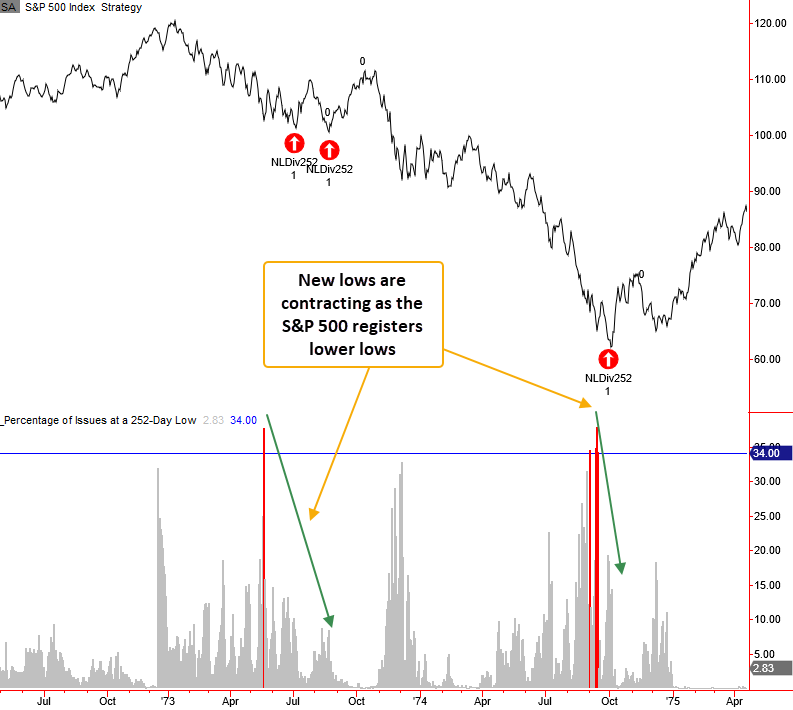
Historically, markets bottom when lows are contracting, not expanding
In my note on Wednesday, I shared a new signal from my TCTM composite washout model. The composite model contains 10 components, 3 of which seek to identify a divergence in new lows across multiple durations. As I stated in my note, it's somewhat troubling that 2/3 of the new low divergence components did not trigger a signal. Historically, meaningful market lows occur when fewer issues register a new low as an index records lower lows. Market participants call this a divergence.
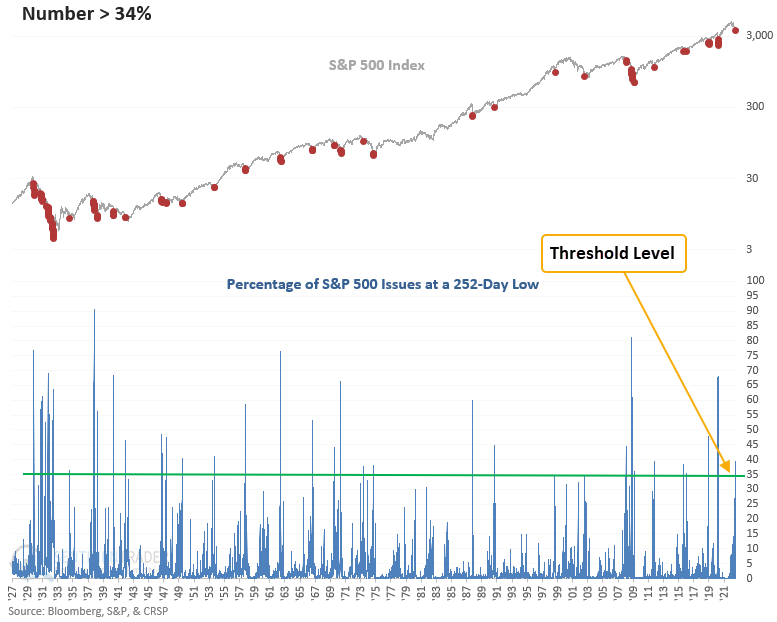
The new lows divergence model that I created requires the percentage of new lows to exceed a user-defined level before a signal can occur. In the case of the 252-day low model, it must exceed 34%. Once achieved, the model will trigger an alert if the percentage of lows is less than that level and the S&P 500 registers a lower low. I use a window of 5 to 100 days for the alert. i.e., a signal cannot occur outside of that window.
Let's review the historical signal performance and charts for the 252-day divergence model.
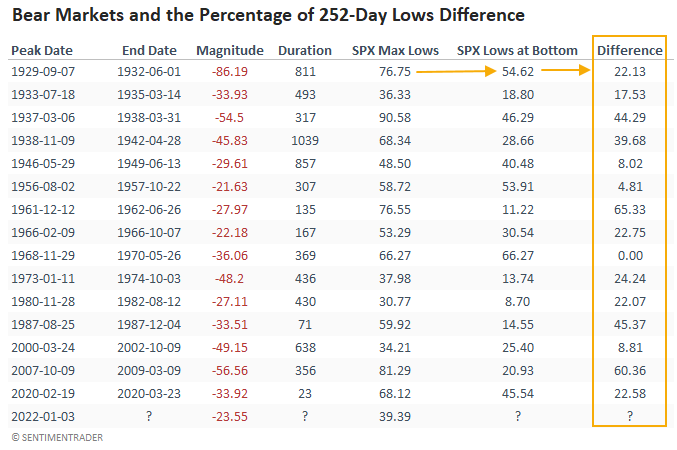
Suppose we compare the maximum percentage of 252-day lows in a bear market to the level at the final low in the index. In that case, we see a difference in all but one instance. Historically, markets bottom when lows are contracting.
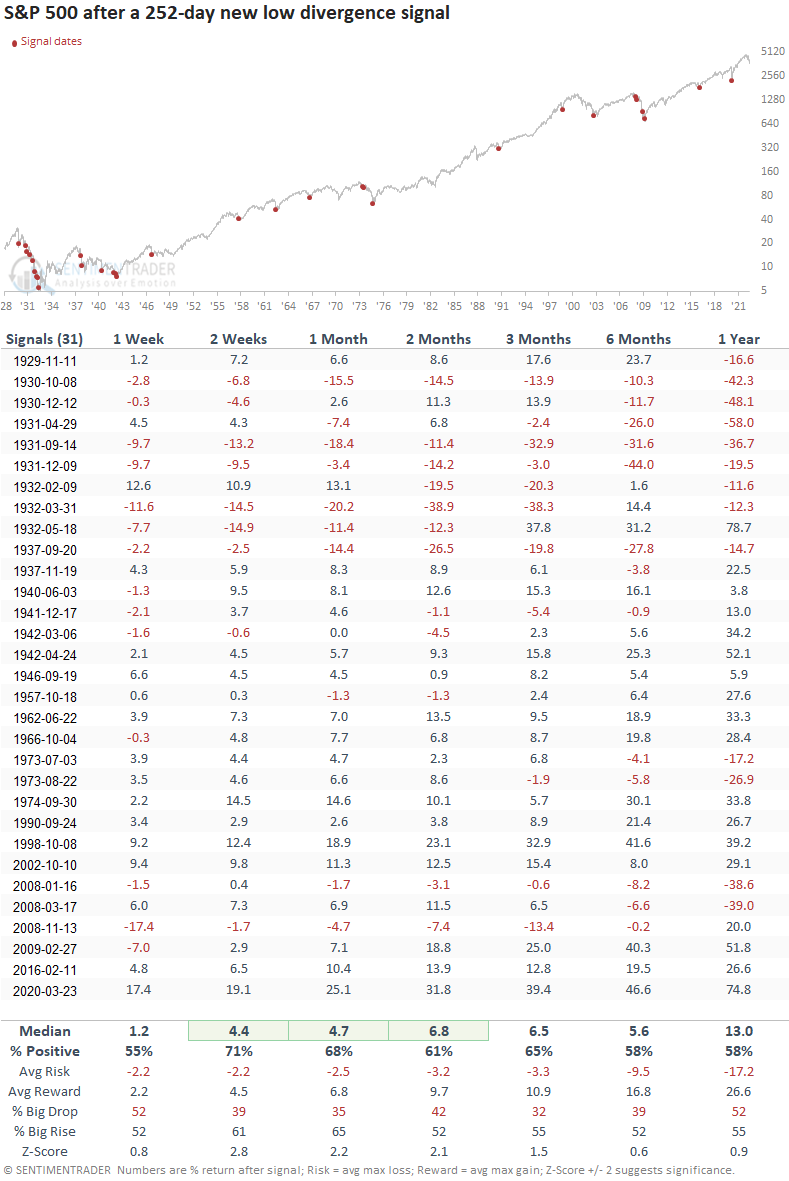
New low divergence signals preceded positive returns
My divergence model generated a signal 31 times over the past 93 years. After the others, S&P 500 future returns, win rates, and risk/reward profiles look solid in the 2-8-week range. As with most historical analyses, the outlook improves after the 1929-32 bear market period. Since 1937, the 1-month time frame shows a positive return in 18 out of 21 instances.
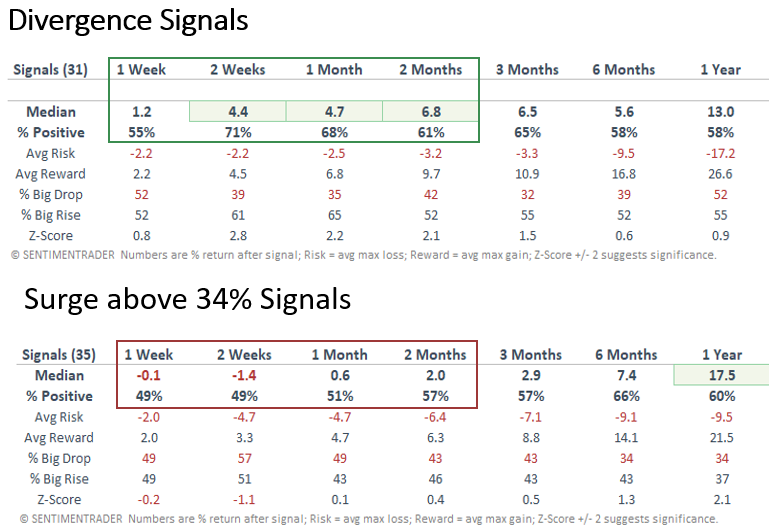
New low divergence signals provide a better near-term outlook
Suppose we compare the divergence signals to a signal that buys the S&P 500 when new lows expand above 34%, the hurdle rate used in the divergence signal. In that case, we see a significantly better outlook across short to medium-term time frames for divergence signals. So, one would be better off waiting for less downside participation from the individual index members.
Let's zoom in and review some of the bear market signals/charts since 1929.
Current day chart example
2007-08 bear market chart example
2000-02 bear market chart example
1973-74 bear market chart example
1968-70 bear market chart example
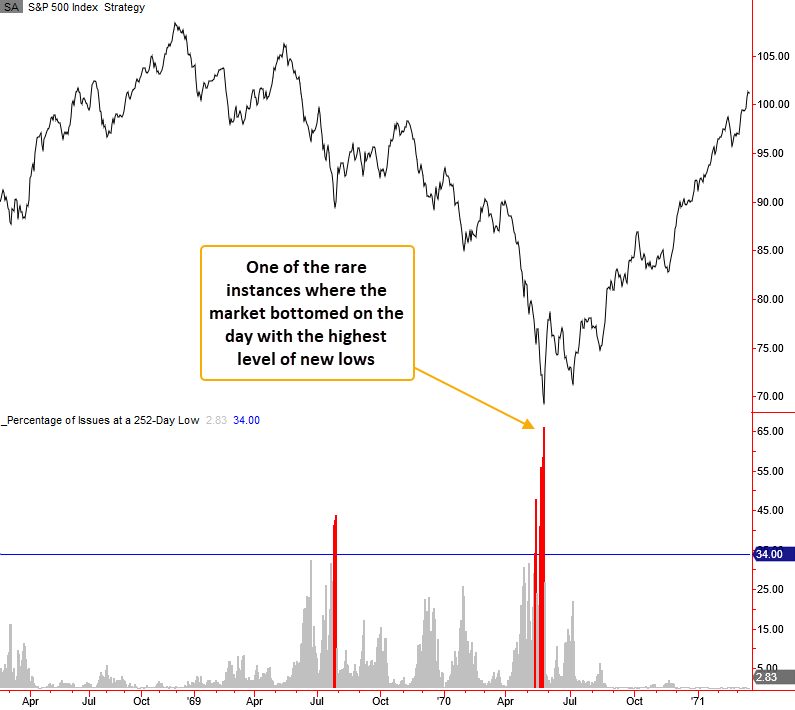
1966 bear market chart example
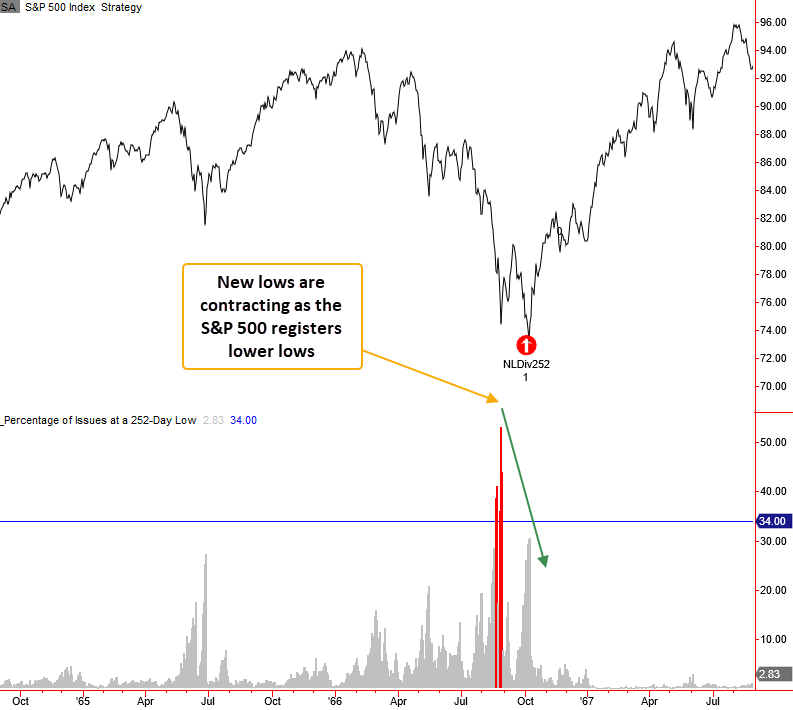
1962 bear market chart example
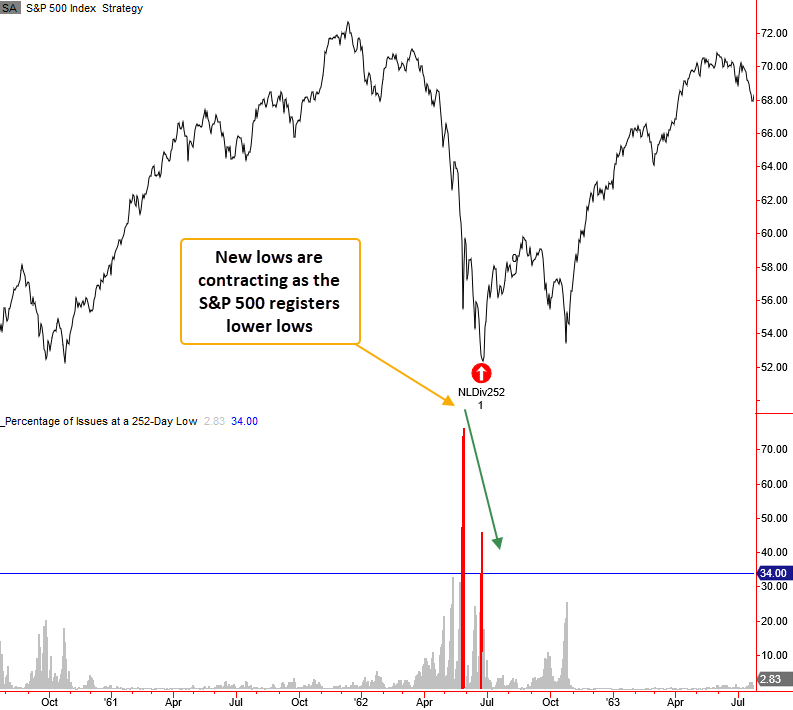
1946-49 bear market chart example
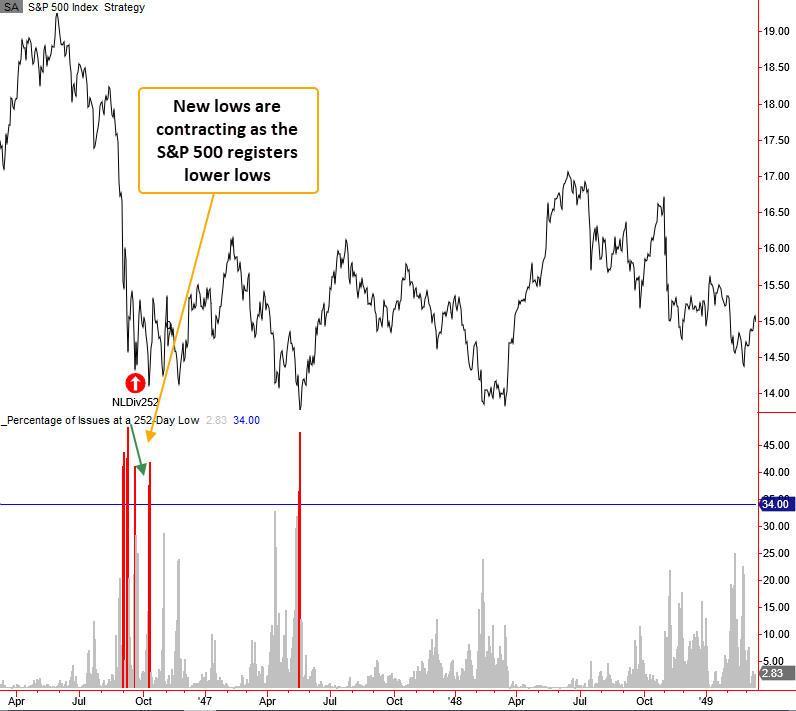
1937-42 bear market chart example
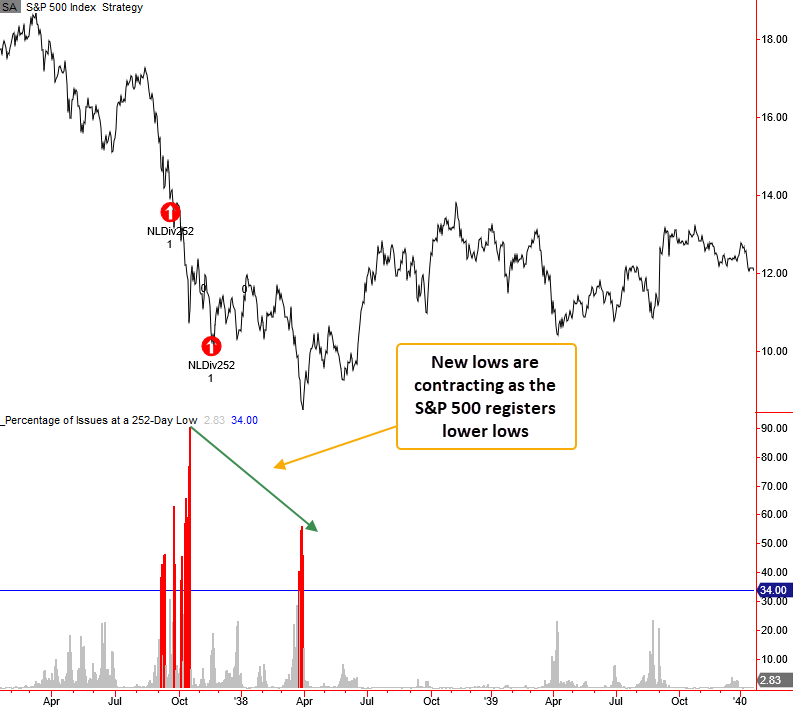
1929-32 bear market chart example
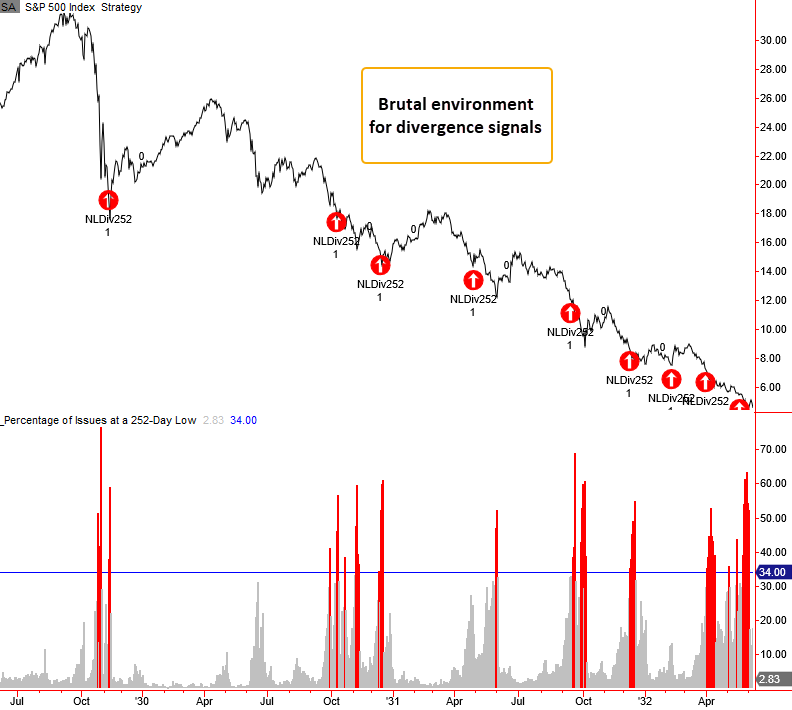
What the research tells us...
When the percentage of new lows in an index contracts as the index registers lower lows, the internal healing process creates a divergence setup that provides a better launch pad for a market rally. Stay tuned for a potential signal.