
A considerable number of Industrial stocks are breaking out

Key points:
- Over 30% of Industrial sector stocks registered an annual high, with the index closing at an all-time high
- Similar expansions in new highs suggest the uptrend in the group continues over the following year
- While most industrial stocks maintain bullish trend profiles, relative indicators are showing notable improvement
A cyclical sector shows an abundance of new highs
While technology stocks dominate the headlines and investor focus, the industrial sector has quietly been making significant strides under the surface, with more and more stocks breaking out and exhibiting bullish trends.
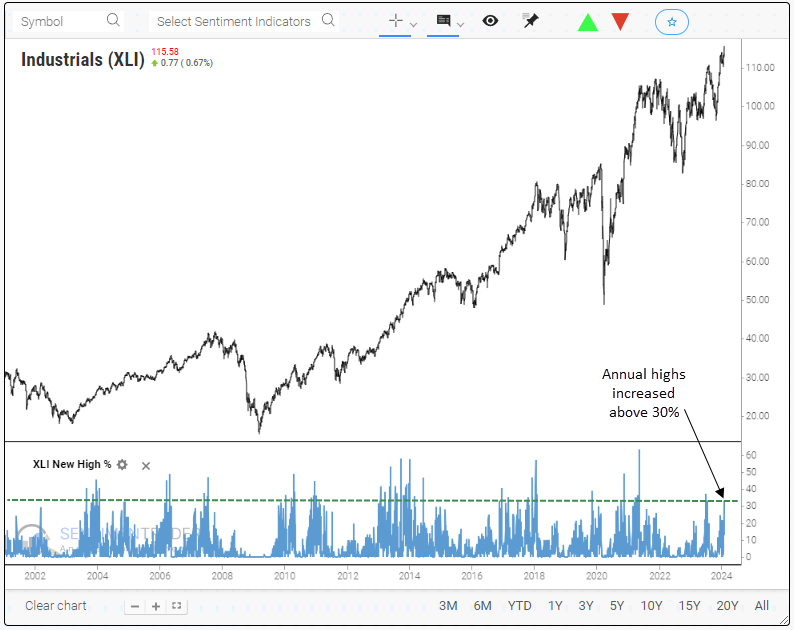
This past Friday witnessed a noteworthy achievement for the S&P 500 Industrial sector, with over 30% of its stocks registering an annual high, outpacing all other groups.
Given the endless debate on a soft versus hard landing, should we trust the macro-oriented bears' perspective or a real-time market message from industrial stocks?
As a former money manager, George Chesnutt, once said, "The best forecaster of market action is the action of the market itself."
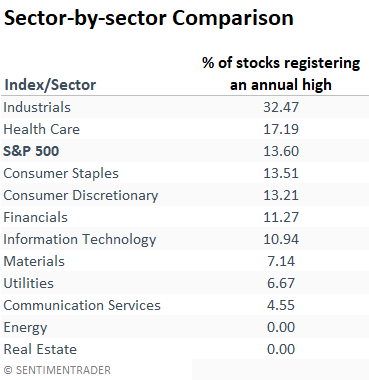
On a day when Meta and Amazon propelled the S&P 500 to a new all-time high while overall market breadth was anemic, the industrial sector quietly notched a substantial number of annual highs, almost doubling the percentage recorded in the second-best group, healthcare.
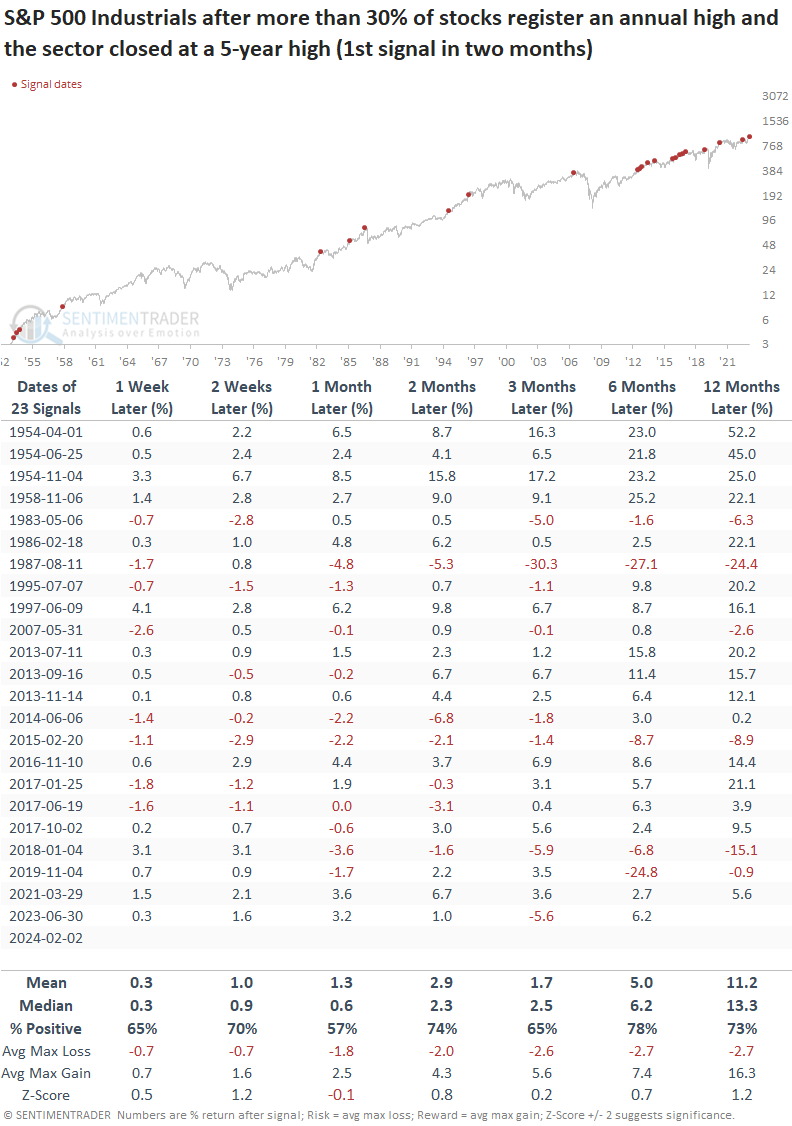
Similar expansions in annual highs preceded a bullish outlook
The S&P 500 Industrials sector shows an upward trajectory over the subsequent year when annual highs expand by 30% or more, with the index closing at a 5-year high. Over the following six months, the sector encountered only four instances of a maximum loss exceeding -10%, with two of these occurrences representing rare crash events in 1987 and 2020.
It's worth noting that a significant number of precedents occurred since 2009, a period dominated by growth stocks.
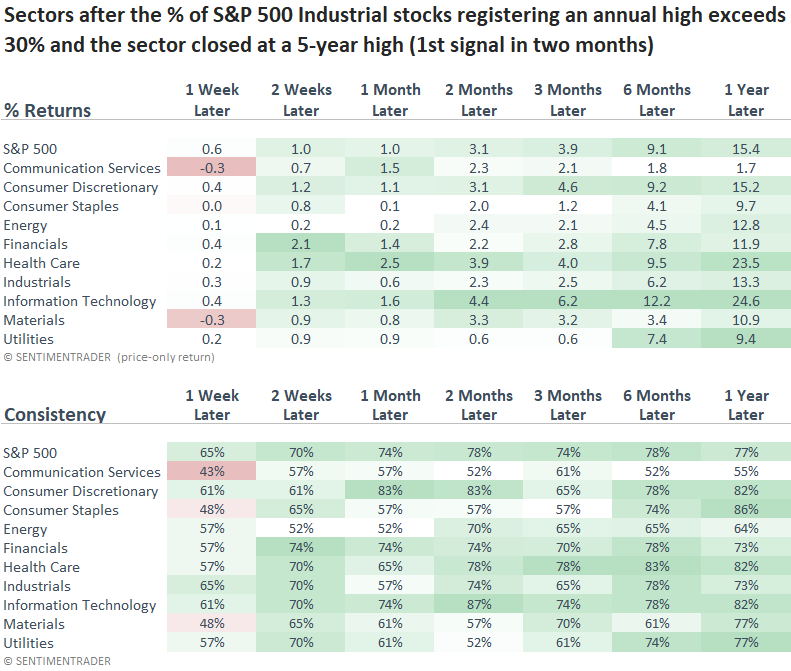
Interestingly, the expansion in new highs within Industrials did not lead to outperformance relative to the S&P 500 and growth-oriented groups like Technology, Healthcare, and Consumer Discretionary over the subsequent year. However, it did outperform other value-oriented groups and defensives like Staples and Utilities.
In my experience, allocating capital to specific stocks within the industrial sector benefits investors more than opting for a broad-based vehicle such as the ETF (XLI).
Absolute and Relative Trend Scores
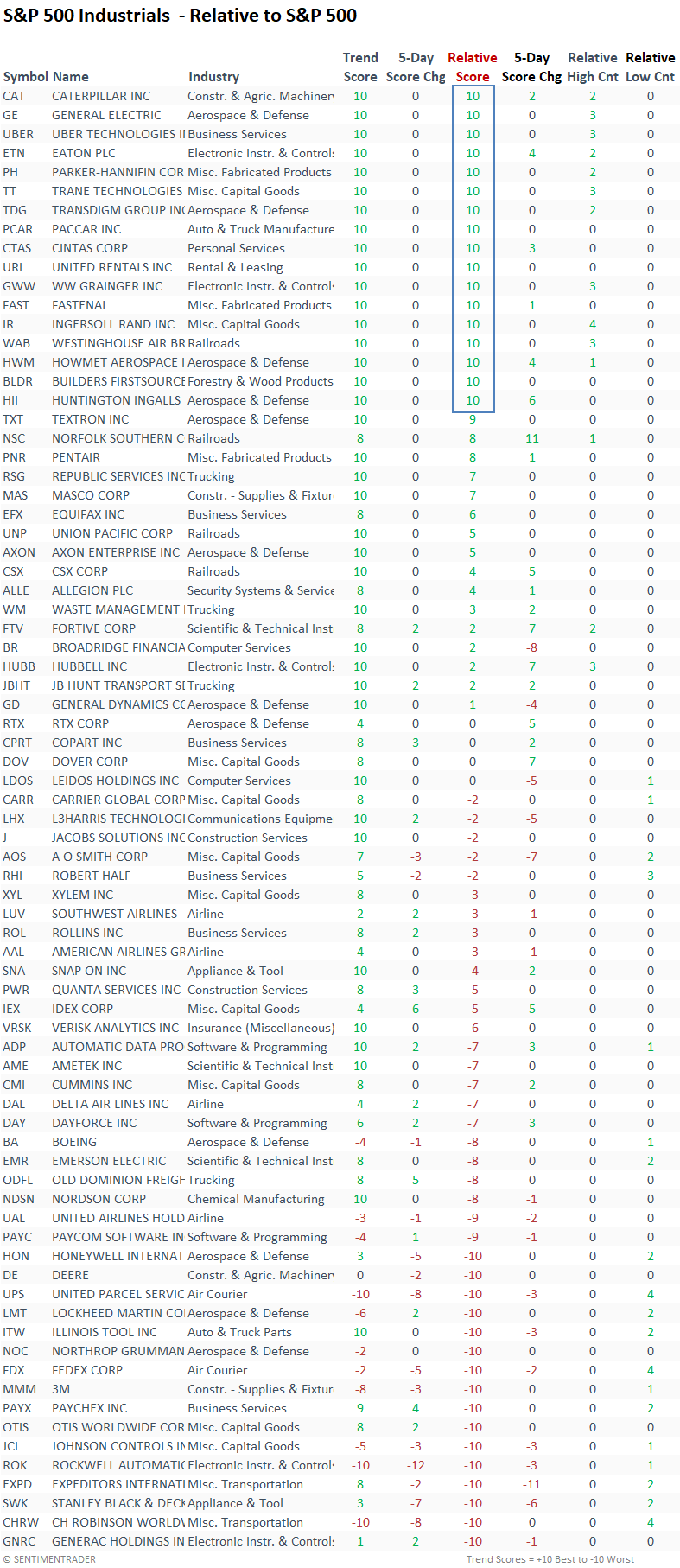
In a recent financial sector research note, the S&P 500 Industrials sector showed 18% of its respective members with a relative trend score of ten, ranking as the 4th best among all groups. As of Friday, the percentage has increased to 22%, trailing only Technology.
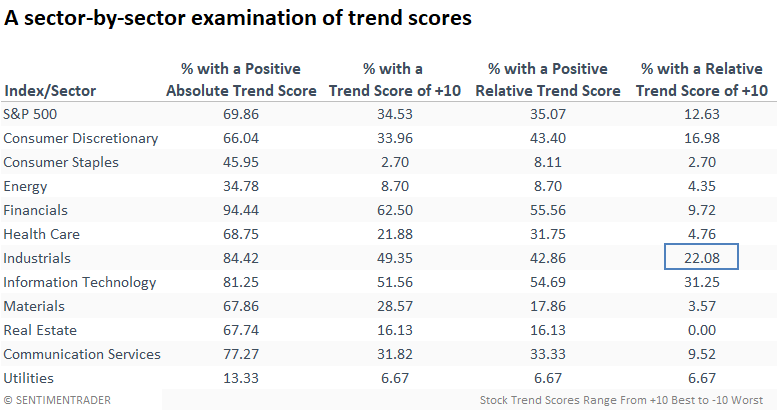
With a growing number of S&P 500 Industrial sector stocks climbing the relative trend score ladder, investors have plenty of opportunities to choose from despite an environment where growth stocks remain the leader.
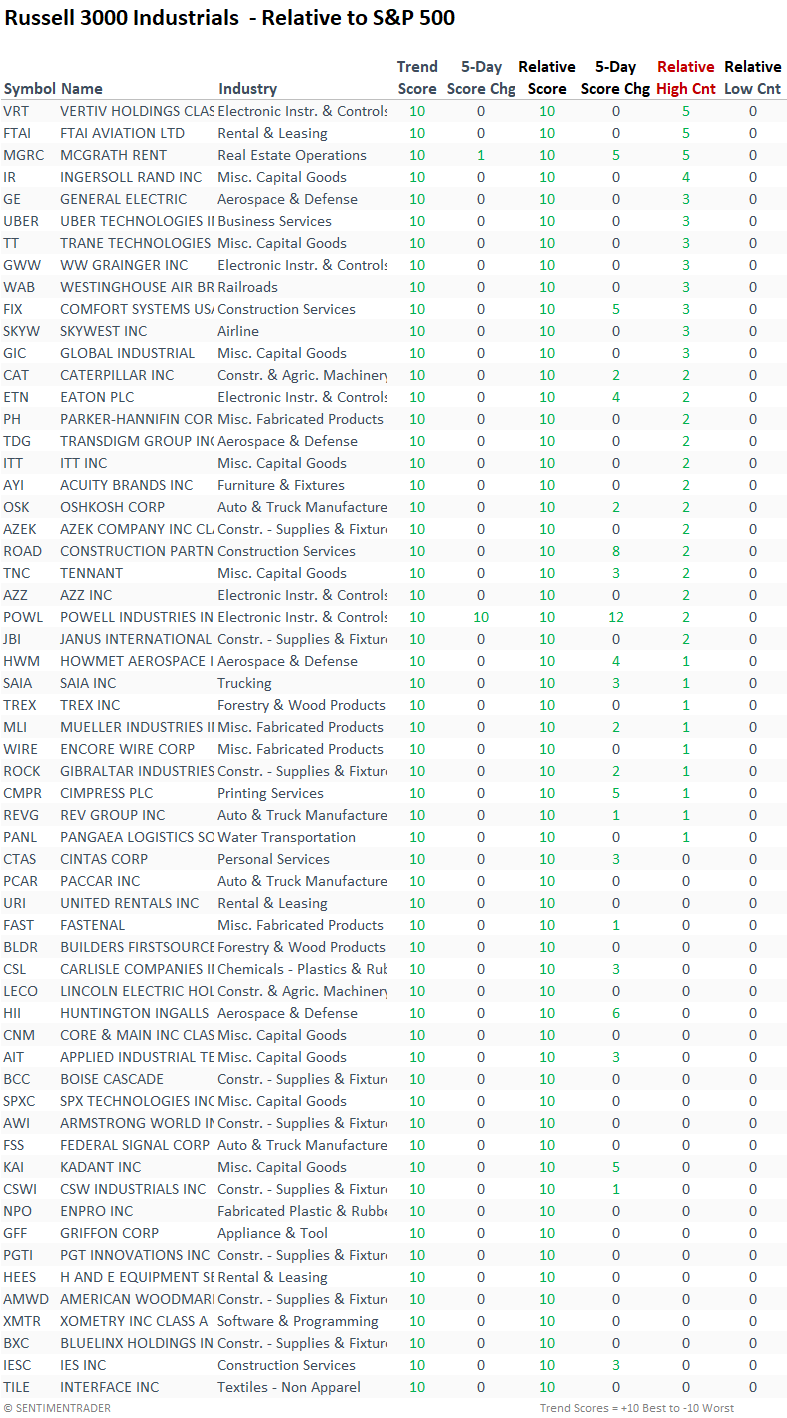
The following table contains every industrial sector stock in the Russell 3000 with a perfect absolute and relative trend score, sorted by the 1-month relative high count versus the S&P 500 over the preceding week. With 59 stocks, investors have a multitude of options to consider.
What the research tells us...
Over the last few weeks, I've shared several research notes highlighting an expansion in new highs for Technology, Financials, Healthcare, and now Industrials, denoting broad upside participation across growth and value-oriented groups. Although growth remains the dominant factor, investors can find opportunities in individual stocks showcasing bullish trends within value-based sectors. The Industrial sector is a compelling option, as its stocks are breaking out and displaying impressive absolute and relative trend scores.