
A bullish policy shift in Brazil

Key points:
- The Brazilian Central Bank lowered its target rate for the first time after a tightening cycle
- Similar shifts in policy led to an 86% win rate for the Ibovespa Index over the next three and six months
- Returns for the Brazil ETF (EWZ) tend to exceed those of the S&P 500 over the next six and twelve months
Brazil pivots from its restrictive monetary policy stance
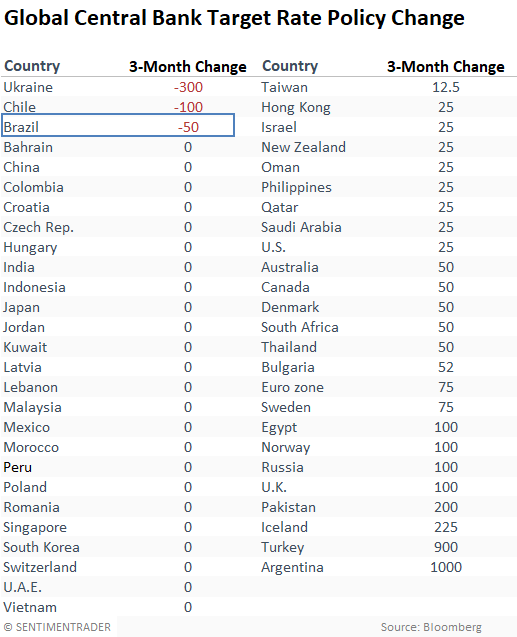
The Brazilian central bank cut its target rate on August 2nd, marking the third country to shift its monetary policy stance from tightening to easing. The accompanying statement emphasized the role of an improved consumer inflation outlook as a driver for the policy change.
Transitions from tightening to easing monetary policy typically generate a favorable response from stocks. When stocks respond negatively, the central bank's actions often come too late, with the economy already reeling from the repercussions of the tightening cycle.
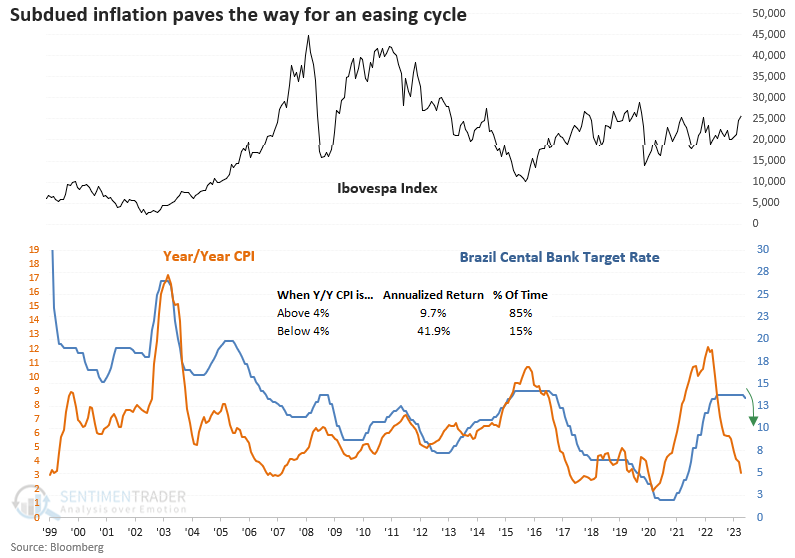
Inflation, central bank policy, and stock returns
Brazil's year-over-year Consumer Price Index dropped to 3%, a threshold reached in just 9% of months since 1999. Annualized returns of 42% are observed for the Ibovespa Index when CPI falls below 4%.
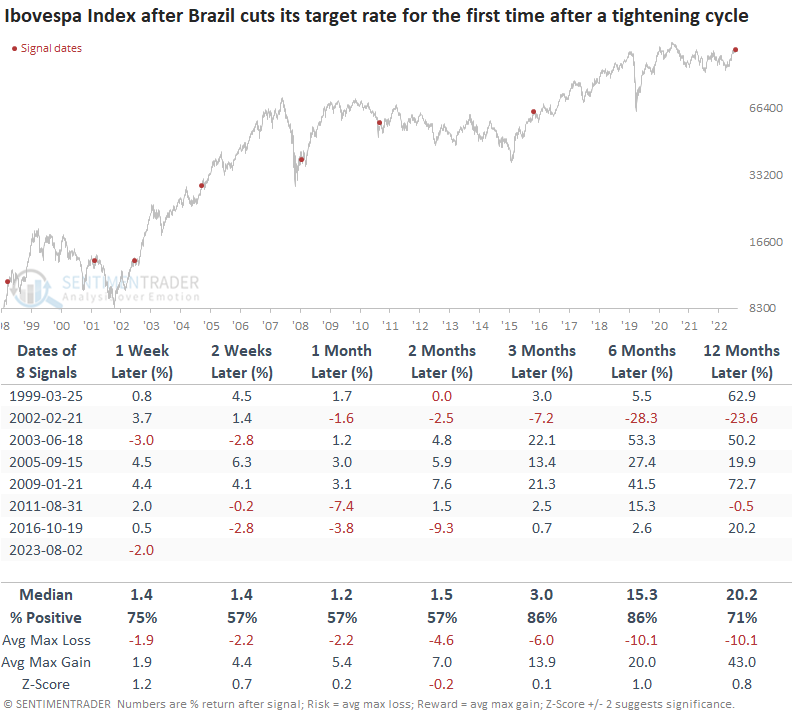
Similar shifts from tightening to easing led to positive returns for the Ibovespa Index
While the sample size is small, the first rate cut after a tightening cycle tends to be bullish for the Ibovespa Index, with an 86% win rate over the next three and six months.
The one outlier in 2002 occurred after Brazil's central bank raised rates in 2001, swimming against the tide of other banks around the globe who were easing policy.
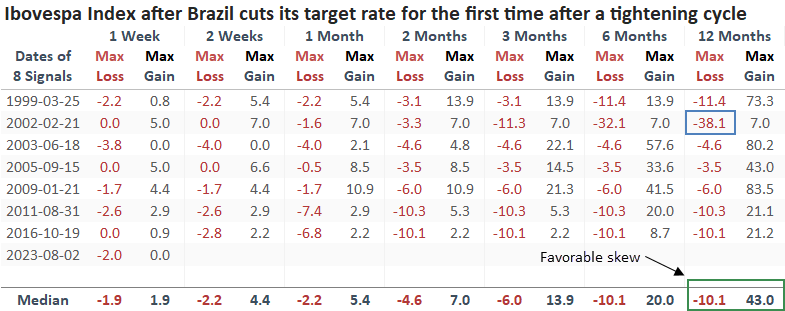
Except for 2002, the maximum gain exceeded the maximum loss by a significant amount over the next year.
Relative comparison between the Brazil ETF (EWZ) and the S&P 500 ETF (SPY)
USD-based investors have limited options for accessing Brazilian stocks. One potential vehicle is the ETF (EWZ). While win rates are less favorable when compared to the Ibovespa Index, returns are better across most time frames.
When benchmarked against the S&P 500, the win rate resembles a coin toss in most cases. However, returns show potential for relative outperformance.
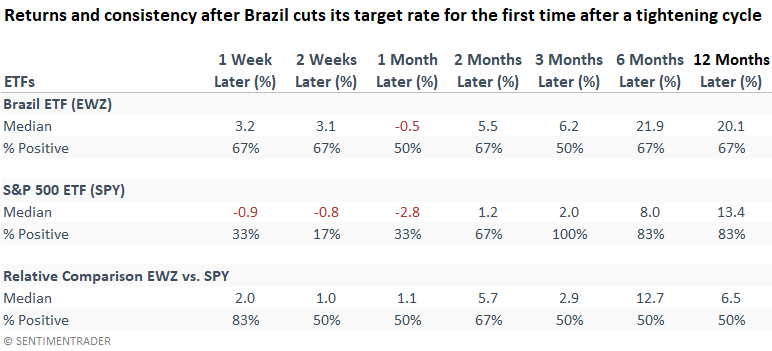
Due to data limitations, the EWZ comparison contains one less signal.
Trust but verify with other indicators
Even though historical returns offer a glimpse into potential opportunities, allocating capital based on additional confirmation from other conditions or indicators is a more prudent approach.
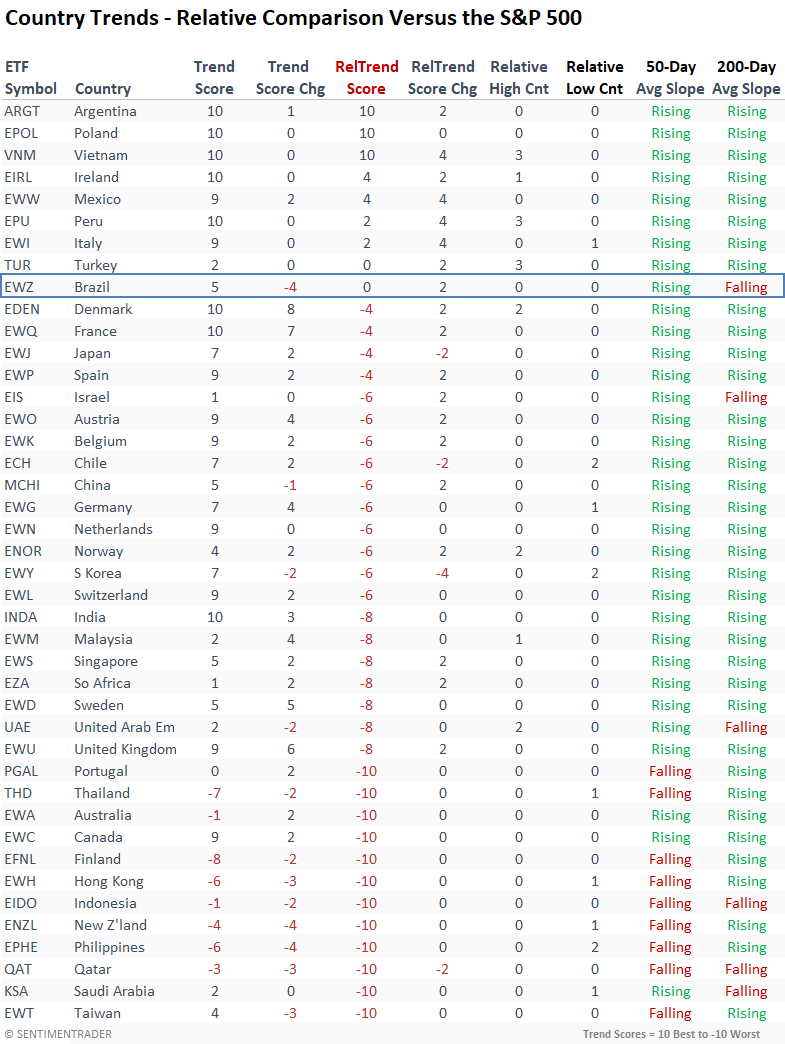
Although the EWZ ETF looks favorable compared to other country ETFs, its relative trend score does not reflect a bullish status when gauged against the S&P 500. And it's one of a handful of ETFs with a downward sloping 200-day average, an adverse long-term trend condition.
What the research tells us...
The Brazilian central bank reduced its target rate for the first time after raising rates 12 times, starting in March 2021. Historically, a shift in monetary policy, like now, has been a bullish development for the Ibovespa Index. USD-based investors can allocate capital to an ETF like EWZ. However, I would wait for absolute and relative trends to improve.