
A bullish breakout in discretionary stocks

Key points:
- Discretionary stocks saw 52-week highs surge to the highest level in more than six months
- Similar breakouts saw the sector and the broad market rally over the next year in all but one case
- Though discretionary posted a modest relative advantage, technology displayed an overwhelming edge
Consumer cyclical stocks break out
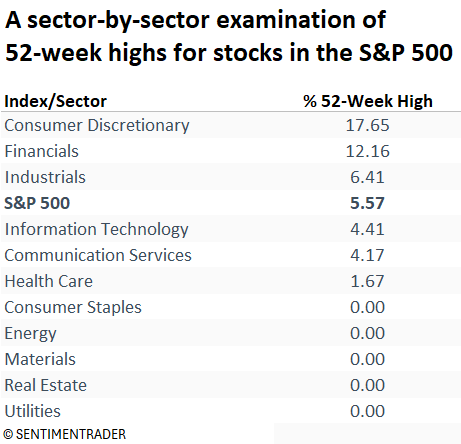
On Wednesday, the consumer discretionary sector emerged as the clear leader, posting the highest number of 52-week highs among all groups.
The expansion in new highs marked a notable shift, as it was the first time since the April lows that breakouts in the discretionary sector outnumbered those in other key cyclical groups, such as industrials, financials, and technology.
With elevated expectations for a September Fed rate cut, consumer cyclical stocks are attracting renewed attention, as lower yields tend to support borrowing and spending, a key driver for this sector.
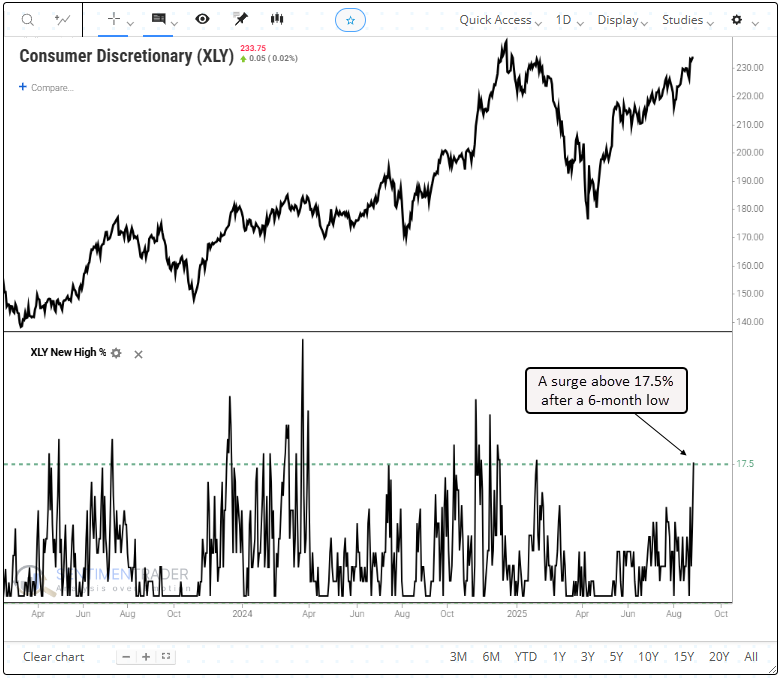
The consumer discretionary sector topped all other groups in 52-week highs on Wednesday, in a session where breakouts were generally pro-cyclical.
A bullish bias
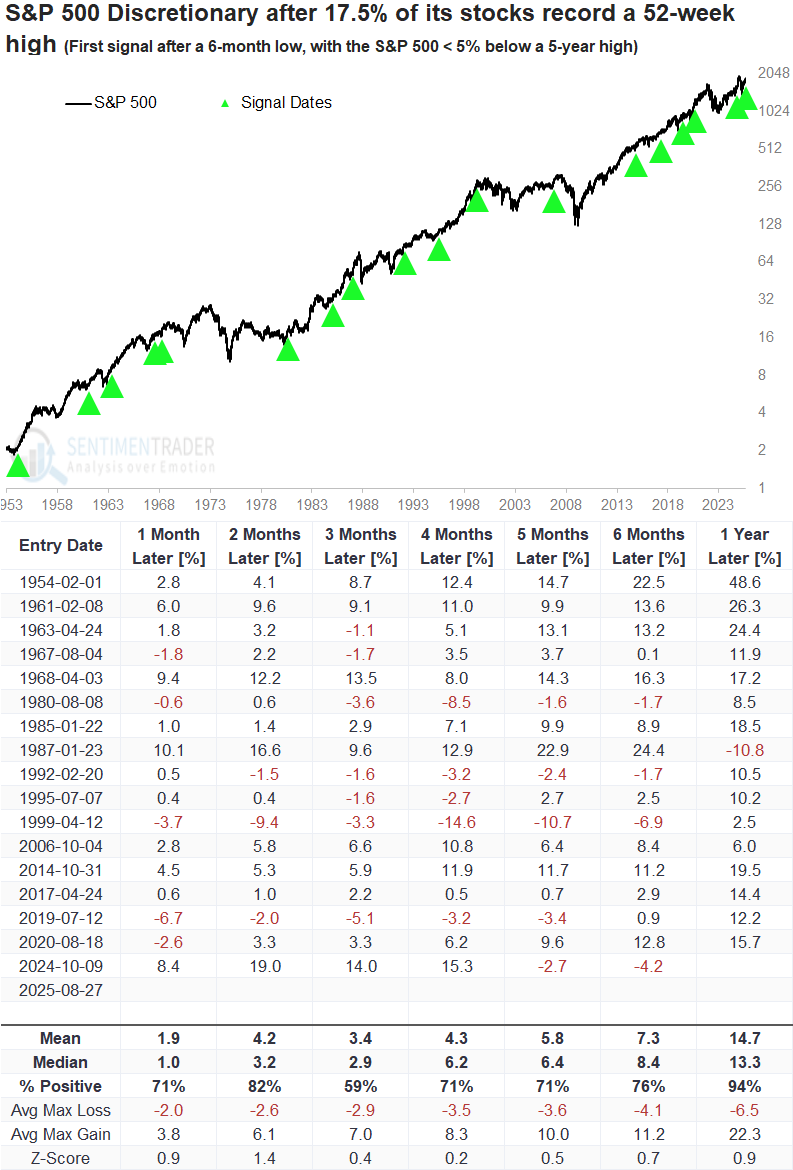
Whenever 17.5% of consumer discretionary stocks hit a 52-week high for the first time after a six-month low, and the S&P 500 was less than 5% below a five-year high, consumer cyclicals tended to move higher over the next year, posting gains in all but one case.
The single loss observed a year later initially showed substantial gains but ultimately fell victim to the 1987 crash, a highly unusual outcome. It's also worth noting that the negative signal in 1999 occurred just before the Fed began a rate-hiking cycle, which is quite different from today, given the odds of a September rate cut.
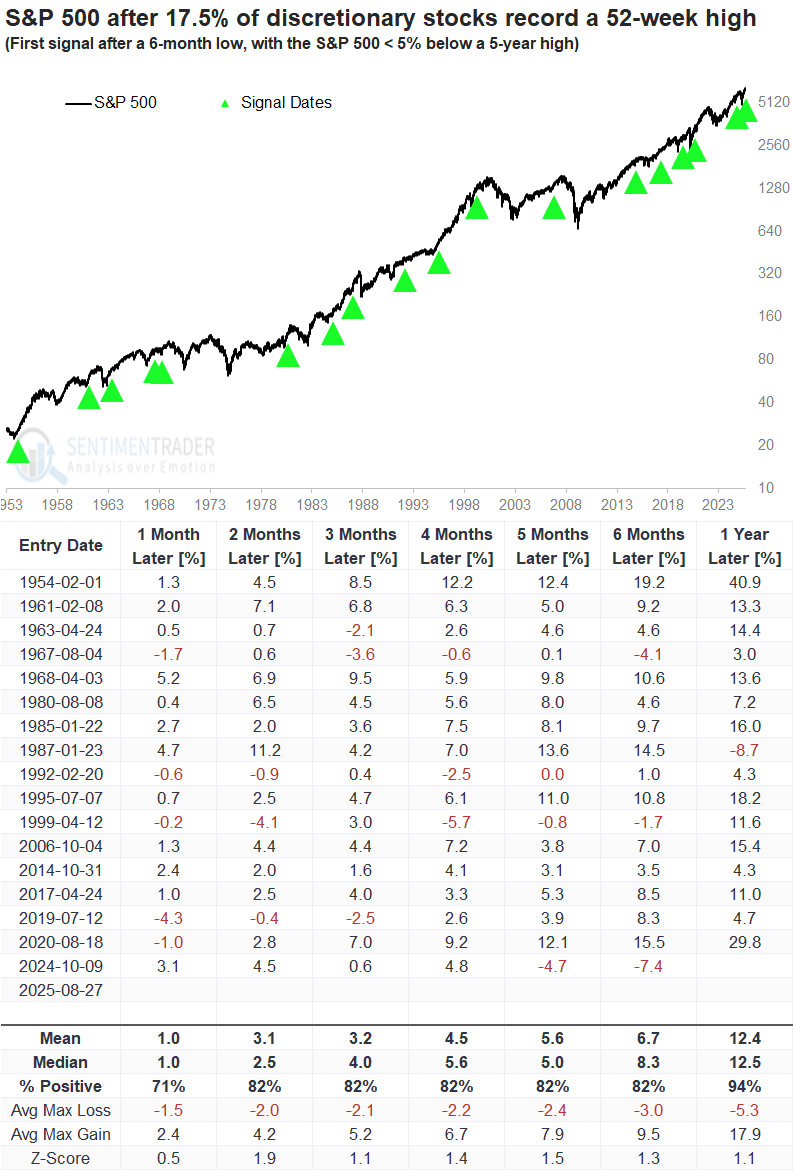
When a surge in 52-week highs occurred for stocks in the discretionary sector, it typically indicated a bullish backdrop for the broader market. In fact, the S&P 500 went on to rise in nearly every case a year later, echoing the sector's outlook. However, the world's most benchmarked index actually showed stronger win rates in the three- to six-month window.
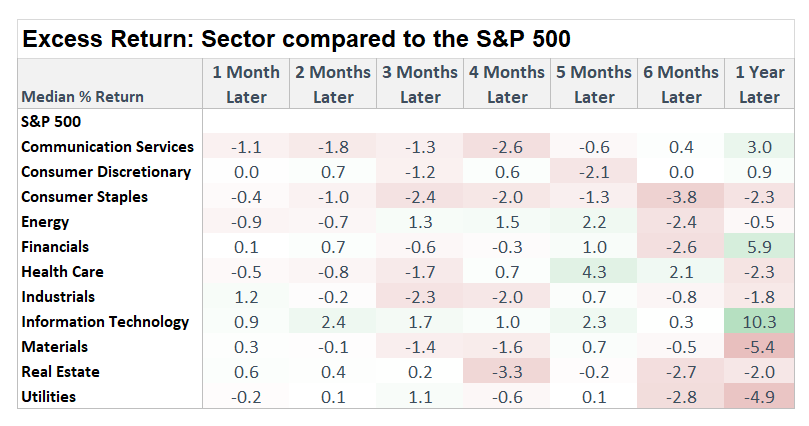
A year later, the consumer discretionary, financials, and technology sectors outperformed the S&P 500, indicating that a surge in breakouts from the discretionary sector was a positive development for cyclical groups.
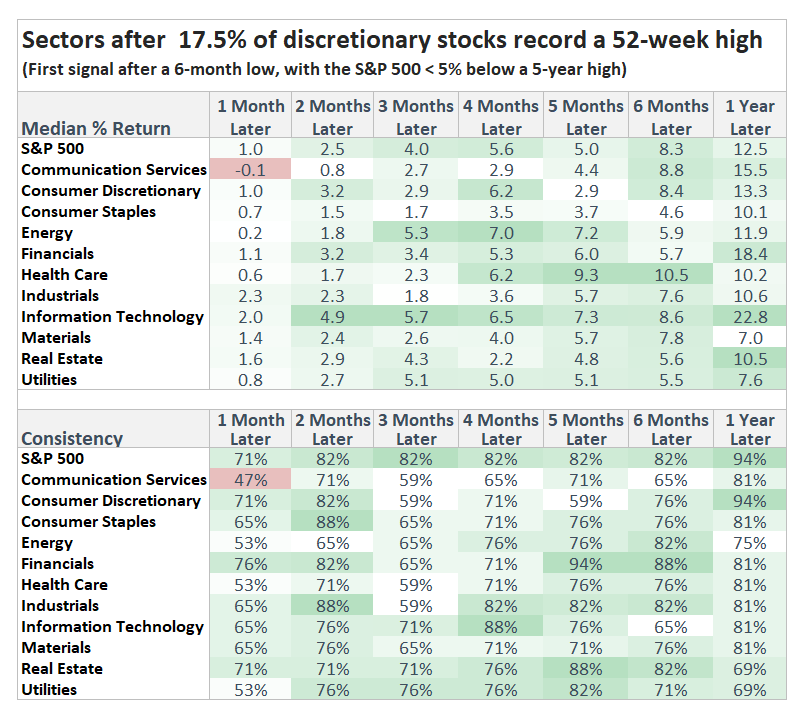
Although the consumer discretionary sector outperformed the S&P 500 in most time horizons, the excess return wasn't overwhelming. On the other hand, returns for the technology sector exceeded those of the broad market across all intervals.
While the tech sector has recently succumbed to profit-taking, big-picture trends still look constructive, suggesting investors maintain a healthy portfolio weighting.
What the research tells us...
On Wednesday, consumer discretionary stocks led all sectors by registering the highest proportion of 52-week highs. This leadership is a positive signal not only for the sector itself but also for the broader U.S. equity market, given the economy's heavy reliance on consumer spending.