
A breakout with bullish implications for stocks

Key points:
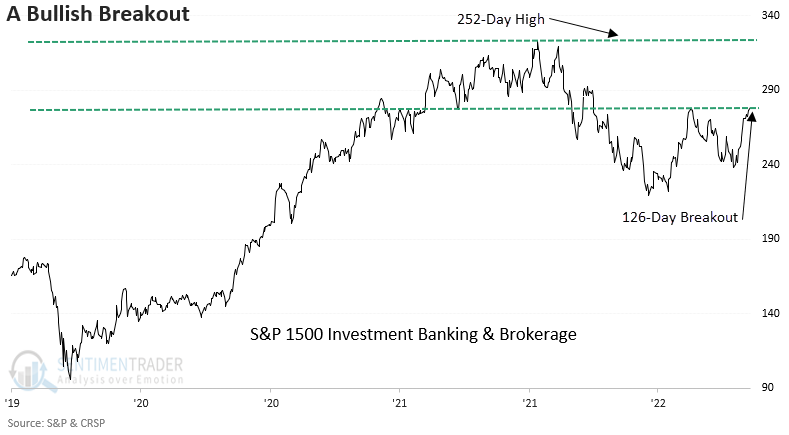
- The Investment Banking & Brokerage Sub-Industry group closed at a new 126-day high
- However, the group did not close at a 252-day high
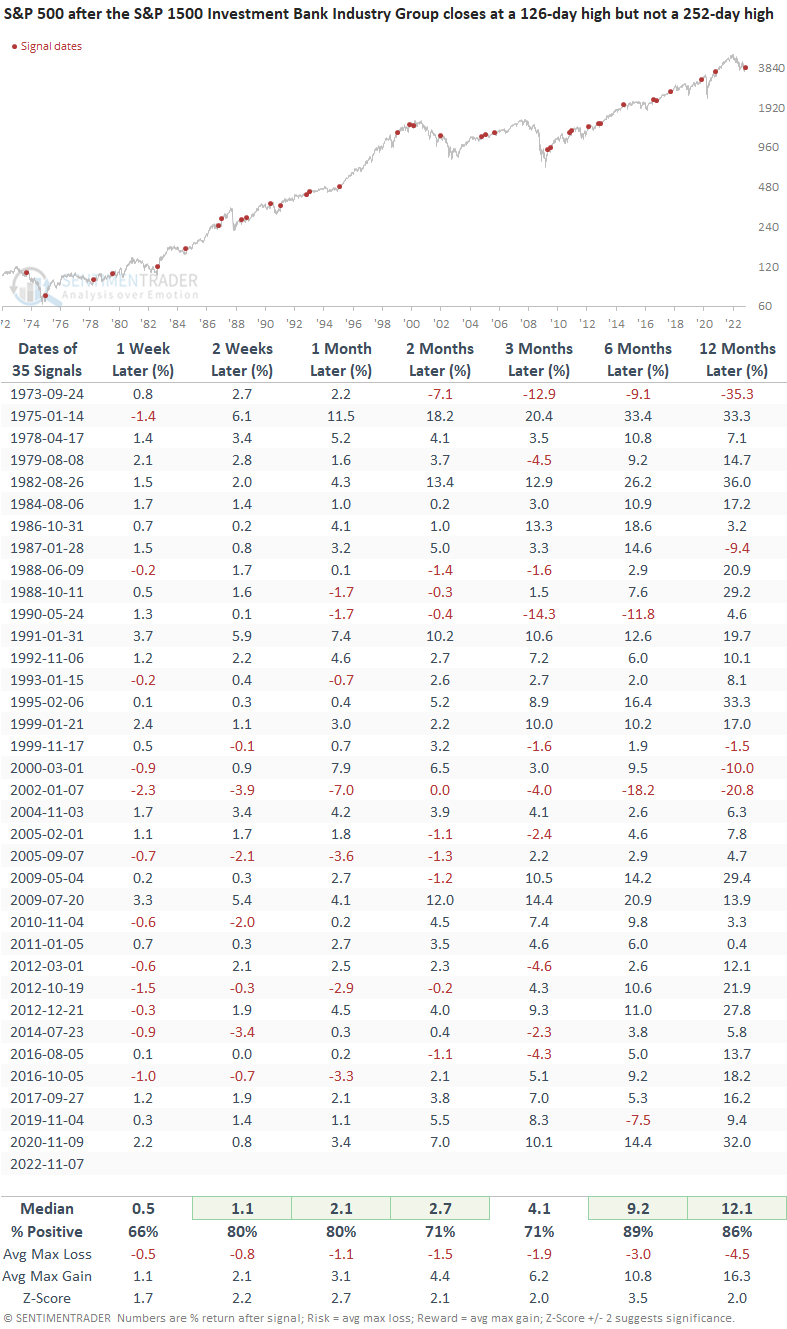
- After similar base breakouts, the Sub-Industry and the S&P 500 had a positive upward bias
Financials are a systemically important sector
On Monday, the Investment Banking & Brokerage Sub-Industry closed at a new 126-day but not a 252-day high. The breakout is an interesting development for an industry that suffers in volatile periods like now, as deal flow across the capital markets tends to slow.
So, with financials outperforming this year and the Investment Banking and Brokerage Sub-Industry group breaking out to a new high, what can we learn from the message of the market?
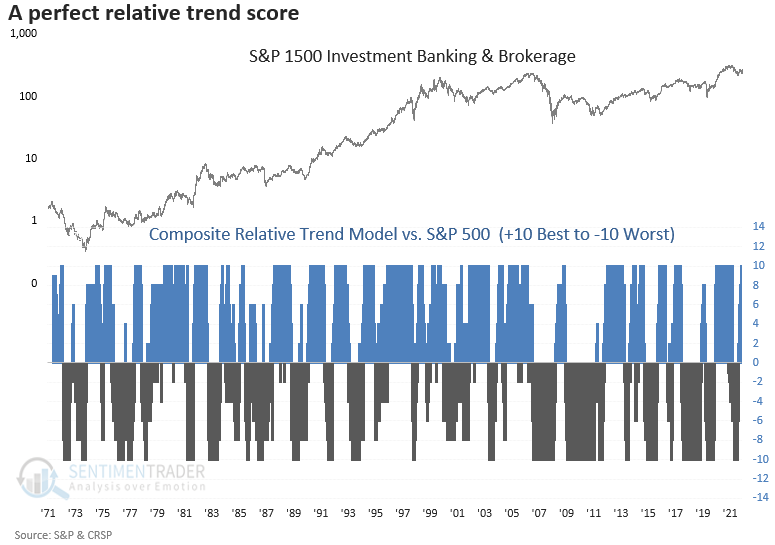
At the same time that the Investment Banking and Brokerage group is breaking out on an absolute basis, the index is outperforming on a relative basis. My composite relative trend model maintains a perfect score.
Similar breakouts preceded positive returns
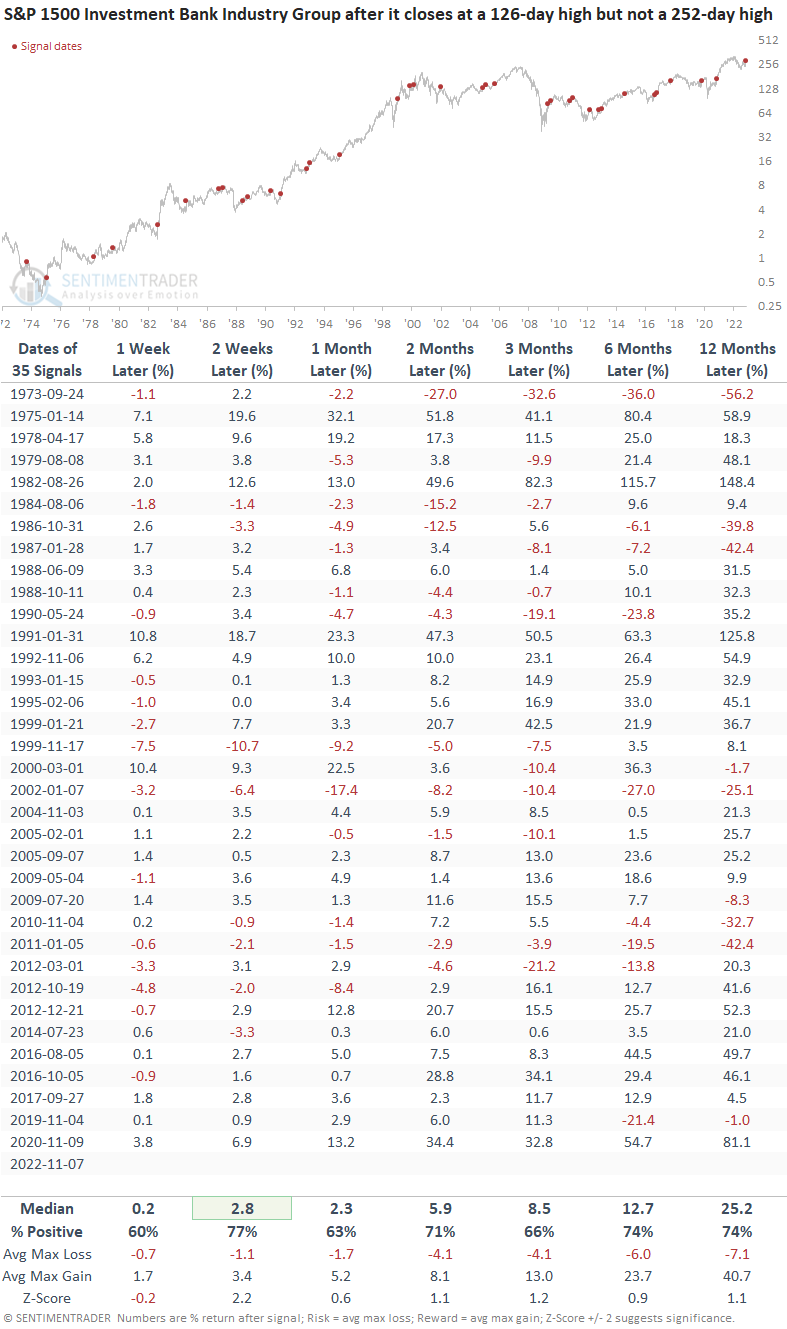
When the Investment Banking and Brokerage Sub-Industry Group closes at a 126-day high but not a 252-day high, the bullish price pattern tends to foreshadow positive returns across all time frames.
The signal shows 31 out of 35 winners at some point in the first two months.
While long-term results are solid, a handful of significant drawdowns are worth noting, especially in 1973 and 2002.
Returns, win rates, and z-scores look even better when I apply the signals to the S&P 500. So, what's good for a component within financials is good for the broad market.
What the research tells us...
The Investment Banking and Brokerage Sub-Industry group closed at a new 126-day high but not a 252-day high. While the outlook for the industry and the broad market looks constructive, we must be mindful that the breakout is unusual as the group tends to suffer in volatile market periods. The two most noteworthy bear market signals occurred in 1973 and 2002. Interestingly, both periods share similar factors with the current environment. Valuation, inflation, and monetary policy were all headwinds.