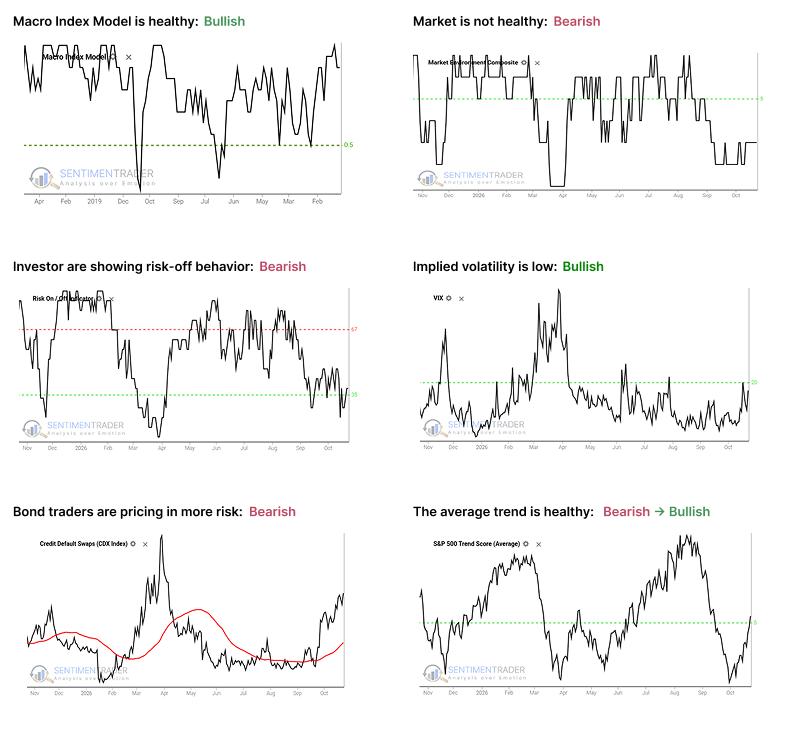
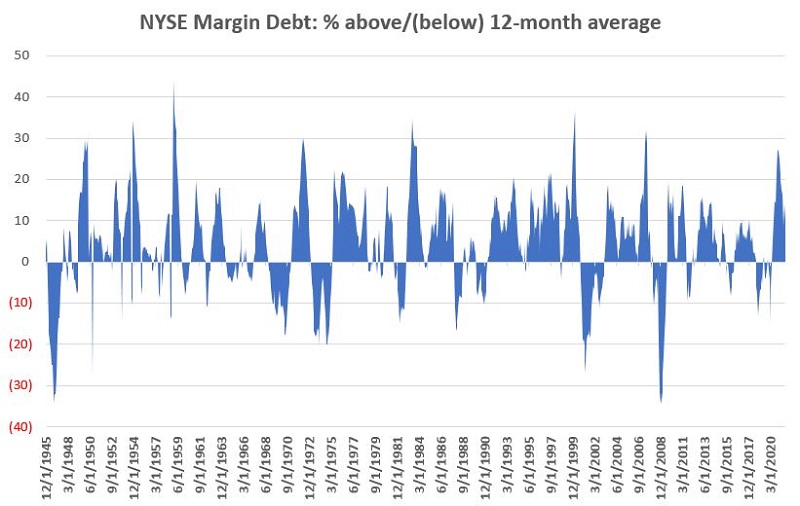
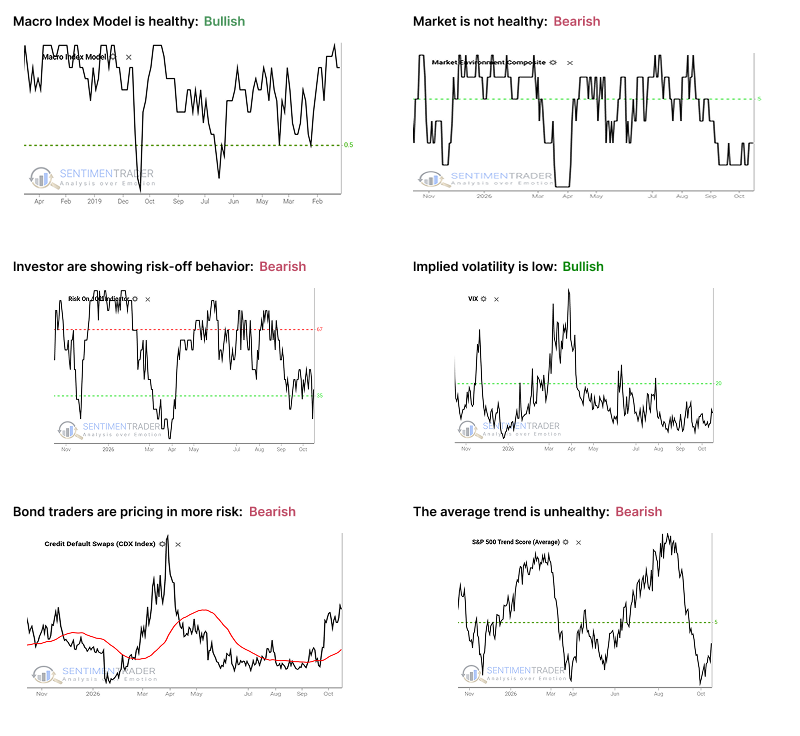
While short-term risk models flag caution, NYSE Margin Debt remains 11.9% above its 12-month average, signaling a favorable macro trend. Meanwhile, Bitcoin triggers a rare trend-following buy signal boasting an 81.8% historical win rate.
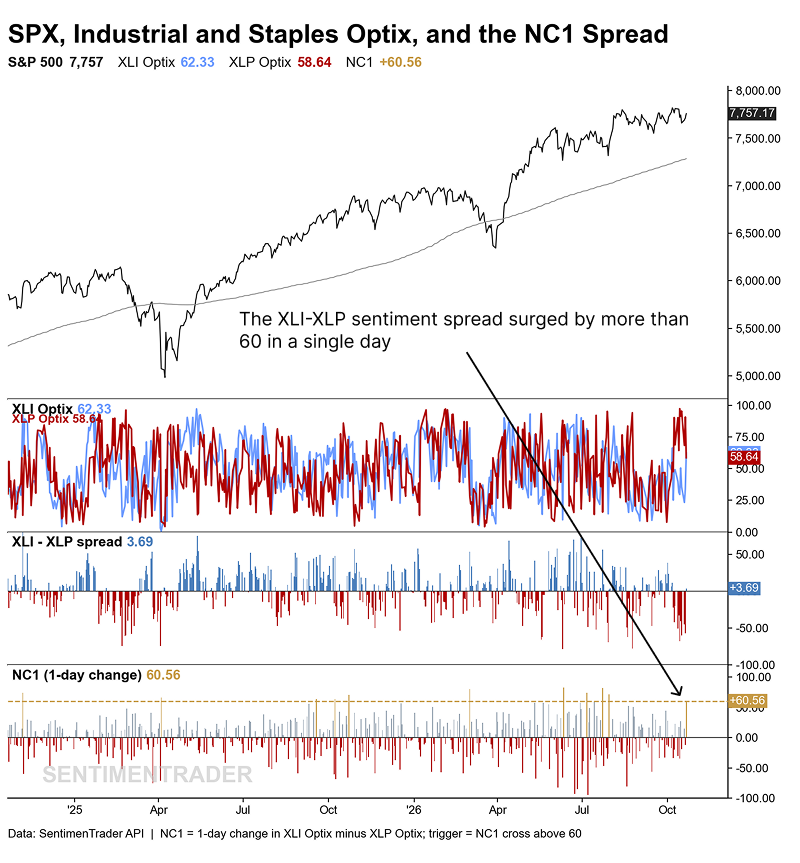
Industrials' sentiment relative to consumer staples flipped sharply in one day. Similar signals averaged -9.0% over five months below the S&P 500's 200-day average but +4.9% above it, placing the current signal in the historically more favorable regime.
The trend of NYSE Margin Debt can serve as a useful trend-following indicator. In this piece, we present the details of a straightforward approach to using this data series to assess the likelihood of a bull market.
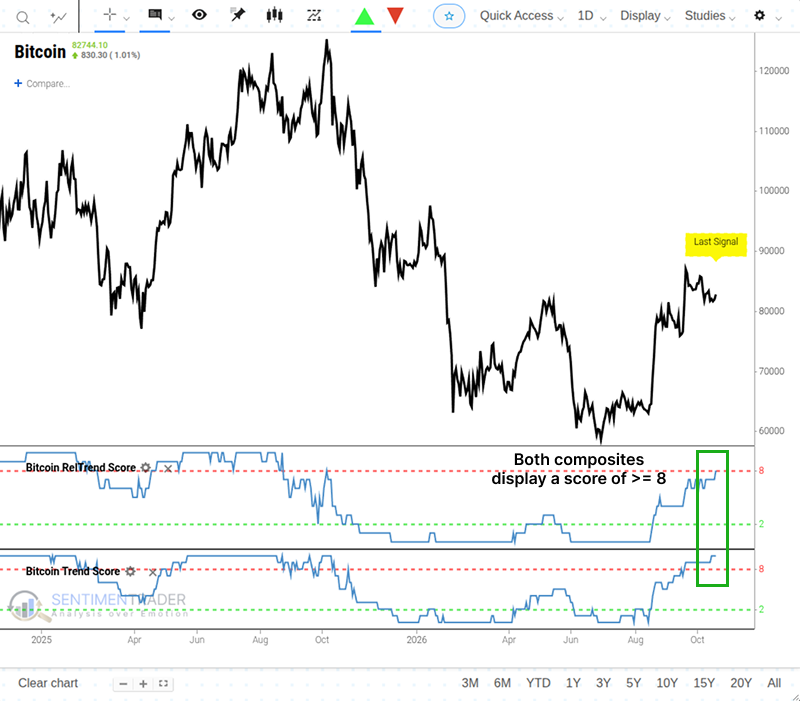
Bitcoin's trend indicators just triggered a bullish signal, with relative and absolute scores hitting 8 and 10. Historically, holding Bitcoin when both scores sit at 8+ generates a massive 92.5% annualized return and an 81.8% win rate.
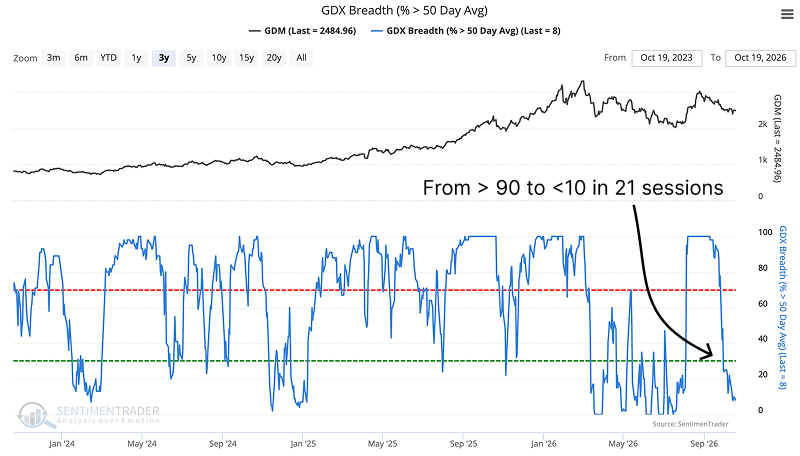
GDX's 50-day breadth collapsed from above 90% to 8% in only 21 sessions. Similar washouts favored a first-month rebound, but gains often faded afterward, while a separate fund-flow signal carried a weak six-month record.
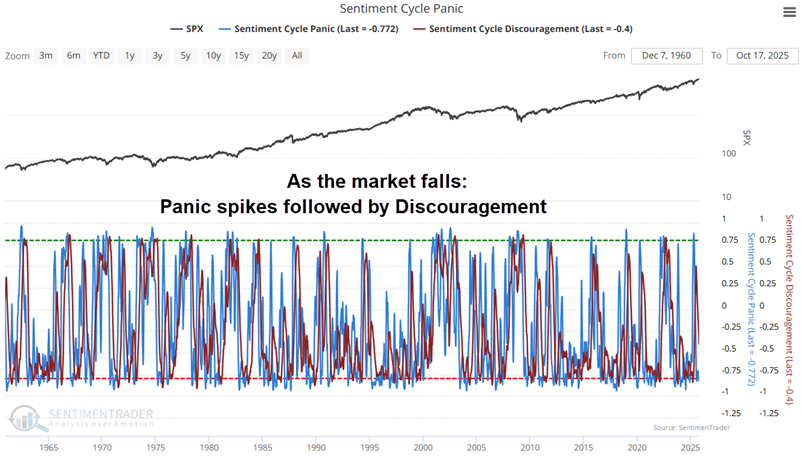
Our Sentiment Cycle Composite indicator turns investor sentiment into a trend-following tool. Details regarding its construction and real-world investment applications are provided herein.
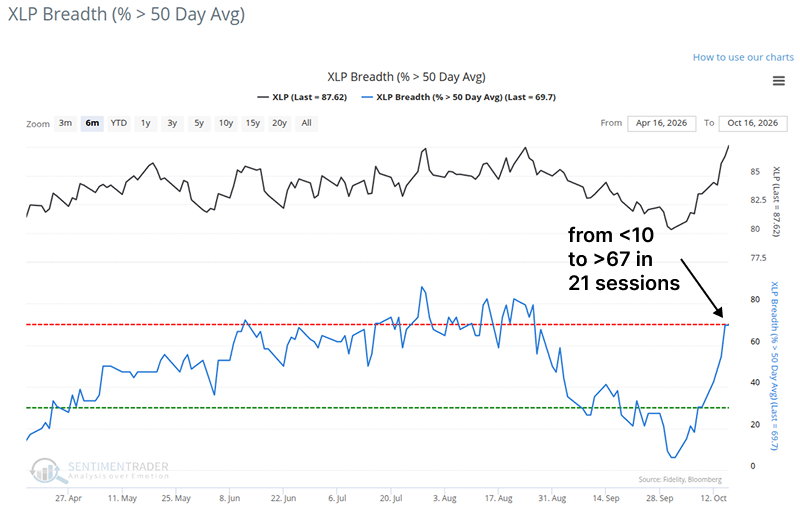
A sudden breadth thrust and surging corporate insider buying (Buy/Sell Ratio spiking to 0.12) point to a strong medium-to-long-term recovery for Consumer Staples ($XLP) despite near-term short-term pressure.
The S&P 500 enters its most favorable year-end seasonal window, yet dual-exchange Titanic Syndrome warnings and crude oil volatility warn of near-term turbulence. Meanwhile, transport and utility sectors flash compelling long-term setups.